
Knauf Blown-In Insulation in Campbell: What to Know First
We provide independent Knauf blown-in insulation service in Campbell, typically scheduling within 48 hours and completing most attic jobs in a single day. Most Campbell homeowners with Knauf insulation pay between $2,800 and $5,400 for a full attic replacement, or $1,200 to $2,400 for a blown-in top-up over existing material. We publish a written price before any work starts, and we seal the leaks first. The insulation has nowhere useful to go until you do.
This page is for Campbell homeowners who already have Knauf insulation in their attic or walls and need to know whether it can be topped up, dense-packed, or if it’s time to pull it out and start over. If your home sits near the Pruneyard Plaza corridor, the Campbell Avenue historic district, or anywhere in the 95008 zip, the age of your framing and the way your top plates were originally sealed will determine more about your final result than the brand name on the bag. Call (831) 534-3206 to schedule a free estimate with a written price delivered before we lift a tool.
How Knauf Products Fail - and How We Fix Them
- Knauf Jet Stream Ultra settling in 12-inch rafter bays. This high-performance fiberglass is designed to achieve R-38 in a 2×12 cavity, but in Campbell’s older ranch homes with skip-sheathing roof decks, vibration from decades of traffic on nearby Highway 17 and I-880 gradually compacts the material at the eaves. We find 4-inch gaps where R-38 became R-12. Our fix: remove the settled material, install proper vent baffles to stop wind-washing, then re-blow at the specified density with a fresh blower-door test to confirm we didn’t pressurize the attic into the living space.
- Knauf EcoFill WX cellulose bridging over recessed can lights. This blown-in cellulose is treated with borate for fire resistance, but when previous contractors blew it directly over non-IC-rated housings in Campbell’s 1960s tract homes, the heat buildup creates hard-packed crusts that slump away from the fixture over time. We see this constantly in the neighborhoods east of Bascom Avenue. Our fix: mark every penetration, install fire-rated covers or replace with IC-rated LEDs, air-seal the housing to the drywall with firestop caulk, then re-blow. The borate treatment is still good; the installation geometry was wrong.
- Knauf Insulation Atmosphere dense-pack fracturing in balloon-framed walls. We encounter this in Campbell’s pre-1940s cottages near downtown, where the product was dense-packed at too low a pressure into walls with no top plate blocking. The material bridges mid-cavity, leaving voids at the headers that telegraph as cold stripes on interior walls. Our fix: infrared scan to map the voids, drill-and-fill at higher pressure with real-time density monitoring, or switch to a two-stage approach with air-sealing first if the framing is too irregular.
- Knauf Momentum blown-in fiberglass migrating around attic hatches. The low-density product performs well when contained, but in Campbell homes with pull-down stairs that see seasonal storage use, the fiberglass shifts with every footstep on the ceiling joists below. We find bare spots within 18 months of installation. Our fix: build a contained landing zone with rigid foam dams, weatherstrip and insulate the hatch to R-38 equivalent, then re-blow with a slightly higher installed density in the traffic zone.
- Knauf Ecose binder off-gassing in poorly ventilated attics. The plant-based binder is a legitimate innovation, but in Campbell’s tight zero-lot-line homes with inadequate soffit ventilation, we’ve measured elevated humidity that accelerates binder breakdown. The material clumps and loses loft. Our fix: solve the ventilation first - calculate net free area, add baffles, confirm exhaust flow - then replace the damaged material. We document the before-and-after attic humidity readings because the manufacturer warranty excludes moisture damage, and you’ll need that paper if you ever file a claim.
Our Knauf Blown-In Insulation Process
- 1
Call and schedule. A live person answers (831) 534-3206 24/7. We book a 2-hour arrival window, not “morning or afternoon.”
- 2
Attic inspection and blower-door test. Wes Okafor or a lead technician runs a pressurization reading - CFM50 - to quantify exactly how leaky your envelope is. We photograph every top plate, penetration, and duct boot. You get the photos and the number before we discuss material.
- 3
Written price and scope. We specify Knauf line item by line item: removal cost per bag, air-sealing labor by penetration count, new material type and installed R-value, and the final blower-door target. No work starts without your signature on this document.
- 4
Air sealing first. We seal top plates with firestop caulk, box out can lights, foam every wire and pipe penetration, and weatherstrip the hatch. Then we run the blower-door again. If we don’t hit the target reduction, we find the leak before insulation touches the attic.
- 5
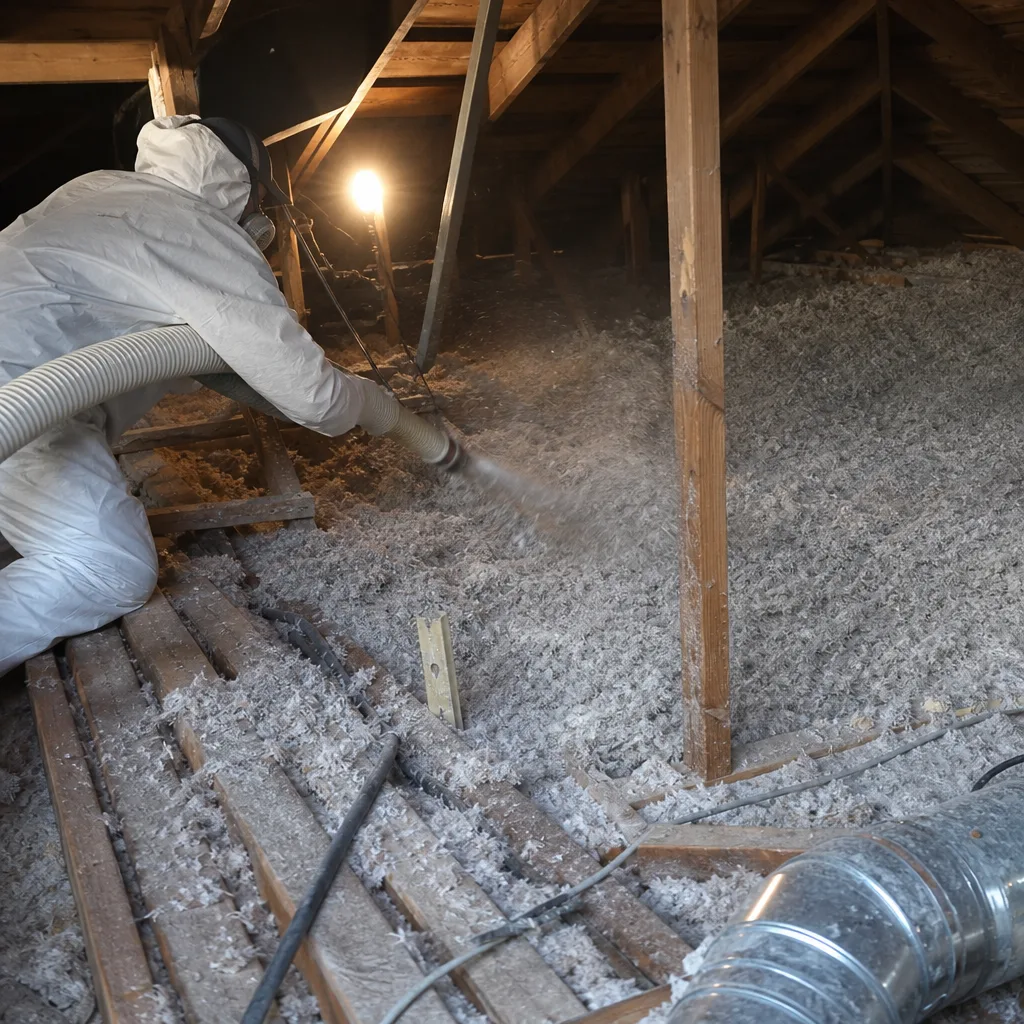
Knauf material installation. We match the product to the application - Jet Stream Ultra for open attics, EcoFill WX for dense-pack walls, Atmosphere for netted cathedral ceilings - and verify installed depth and density against manufacturer specs.
- 6
Final test and documentation. Second blower-door reading, photos of completed work, printed report with both CFM50 numbers, and your copy of the 365-Day Done Right Promise. The crew cleans with a HEPA vacuum. You pay the written price, nothing else.
 Before
 After
AfterWhat Knauf Blown-In Insulation Costs in Campbell
| Job Type | Typical Range | What Moves the Price |
|---|---|---|
| Blown-in top-up over existing Knauf (attic, R-19 to R-38) | $1,200 - $2,400 | Attic square footage, hatch accessibility, whether existing material is clean |
| Full Knauf removal + replacement with air sealing | $2,800 - $5,400 | Removal volume, penetration count, ventilation corrections needed |
| Dense-pack wall fill with Knauf Atmosphere | $3,500 - $6,200 | Wall square footage, interior vs. exterior access, plaster vs. drywall |
| Crawl space Knauf install with vapor barrier | $2,200 - $4,100 | Crawl height, existing moisture damage, rodent activity |
These ranges reflect what we actually charge in Campbell for Knauf-specific jobs completed in 2024 and 2025. Your written price will land inside the appropriate band unless we find something unexpected - rot, active leaks, or code violations - in which case we stop and show you before proceeding. Call (831) 534-3206 for your free estimate. Estimates are free. The written price is real.
Why Campbell Homeowners Call Topside Attic Insulation Campbell for Knauf Work
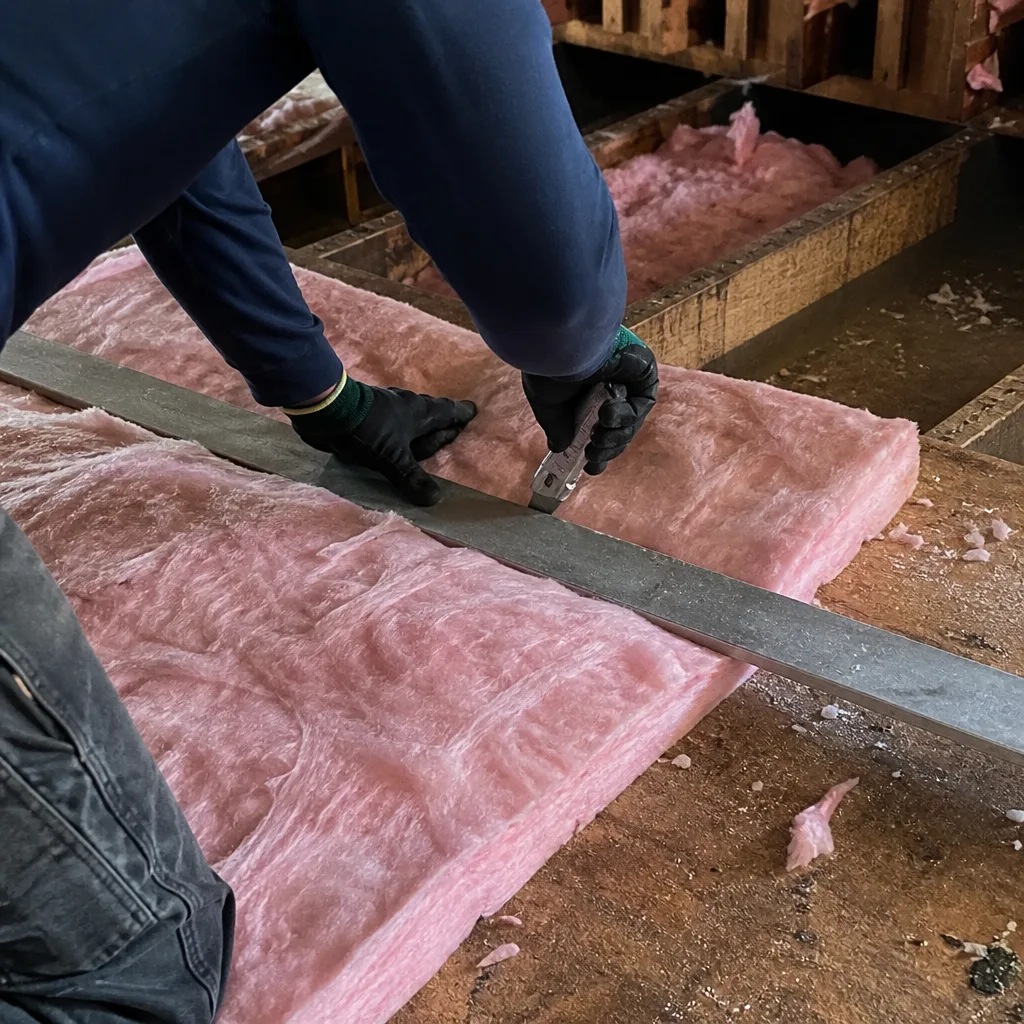
We’re an independent Knauf service provider - not affiliated with or authorized by Knauf - which means we work with their materials because they perform well when installed correctly, not because a distributor contract requires it. If your job calls for Reflectix radiant barrier in a mixed assembly, or if the attic conditions suggest cellulose over fiberglass, we say so and we stock it. No proprietary lock-in.
Since 2016, we’ve sealed and insulated over 9,000 homes, every one with a written price before work started and a documented record when the crew left. The 365-Day Done Right Promise applies to all completed work. Our technicians are background-checked and uniformed, and calls are answered by a live person, 24/7. In Campbell specifically, jobs near the Pruneyard Plaza corridor taught us early that homes this age carry a specific set of air-sealing problems that show up long before you ever touch a bag of blown-in cellulose. We know what to look for.
FAQs
No - Knauf’s product warranty covers material defects regardless of who installs it, provided the installation meets their published density and coverage charts. The warranty does not cover moisture damage, compression from foot traffic, or installation over unsealed air leaks. We document our work to those standards so you have what you need if a claim arises. Call (831) 534-3206 and we’ll walk you through the warranty paperwork before you sign anything.
Most Campbell homeowners get an inspection scheduled within 48 hours, and we complete typical attic jobs in one day. Dense-pack wall work or full removal-and-replacement jobs may run two days. We don’t quote turnaround until we’ve seen the attic - a written price with a real schedule is Haven Standard Clause 1, and we don’t break it.
Topping up is cheaper upfront - typically $1,200 to $2,400 versus $2,800 to $5,400 for full replacement - but only if the existing material is clean, uncompressed, and the attic was properly air-sealed before it went in. We’ve opened too many Campbell attics where a previous contractor blew new fiberglass over old, creating a stratified mess that traps moisture. We tell you which category you’re in during the free estimate, with photos, before you decide.
We install Knauf insulation products sourced through authorized regional distributors - the same bags you’d get from any certified dealer. For accessories - vent baffles, fire-rated covers, weatherstripping - we use proven aftermarket products that meet or exceed the application spec. We don’t upsell branded accessories where a standard item performs identically. The written scope names every material by manufacturer so you know before we start.
Usually yes, if the product line is still manufactured. Jet Stream Ultra, EcoFill WX, and Atmosphere are current lines we stock regularly. Discontinued products get matched by thermal performance and density spec, not by bag color. If we can’t match closely enough to avoid a visible or thermal seam, we tell you during the estimate and price both options. Call (831) 534-3206 for an exact answer on your specific material.
Written by Wes Okafor, Owner & Lead Insulation Technician, Topside Attic Insulation Campbell at Topside Attic Insulation Campbell, serving Campbell and nearby areas.