
Knauf Crawl Space Encapsulation: The Campbell Owner’s Guide
We stock and install Knauf-compatible crawl space encapsulation systems in Campbell, with most complete installs running between $3,800 and $7,200 depending on square footage and whether the foundation needs active dehumidification. Same-day assessments are available, and we carry Knauf vapor barrier rolls and seam tape on every truck. Most Campbell homeowners discover their encapsulation has failed when they notice a sharp musty smell returning after months of absence, or when their dehumidifier begins running continuously without dropping the relative humidity below 65%.
Which Knauf Models This Applies To
Knauf’s crawl space line centers on their CleanSpace-compatible vapor barrier system, typically sold in 12-mil and 20-mil reinforced polyethylene rolls with a white woven facing. The critical identifier is the Knauf part prefix: barriers beginning with KCS-VB are the residential-grade 12-mil product, while KCS-VBHD denotes the 20-mil commercial-grade variant with the polyester cord reinforcement grid visible when held to light. We’ve replaced both in Campbell homes near the Pruneyard Plaza corridor, where the clay-heavy soil shifts seasonally and stresses seams at the pier wraps.
Here’s the compatibility gotcha: Knauf barriers manufactured before 2019 used a narrower 6-inch factory edge fold for overlapping seams, while current production runs 9-inch. If you’re patching a section, matching the fold width matters more than matching the mil thickness, because mismatched overlaps create a channel where capillary wicking occurs. We stock both edge specifications on our Campbell trucks.
On OEM versus aftermarket: Knauf does not sell direct to homeowners, only through distribution. The aftermarket equivalent we use when Knauf stock is delayed is a 20-mil woven polyethylene from a regional manufacturer that matches the KCS-VBHD tensile spec of 45 lbs/inch MD (machine direction) and carries the same 10-year rated lifespan in conditioned crawl spaces. We document which product goes in on every job, and the customer receives that documentation before we leave.
Signs Your Knauf Crawl Space Encapsulation Is Failing
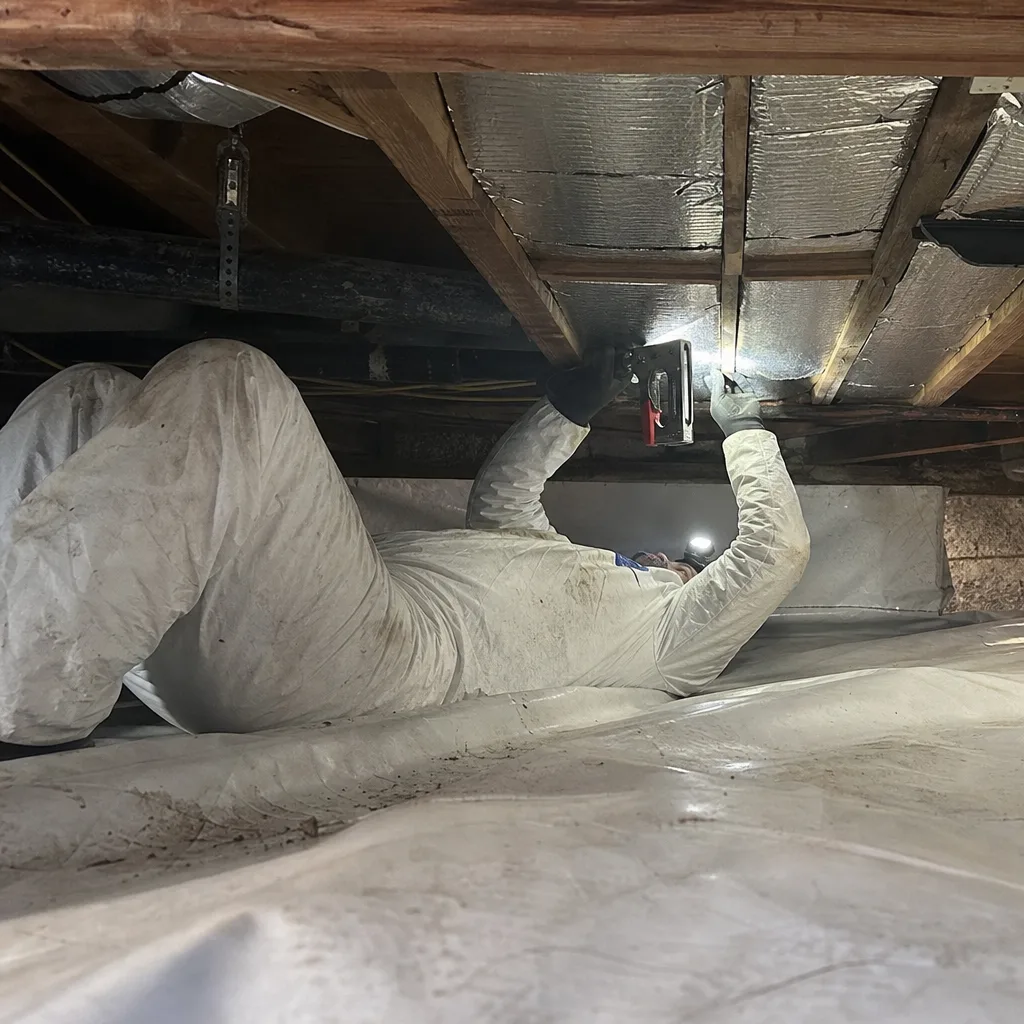
- Musty odor returning in conditioned spaces above. When the vapor barrier separates at piers or wall transitions, soil gas and moisture bypass the seal. The HVAC’s negative pressure in the living space draws that air upward through floor penetrations. We see this most often in Campbell’s 1960s ranch homes where original pier construction left rough, irregular surfaces that abrade tape bonds over time.
- Dehumidifier running continuously without reaching setpoint. A properly sealed crawl space in Campbell’s climate should maintain 50-55% relative humidity with a 70-pint unit cycling normally. If the unit never shuts off, the encapsulation has likely breached and the dehumidifier is fighting unrestricted ground moisture evaporation.
- Visible condensation on barrier underside or puddling on top. This indicates either a vapor barrier with compromised permeance rating (tears, thin spots from UV exposure during storage) or, more commonly, a missing or failed wall-to-footing seal that lets warm exterior air meet the cooled crawl space environment.
- White or gray mold spots reappearing on floor joists. Encapsulation should arrest active mold growth by removing the moisture source. Recurrence means the relative humidity is cycling above 70% seasonally, which in Campbell typically traces to a failed sump pump discharge, breached vapor barrier, or missing dehumidifier integration.
- Tape lifting at seams, especially near the perimeter wall. Knauf’s pressure-sensitive seam tape requires a clean, dry, room-temperature surface at application. We’ve found tape failures concentrated in Campbell homes where previous installers worked over damp concrete or applied tape in winter conditions below 50°F, which prevents the acrylic adhesive from achieving full bond strength.
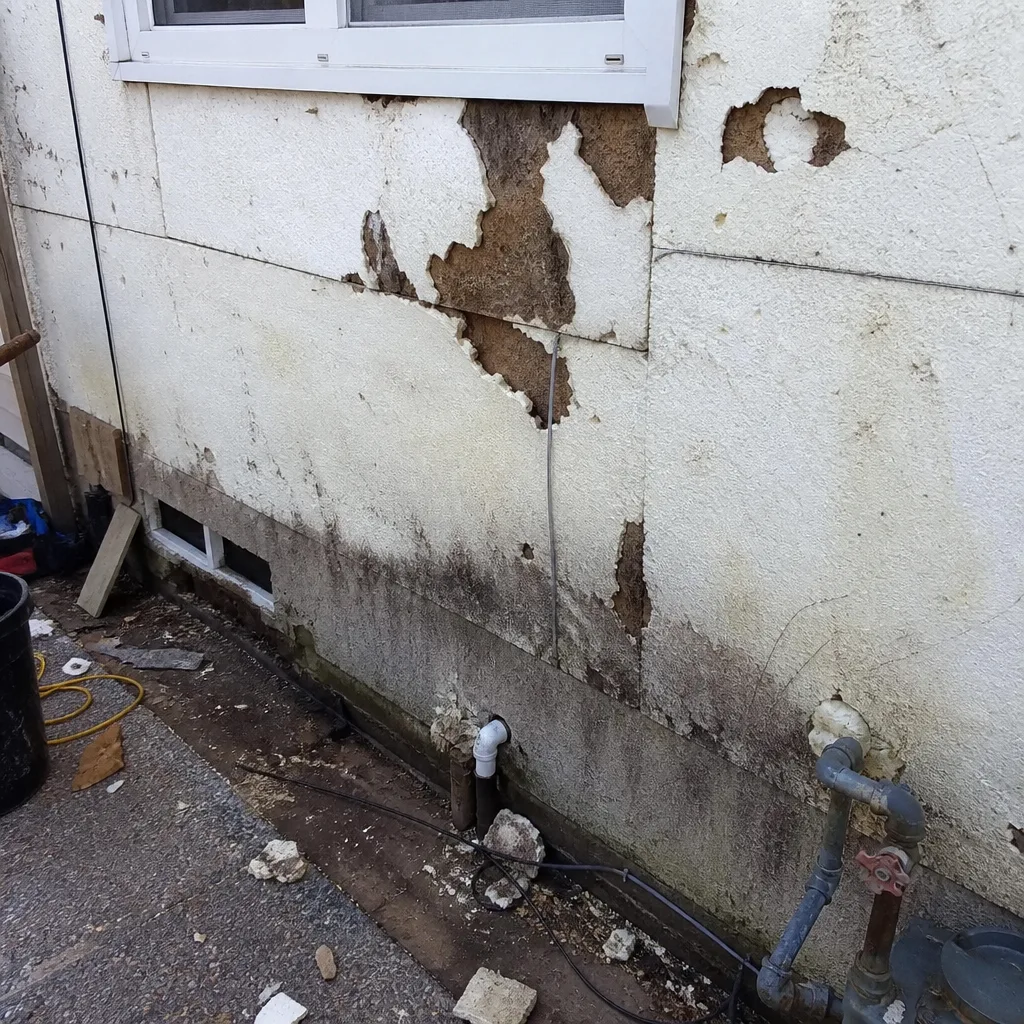 Before
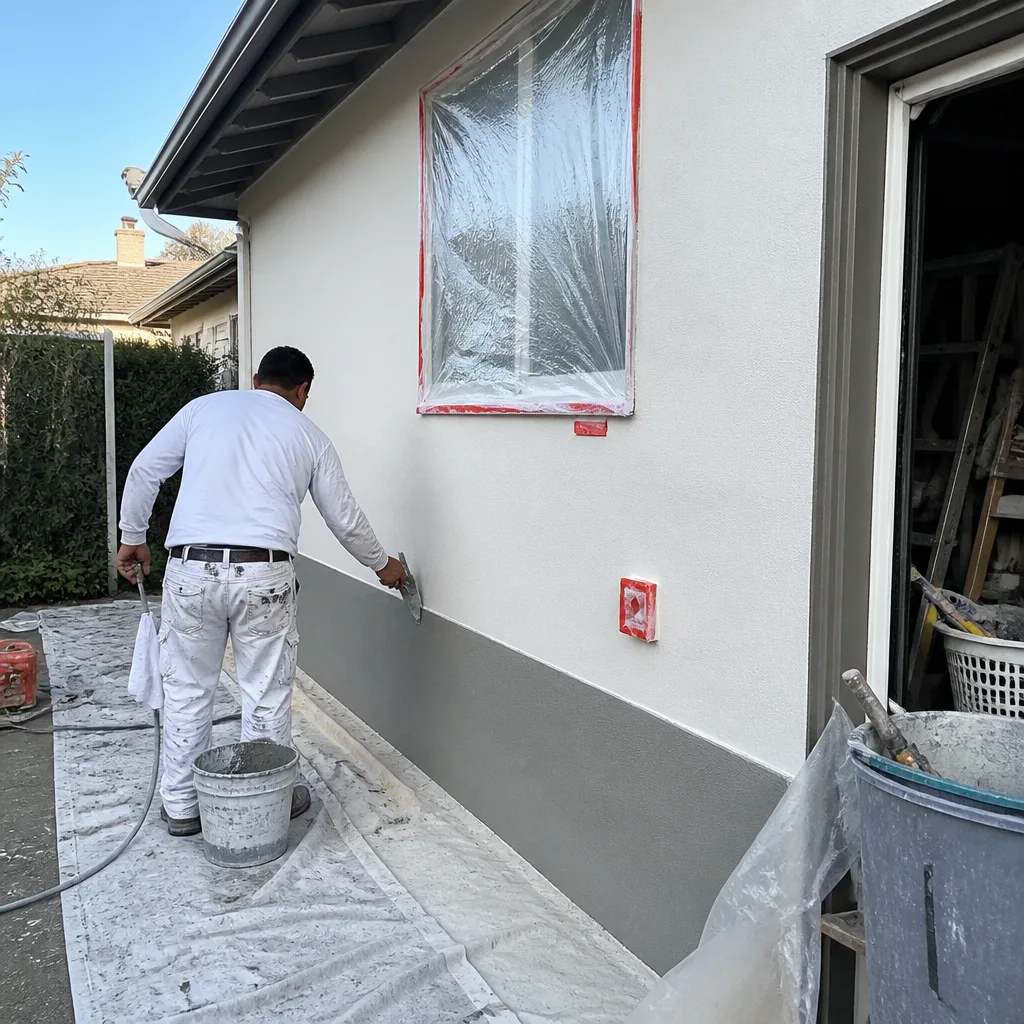 After
AfterReplacement Cost & What’s Included
Complete Knauf crawl space encapsulation replacement in Campbell typically runs $3,800 to $5,400 for crawl spaces under 1,000 square feet with straightforward access, and $5,400 to $7,200 for larger footprints or those requiring pier wrap rework and active dehumidification. The lower end assumes intact insulation, sound footings, and a single-access point. The upper end includes full removal of degraded barrier, re-treatment of any active mold on joists, installation of new 20-mil Knauf-compatible barrier with sealed seams, wall-to-footing termination, and integration with a new or existing dehumidifier.
Every quote we deliver in Campbell is a flat, written price before any work starts. That written scope specifies the barrier mil thickness, seam tape type, whether pier wraps are included, and the dehumidifier capacity if applicable. The 365-Day Done Right Promise covers all completed encapsulation work, and you receive a Documented Photo Record showing the space before, during seam application, and after completion. On jobs where we’re also air-sealing the attic, we run a blower-door test - a pressurization reading that shows, in one number, how much conditioned air the building envelope was losing - and hand you a printed report with both numbers.
DIY or Call Us?
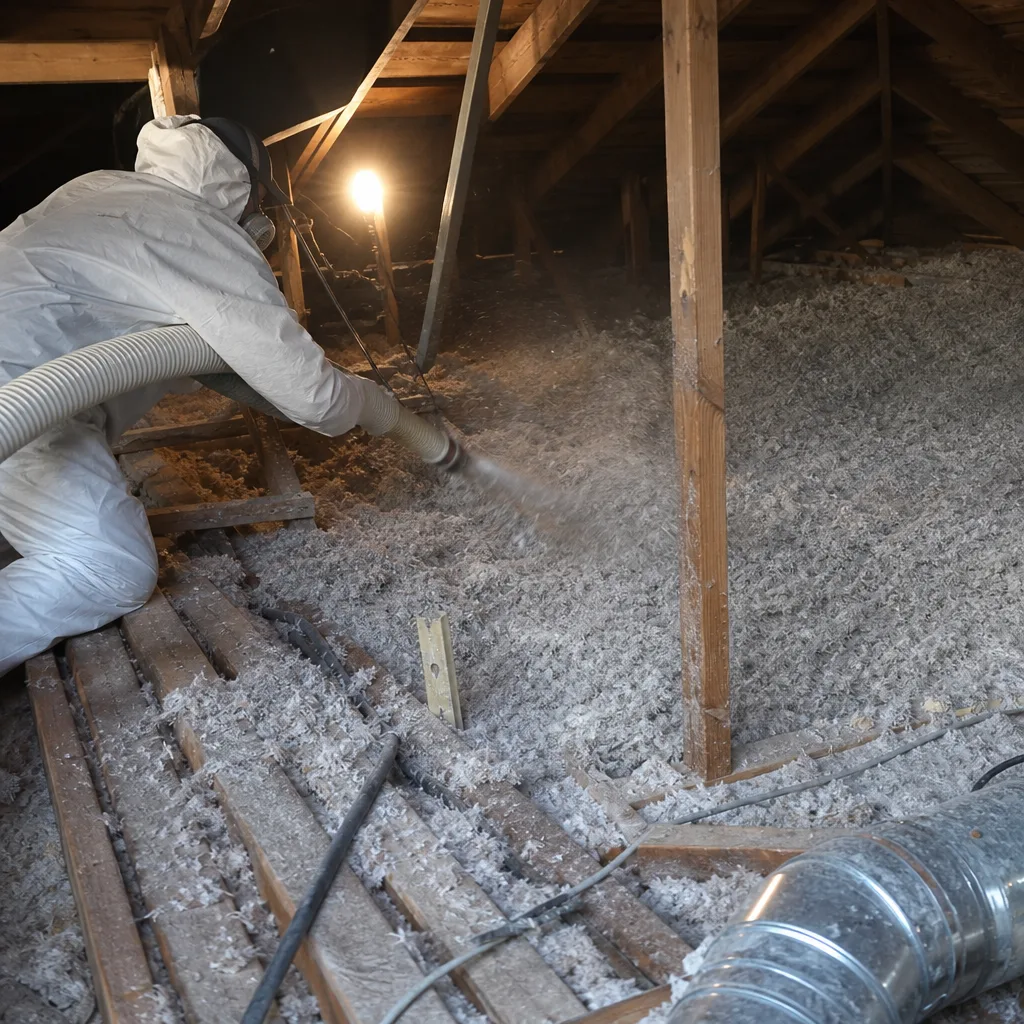
There’s no high-tension danger in crawl space encapsulation, but there is a genuine respiratory hazard: disturbed soil, rodent droppings, and active mold spores are common in failed encapsulations, and the confined space amplifies exposure. An N95 is minimum; a half-face P100 is better. We also encounter live electrical in junction boxes that previous owners relocated to the crawl space, and the occasional gas line routed below code height.
What a Campbell owner can safely check: verify your dehumidifier’s collection bucket and filter, confirm the sump pump discharges water when manually triggered, and photograph any visible barrier damage for documentation. What goes wrong in DIY: improper surface prep (damp concrete, dusty joists), tape applied below temperature spec, insufficient overlap at seams, and missing the wall-to-footing seal that is invisible from a standing position in the access hatch. Seal the leaks first. The insulation has nowhere useful to go until you do.
For a written price before any work starts, call (831) 534-3206. We also provide a Free Second Opinion on any written estimate you’ve already received.
FAQs
A properly installed 20-mil Knauf-compatible barrier with sealed seams and integrated dehumidification typically performs 15 to 20 years in Campbell’s climate, though the clay-heavy soils near the Pruneyard corridor can stress pier wraps to the point of needing inspection at year 10. Call (831) 534-3206 for an assessment of your specific installation.
Localized repair is viable when damage is limited to under 15% of the total barrier area, the existing material is still supple (not embrittled), and the failure mode is mechanical tear rather than adhesive breakdown across multiple seams. Most Campbell jobs we assess require full replacement because tape degradation propagates beyond the visible failure point. We evaluate this during our free estimate and document our recommendation with photos.
Most residential crawl spaces in Campbell are completed in one to two working days: day one for barrier removal, surface prep, and any mold remediation; day two for barrier installation, seam sealing, and dehumidifier integration. Larger footprints or restricted access (hatch dimensions under 24 inches) may extend to a third day. We provide a written timeline with our flat price before work begins.
We carry Knauf-compatible 12-mil and 20-mil vapor barrier rolls, both 6-inch and 9-inch edge-fold specifications, acrylic seam tape rated for below-grade application, and mechanical fasteners for pier wraps on every truck serving Campbell. For Knauf-specific dehumidifier integration components or unusual barrier widths, we can typically source within 24 hours through regional distribution. Call (831) 534-3206 to confirm availability for your specific model.
Written by Wes Okafor, Owner & Lead Insulation Technician, Topside Attic Insulation Campbell at Topside Attic Insulation Campbell, serving Campbell and nearby areas.