
CertainTeed Crawl Space Encapsulation: The Campbell Owner’s Guide
Most CertainTeed crawl space encapsulation systems we replace in Campbell run between $3,800 and $7,200 installed, depending on liner grade and whether the foundation needs active dehumidification. We stock CertainTeed-compatible vapor barrier rolls, seam tape, and dehumidifier tie-ins on our trucks, and we can usually inspect and quote same-day. Homeowners typically notice the problem first as a musty smell that returns within 48 hours of running a portable dehumidifier, or they spot pooling water along the Campbell concrete perimeter where the liner has pulled from the wall.
Wes Okafor and our crew have handled encapsulation failures across Campbell’s older neighborhoods near the Pruneyard Plaza corridor, where post-war crawl spaces with irregular stem walls make liner adhesion a recurring issue. The fix isn’t always the liner itself. Often it’s the prep work that was skipped.
Which CertainTeed Models This Applies To
CertainTeed’s crawl space products fall into two main lines: the CertaSpray closed-cell spray foam systems (typically 2.0 lb density, applied at 2-3 inches for vapor barrier qualification) and the MemBrain smart vapor retarder line, which is a rolled polyamide film rather than a sprayed assembly. For encapsulation, we’re usually talking about the CertaSpray 1000 series or retrofit jobs where a previous contractor paired CertainTeed open-cell foam with a supplemental polyethylene ground liner.
To identify what you have, check the rim joist or access door for a CertainTeed specification tag. CertaSpray jobs will show an R-value stamp and application date; MemBrain installations carry a lot number beginning with “MB-” and an installer’s certification code. If the tag is missing, measure the foam thickness at a cut edge. CertaSpray 1000 cures to a light yellow; open-cell alternatives from other brands are usually white or off-white and will absorb water, which is one way to spot a mismatch in a damp Campbell crawl space.
We carry both OEM CertainTeed materials and compatible aftermarket equivalents from Johns Manville and Owens Corning. For Campbell’s clay-heavy soil and seasonal groundwater rise, we often spec a 20-mil reinforced polyethylene ground liner even when the original job used CertainTeed’s standard 6-mil poly, because the thicker material resists puncture from the sharp aggregate common in local foundation prep.
Signs Your CertainTeed Crawl Space Encapsulation Is Failing
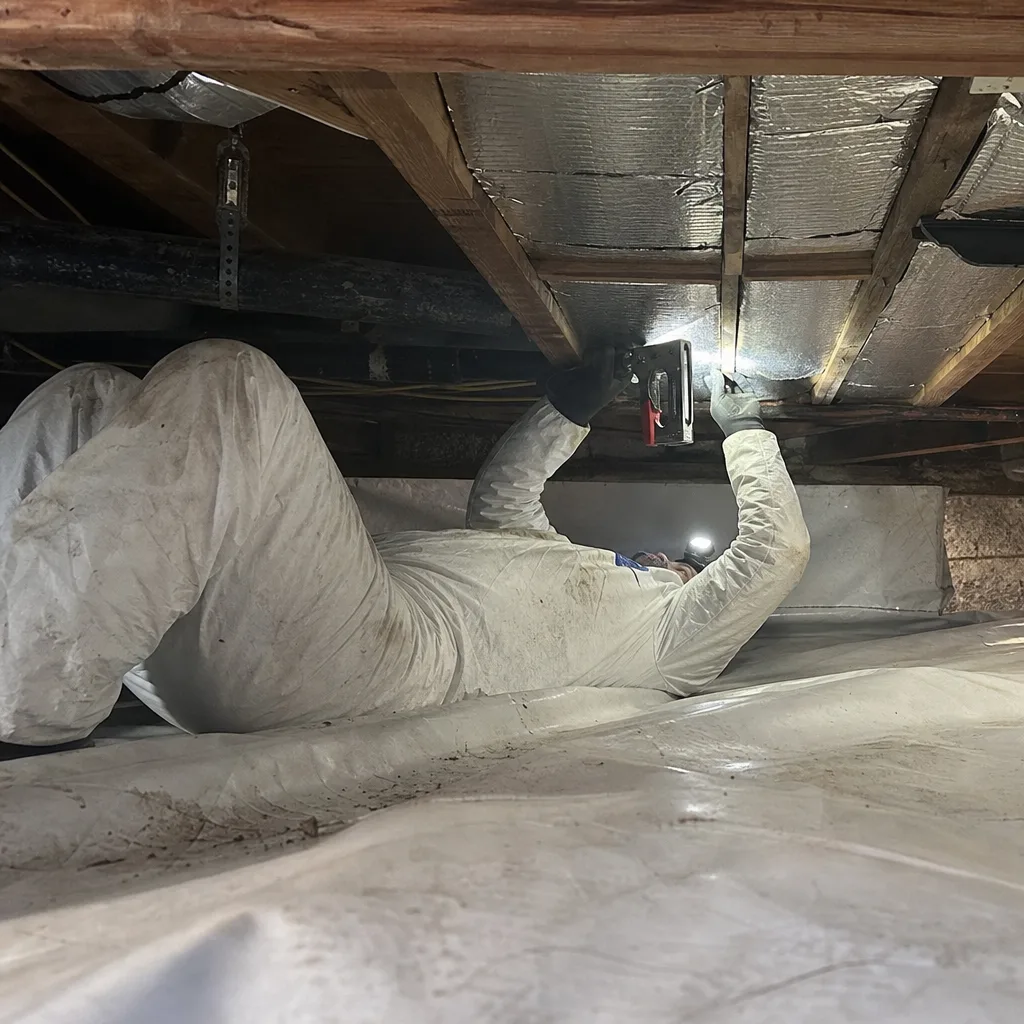
- Musty odor returning within days of dehumidifier use. This means your vapor barrier has lost its seal somewhere, likely at the wall-to-ground liner junction or around a pier pad. The dehumidifier is working overtime to dry air that’s being replenished from the soil below.
- White chalky residue on the liner surface. This is efflorescence, mineral salts pulled through the concrete by vapor drive. It indicates your barrier’s perm rating has degraded or was never properly sealed at the seams. In Campbell’s climate, this accelerates when winter rains saturate the soil and summer heat drives moisture upward.
- Sagging or pooled areas on the ground liner. Water is getting between the liner and soil, either from a perimeter breach or because the original installer didn’t grade the crawl space floor to a sump point. Standing water voids most manufacturer warranties and breeds mold in 72 hours.
- Insulation falling from rim joists. If your encapsulation included CertainTeed fiberglass batts at the band joist, high humidity will cause them to delaminate and drop. The encapsulation has failed as a system; the air in the crawl space is no longer conditioned or dry.
- Hardwood floors cupping or buckling above the crawl space. This is late-stage failure. Moisture is migrating through the subfloor and equalizing with the living space. By the time you see this, the crawl space humidity has likely held above 70% for multiple seasons.
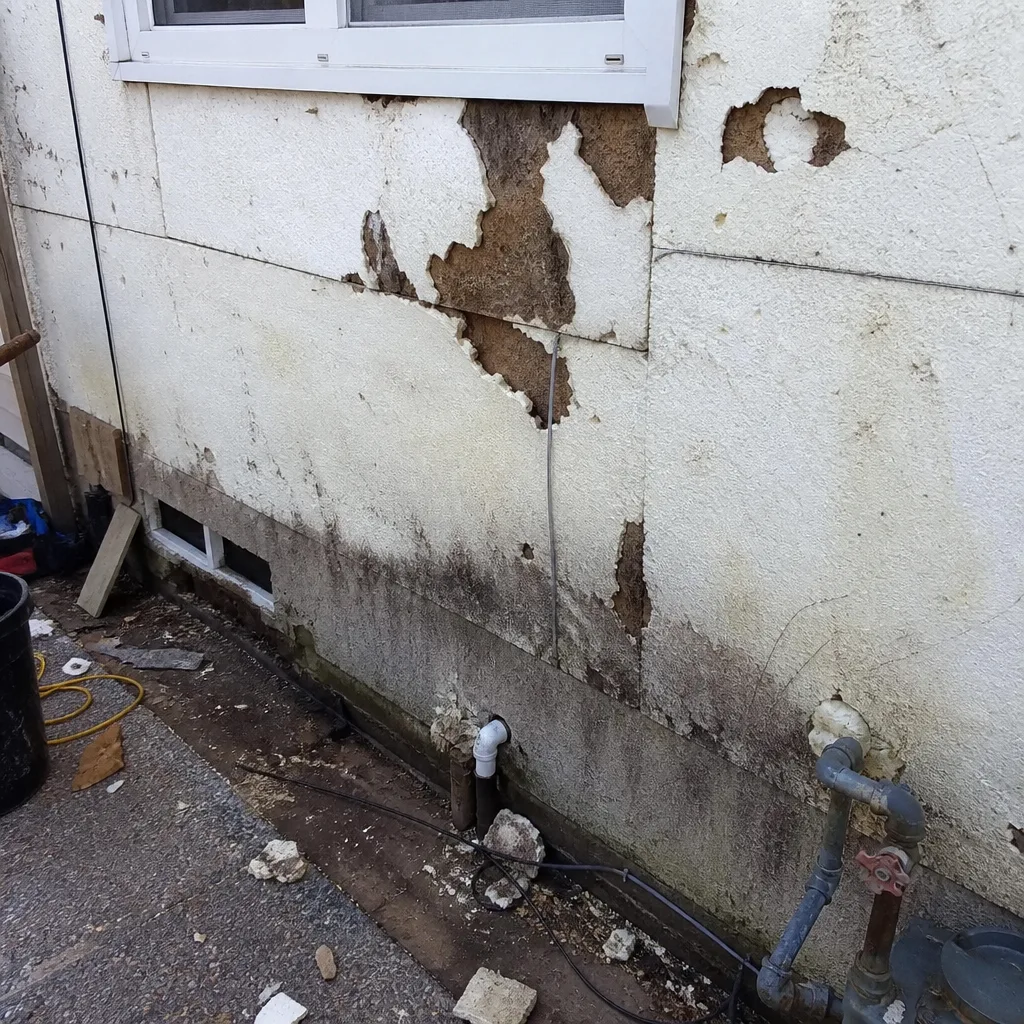 Before
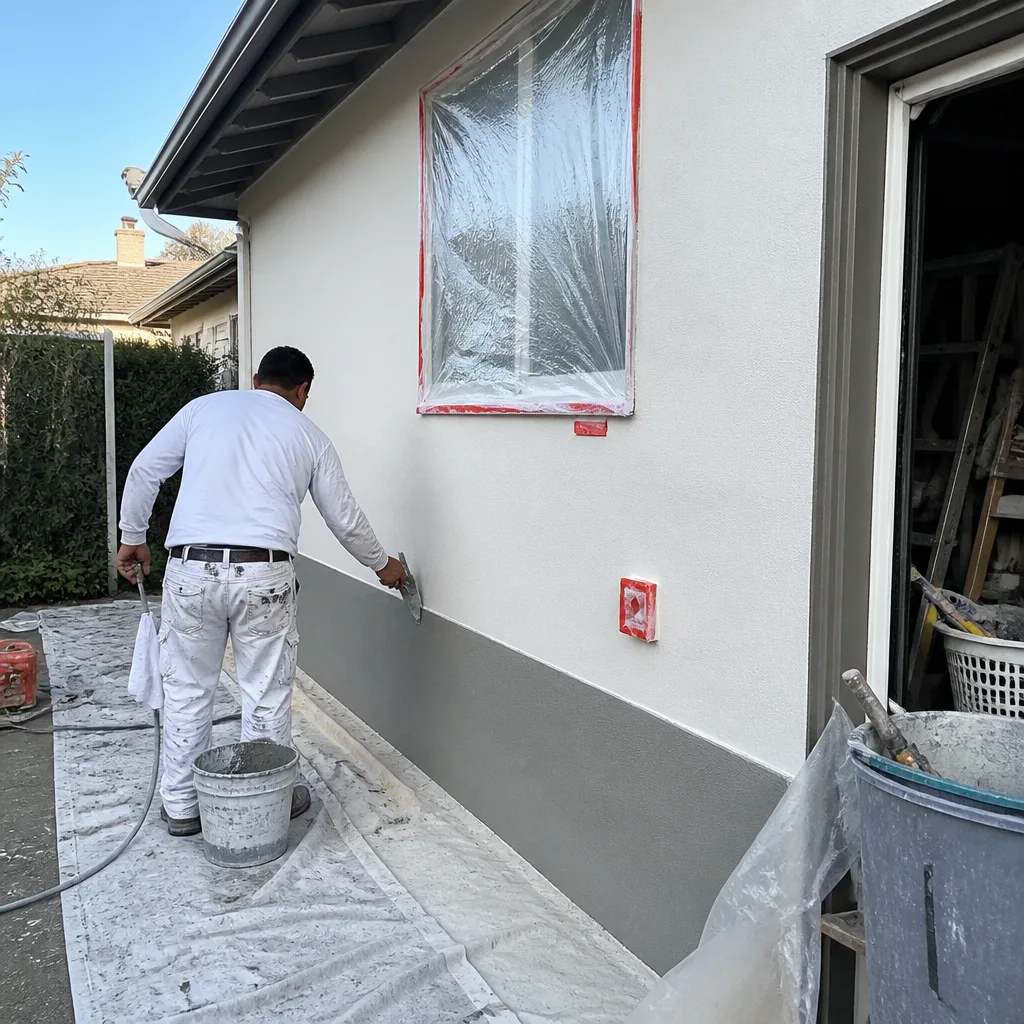 After
AfterReplacement Cost & What’s Included
| Component | Typical Range (Campbell) |
|---|---|
| Ground liner only (20-mil reinforced, up to 1,200 sq ft) | $2,400 - $4,100 |
| Full encapsulation with wall liner, seam sealing, and new dehumidifier tie-in | $4,800 - $7,200 |
| Rim joist spray foam (CertaSpray 1000, 2-inch minimum) | $1,800 - $3,400 |
| Sump pump or condensate pump addition | $890 - $1,600 |
What drives the range: crawl space height (anything under 18 inches requires crew rotation and extends labor hours), number of pier pads to wrap, and whether we need to remove failed existing material before installing new. Every quote from us is a written price before any work starts, per Haven Standard Clause 1. No exceptions. The 365-Day Done Right Promise covers all encapsulation work, and you’ll receive a Documented Photo Record showing before condition, seam detail shots, and final coverage.
On applicable jobs, we run a blower-door test before and after any air-sealing work at the rim joist. Most Campbell homes in the 1,200-1,800 square foot range test at 3,800-5,200 CFM50 before sealing and drop 15-30% after proper rim joist treatment. You get both numbers in writing.
DIY or Call Us?
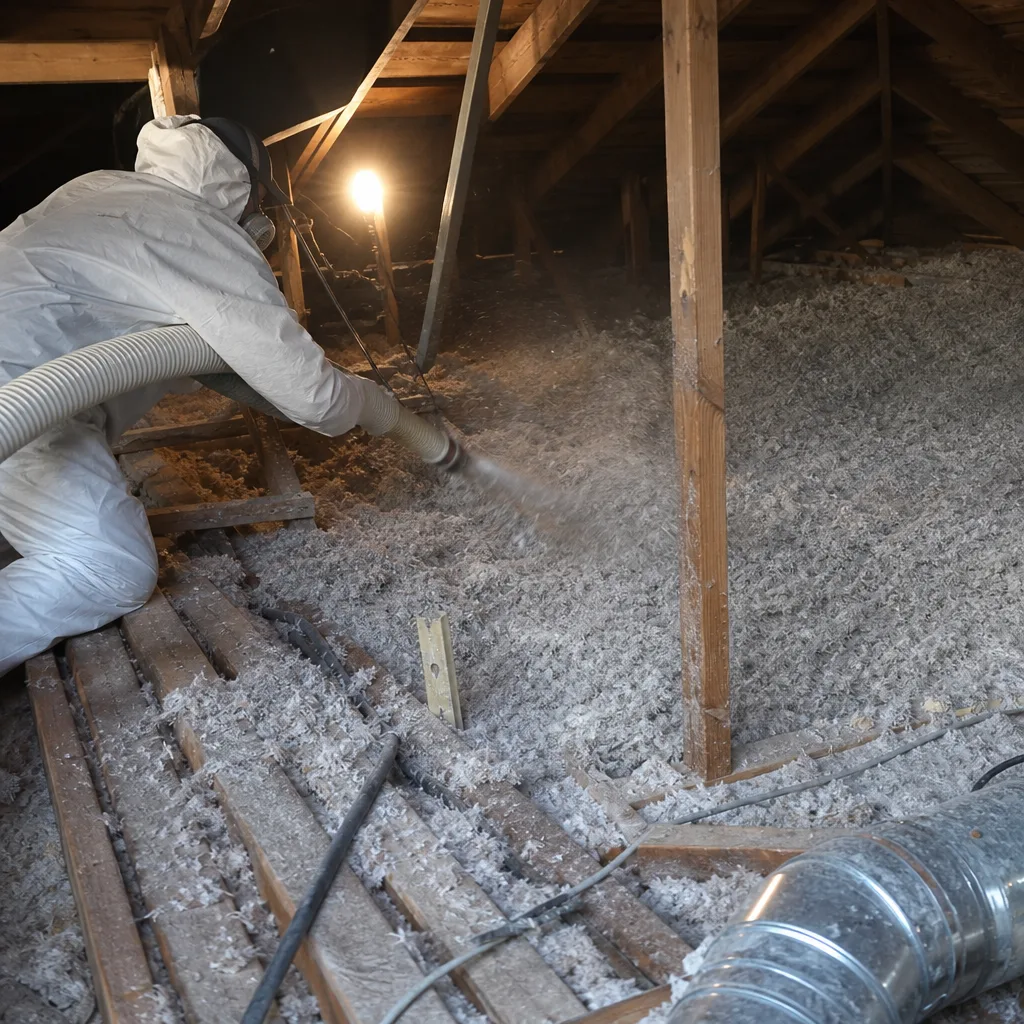
There’s a short list of what a Campbell homeowner can safely check: verify your dehumidifier is running and draining, look for obvious liner tears at the access door, and confirm your crawl space vents are sealed if this was sold as a closed encapsulation. Beyond that, the work gets problematic fast.
Removing old liner means working in confined space with potential mold exposure, sharp foundation edges, and electrical runs you can’t see from the access. Installing new liner requires heat-seaming or pressure-sensitive tape at seams that must hold for 15+ years, and wall adhesion on rough concrete demands mechanical fastening patterns most homeowners don’t have the tools to execute. The “seal the leaks first” principle applies here too: if your rim joist is still leaking conditioned air, any new liner investment is partially wasted.
We carry CertainTeed-compatible materials and alternatives from Reflectix on our trucks. Call (831) 534-3206 for a same-day inspection and written price. Estimates are free, and we offer a Free Second Opinion on any written estimate you’ve already received.
FAQs
A properly installed CertainTeed encapsulation system should perform for 15-20 years in Campbell’s climate, though the dehumidifier component typically needs replacement at 7-10 years. The liner itself fails faster when the original installer skipped seam sealing or used inadequate mil thickness for local soil conditions. Call (831) 534-3206 and we’ll inspect your existing system and tell you honestly whether you’re mid-life or near end-of-life.
Patch repairs work for isolated punctures or small seam failures under 10% of total coverage. If you’re seeing widespread efflorescence, multiple sag points, or liner degradation across more than 30% of the surface, partial repairs create more seams that become future failure points. We document this with photos and give you both options in writing.
Most Campbell crawl spaces under 1,500 square feet take two to three days: one day for removal and surface prep, one day for liner installation and seam work, and a partial day for dehumidifier commissioning and final inspection. Tight crawl spaces or those requiring sump pump work add a day. We give you a specific schedule in your written scope before work starts.
We stock 20-mil reinforced ground liner, seam tape rated for below-grade use, mechanical fasteners for stem wall attachment, and dehumidifier drain hardware on every Campbell-area truck. For OEM CertainTeed CertaSpray foam, we order to spec after measuring your rim joist depth and square footage, since the two-component kits have a limited pot life once opened. We also stock compatible alternatives from Johns Manville and Owens Corning if your timeline is urgent.
Topside Attic Insulation Campbell is an independent service provider. We are not affiliated with CertainTeed Corporation. We source materials from multiple manufacturers including CertainTeed, Owens Corning, Johns Manville, Knauf, Rockwool, Icynene, Demilec, GreenFiber, and Reflectix, with no proprietary lock-in.
Written by Wes Okafor, Owner & Lead Insulation Technician, Topside Attic Insulation Campbell at Topside Attic Insulation Campbell, serving Campbell and nearby areas.