
Icynene Vapor Barrier Installation: The Campbell Owner’s Guide
Icynene vapor barrier installation in Campbell typically runs $2,800-$4,600 for a standard crawl space or attic application, and we stock the full Icynene membrane line for same-day starts on most jobs. Most Campbell homeowners discover the problem when they pull back insulation near the rim joist and find black spotting on the subfloor, or when their energy bill jumps 20% after a rainy winter without any obvious cause. The 1970s-1990s builds near the Pruneyard Plaza corridor and along Winchester Boulevard are especially prone to this; they were insulated before modern vapor barrier standards existed, and the original kraft-faced fiberglass has often become a moisture trap against the Icynene foam.
Which Icynene Models This Applies To
Icynene produces two vapor barrier membrane series relevant to Campbell homes: the VB-6 mil reinforced polyethylene for crawl space encapsulation, and the VB-10 mil cross-laminated HDPE for conditioned attic applications over open-cell spray foam. The critical compatibility gotcha is matching the membrane to the foam density already in place. Open-cell Icynene (LD-C-50, the standard residential formula) requires a Class II vapor retarder or better in Climate Zone 3, which Campbell sits at the edge of; closed-cell Icynene (MD-C-200) acts as its own vapor barrier and should not have an additional impermeable layer installed against it, or you’ll trap moisture in the assembly.
To identify what you have, check the spray foam surface for the Icynene batch label (usually on a tag near the access hatch) or measure the foam density with a simple pinch test: open-cell feels spongy and rebounds slowly, closed-cell is rigid like stale bread. We carry both OEM Icynene membrane rolls and StegoWrap as a quality aftermarket equivalent; the StegoWrap 15 mil tests nearly identical on permeance but costs less per square foot. For Campbell’s clay-heavy soil and seasonal groundwater rise, we typically spec the 10 mil minimum regardless of code minimum.
Signs Your Icynene Vapor Barrier Installation Is Failing
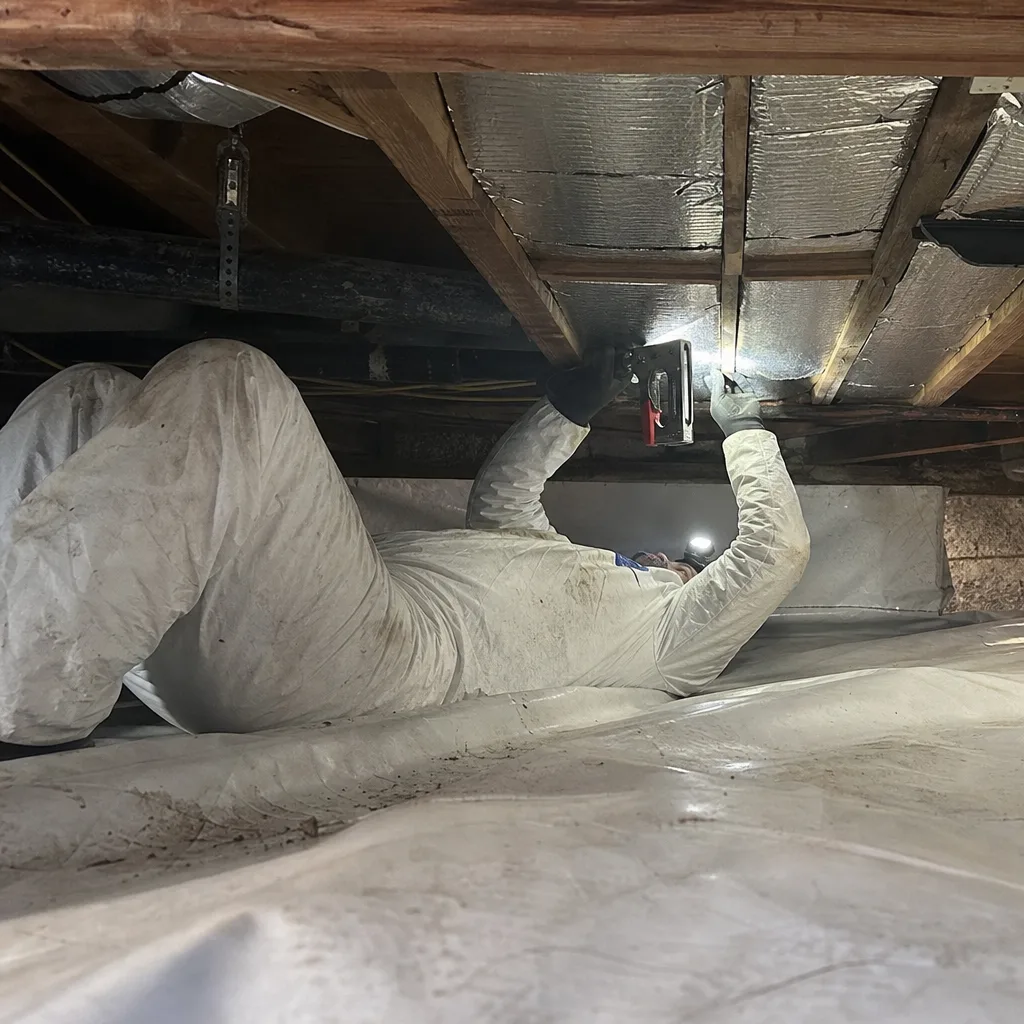
- Musty odor that intensifies after rain. This usually means the original vapor barrier has separated at the seams or pulled away from the foundation wall, letting soil moisture migrate directly into the conditioned space. Campbell’s winter rains saturate the clay soils for weeks, and even a 6-inch gap at the perimeter is enough to raise relative humidity above 70%.
- Condensation droplets on the underside of the Icynene foam. When a vapor barrier is missing or compromised in an attic application, warm moist interior air hits the cold roof deck in January and February. The foam itself doesn’t absorb this moisture, but the water runs down to the drywall and stains the ceiling below.
- Soft or crumbling OSB subfloor in crawl spaces. This is advanced failure. The vapor barrier failed years ago, and seasonal wet-dry cycles have degraded the wood fiber. We’ve replaced subfloor in Campbell homes near Campbell Avenue where the original 4-mil poly disintegrated after 12 years of UV exposure through foundation vents.
- Insulation performance drop without visible gaps. The Icynene foam itself is intact, but moisture has degraded its effective R-value. Wet open-cell foam drops from R-3.7 per inch to roughly R-2.2; you feel it as uneven temperatures between rooms that used to be consistent.
- White salt deposits (efflorescence) on foundation walls. This indicates vapor drive is active and uncontrolled. The existing barrier, if there is one, has lost adhesion or was never sealed to the wall properly. In Campbell’s older ranch homes, we see this where the original installer simply tucked the poly into the sill plate without mechanical fastening.
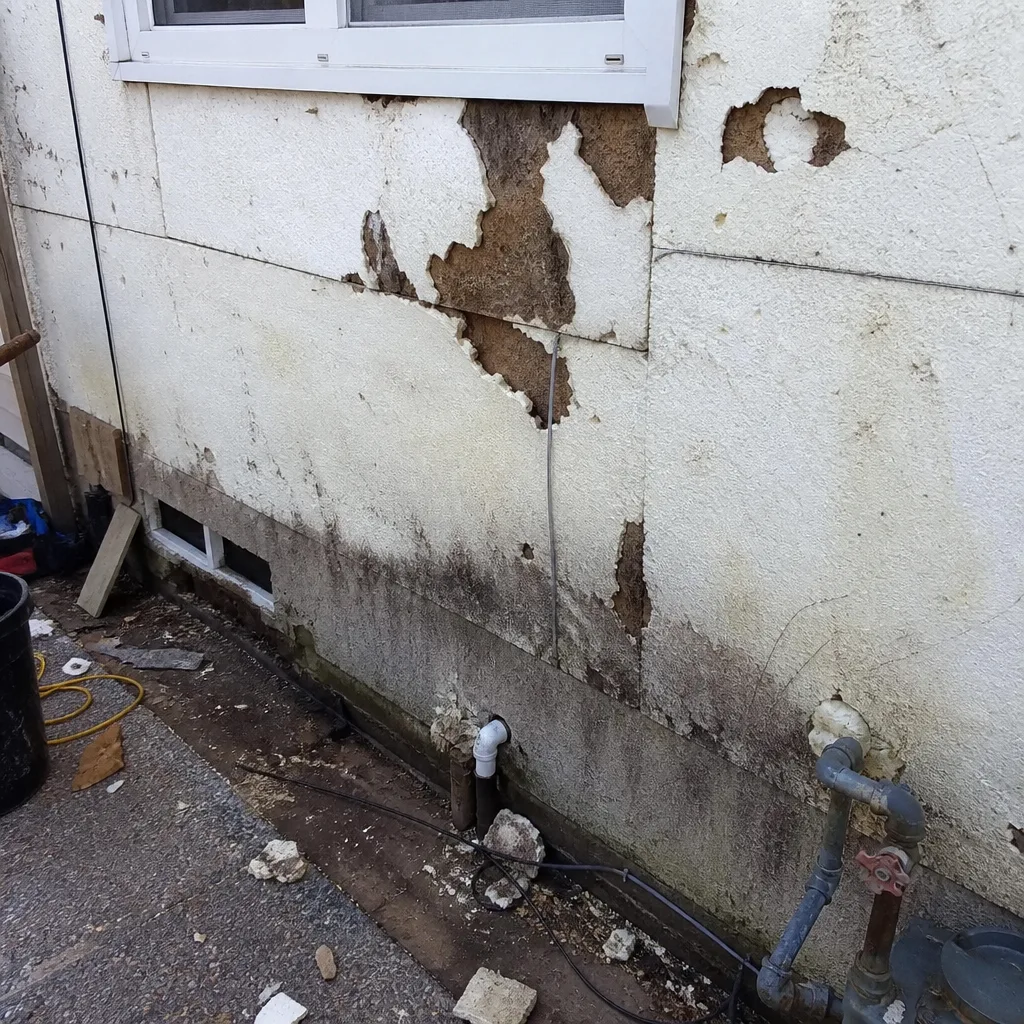 Before
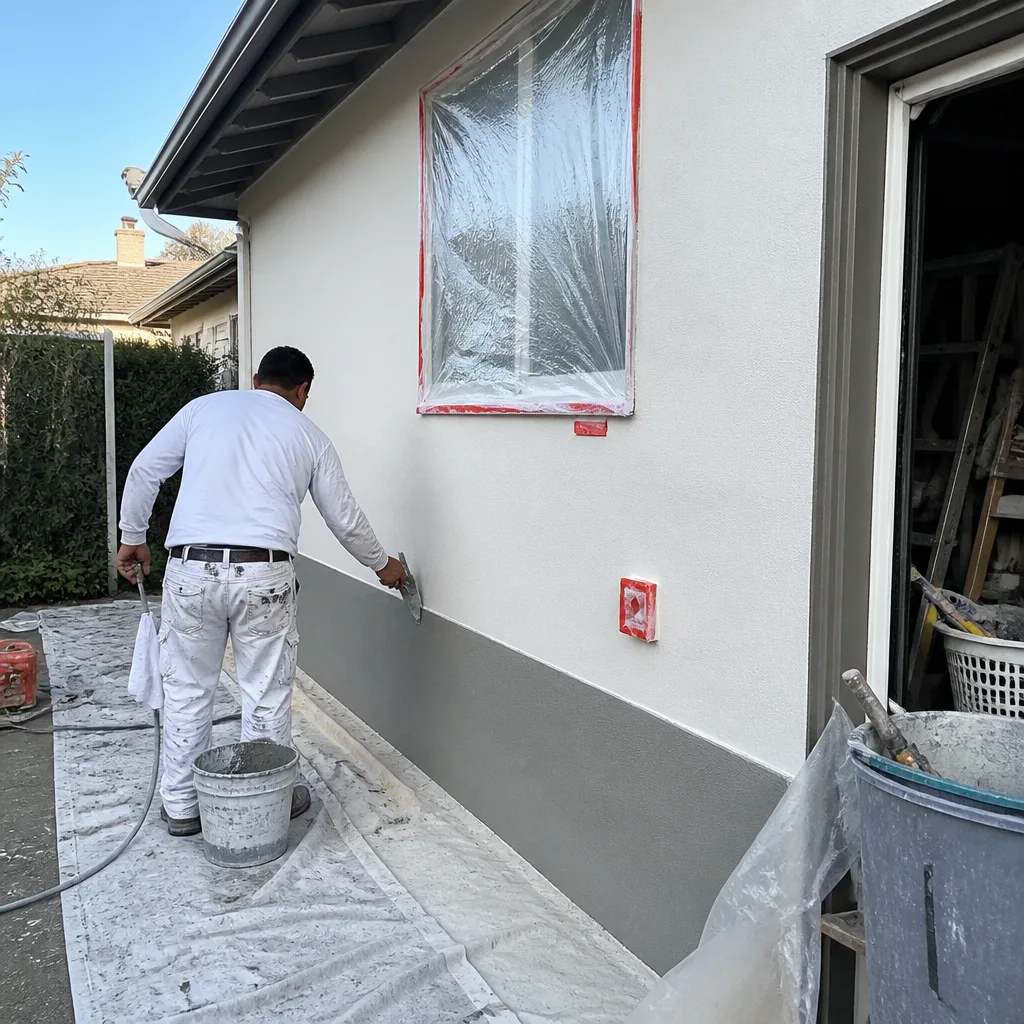 After
AfterReplacement Cost & What’s Included
Most Icynene vapor barrier installations in Campbell run between $2,800 and $4,600 for a full crawl space encapsulation, or $1,900-$3,200 for an attic membrane overlay on existing foam. The range depends on three factors: square footage, accessibility (crawl spaces under 18 inches add labor), and whether we need to remove degraded existing material first.
| Component | Campbell Price Range |
|---|---|
| VB-10 mil membrane (materials only) | $0.85-$1.15/sq ft |
| VB-6 mil membrane (materials only) | $0.55-$0.75/sq ft |
| Labor: full encapsulation, standard access | $1,800-$2,800 |
| Labor: attic overlay, walkable | $1,200-$1,900 |
| Existing barrier removal/disposal | $400-$700 |
| Foundation wall seam sealing (butyl tape) | $2.50-$3.50/linear ft |
Every job includes our Documented Photo Record: before, during, and after shots of the membrane placement, seam overlaps, and wall terminations. Under Haven Standard Clause 1, you get a written price before any work starts and a written warranty when the crew leaves. The 365-Day Done Right Promise covers any seam separation or adhesion failure. Call (831) 534-3206 for an exact quote on your specific square footage - estimates are free.
DIY or Call Us?
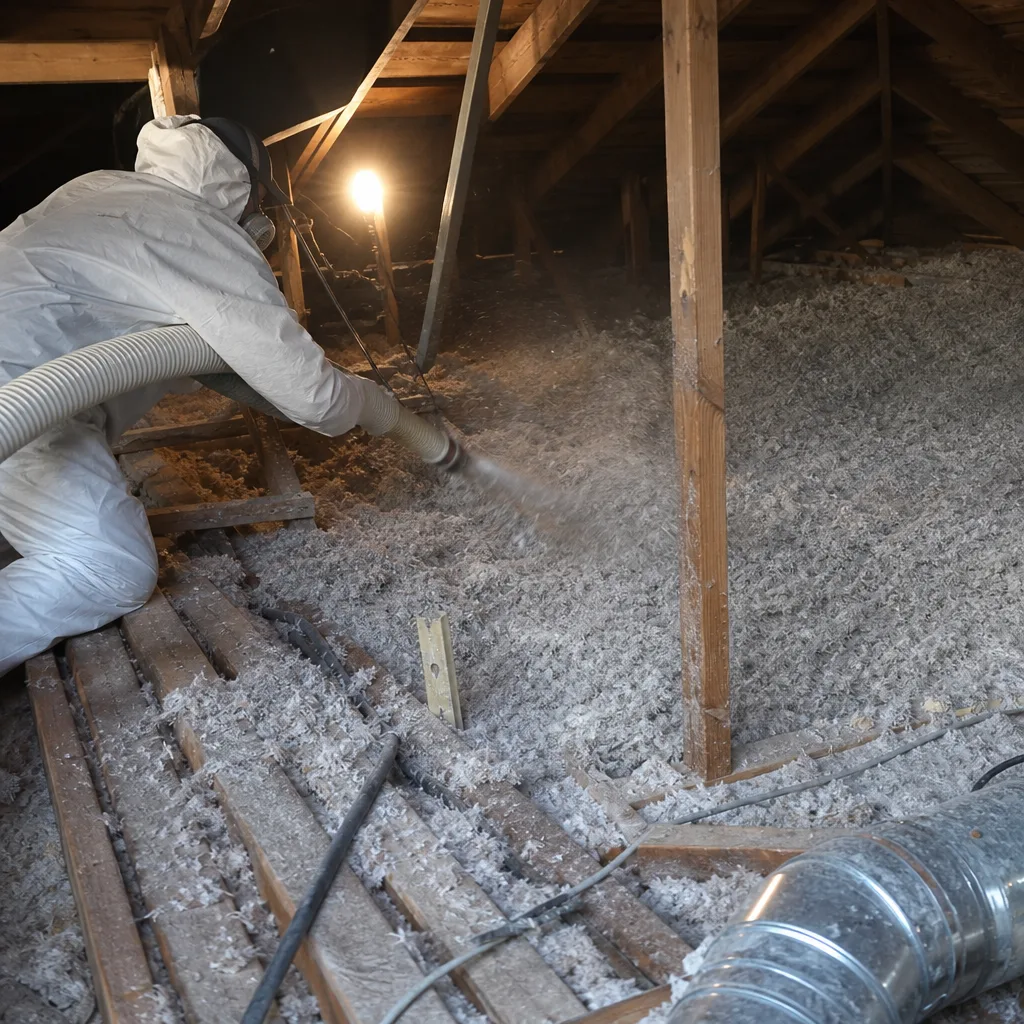
What you can safely check yourself: confirm whether you have open-cell or closed-cell Icynene (the pinch test above), measure your crawl space or attic square footage, and photograph any visible membrane damage for reference. Do not enter a crawl space with active mold bloom or compromised structural supports.
Where DIY goes wrong: vapor barrier installation looks like unrolling plastic, but the failure points are nearly always in the details. Seams need 6-inch overlaps with double-sided butyl tape, not duct tape, which degrades in Campbell’s summer attic temperatures. Wall terminations must be mechanically fastened and sealed to prevent the “tucked poly” failure we see constantly. And critically, you must verify that the assembly dries in the correct direction for your climate zone; adding a vapor barrier on the wrong side of the foam in a mixed-humidity environment traps moisture and rots the assembly from inside. We’ve been called to fix three DIY encapsulations in Campbell in the past two years where the homeowner installed the barrier correctly but on the wrong side of the insulation stack.
Seal the leaks first. The insulation has nowhere useful to go until you do. Wes Okafor and our crew run a blower-door test before and after every job - a pressurization measurement that shows, in one number, exactly how much air your envelope was losing - and we hand you a printed report with both readings so there’s no ambiguity about what changed.
FAQs
In Campbell’s Climate Zone 3 conditions, a properly installed 10 mil reinforced polyethylene barrier lasts 20-25 years in a crawl space and 15-20 years in an attic application, with UV exposure being the primary degradation driver in attics. The 6 mil product degrades roughly 30% faster. Call (831) 534-3206 if you’re unsure of your current membrane’s age - we can inspect and document its condition.
Spot repairs work only when the original membrane is less than 10 years old, the damage is limited to seam separation or small punctures, and the surrounding material still passes a tug test (no crumbling or tearing). If the poly has become brittle or the failure involves wall detachment, full replacement is the only durable fix. We offer free second opinions on any written estimate you’ve received for either approach.
Most Campbell crawl space encapsulations take one to two days; attic membrane overlays on walkable surfaces typically finish in a single day. Jobs requiring existing material removal or sub-18-inch crawl access add a half day. We stock Icynene-compatible membrane on every truck, so there’s no supplier delay.
Yes. We carry VB-6 mil and VB-10 mil reinforced membrane rolls, StegoWrap 15 mil as an aftermarket equivalent, butyl seam tape, mechanical fastening systems, and termination bars on every service vehicle. Topside Attic Insulation Campbell is an independent service provider, not affiliated with Icynene; we source through authorized distribution and also stock Reflectix radiant barrier products for hybrid assemblies.
Ready to stop the moisture problem? Call (831) 534-3206 for a free estimate. We’ll measure your space, identify your existing Icynene foam type, and give you a written price before any work starts - that’s Haven Standard Clause 1, no exceptions. Every job closes with a Documented Photo Record and, where applicable, before-and-after blower-door numbers so you can verify the result yourself.
Written by Wes Okafor, Owner & Lead Insulation Technician, Topside Attic Insulation Campbell at Topside Attic Insulation Campbell, serving Campbell and nearby areas.