
Demilec Radiant Barrier Installation: The Campbell Owner’s Guide
Demilec radiant barrier installation in Campbell typically runs $1,800-$3,400 for a complete attic application depending on square footage and whether your attic floor needs air sealing first. We stock Demilec-compatible radiant barrier materials on our trucks and can usually schedule installation within 48 hours, often next day for homes near the Pruneyard or along Winchester Boulevard. Most Campbell homeowners discover their existing radiant barrier is failing when their upstairs bedrooms won’t cool below 78°F even with the AC running continuously, or when their summer electric bills jump 30-40% compared to the previous year.
Which Demilec Models This Applies To
Demilec produces radiant barrier products primarily through their Heatlok HFO and Sealection 500 spray foam lines with integrated reflective components, plus standalone Demilec Reflective foil-faced assemblies used in hybrid attic systems. The key identifier is the product label on any existing foam or foil: Demilec stamps a 10-digit batch code and R-value designation that tells us which reflective substrate you’re working with. For homes built between 2010 and 2019 in Campbell, we most commonly see the Heatlok XT with radiant facing, a 2.0 lb density closed-cell foam with an aluminum-oxide reflective skin.
The OEM-versus-aftermarket question matters less with Demilec than with some brands because Demilec’s reflective facing is a proprietary bonded layer, not a separate product you can source independently. We use factory-authorized Demilec reflective materials or, where the substrate has degraded beyond salvage, we transition to Owens Corning RadiantBarrier or Reflectix equivalents with comparable emissivity ratings (0.03-0.05). The gotcha: Demilec’s early-2010s reflective facing sometimes delaminated in South Bay attics where summer roof deck temperatures exceed 160°F. If your foil is peeling in sheets, the substrate has failed and patching is temporary at best.
To identify your specific assembly, check the attic for any exposed label remnants, measure the foam thickness if visible (1.5″, 2″, or 3.5″ are standard), and note whether the reflective surface faces the living space or the roof deck. Orientation matters for compatibility.
Signs Your Demilec Radiant Barrier Installation Is Failing
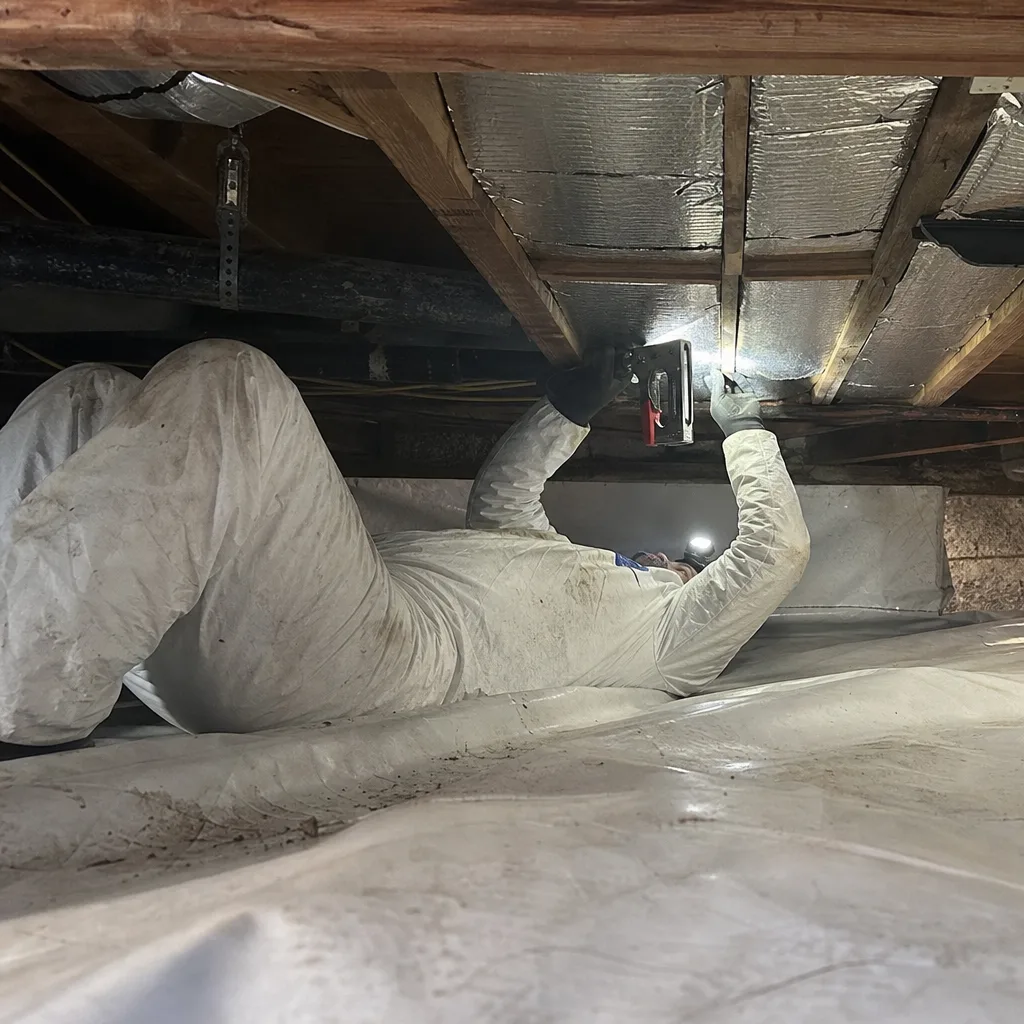
- Upstairs rooms stay hot past 9 PM. A functioning radiant barrier blocks 95% of radiant heat transfer from the roof deck. When the reflective surface oxidizes or delaminates, that heat soaks into insulation below and reradiates into living space for hours after sunset. We see this pattern consistently in Campbell’s 1960s-1980s ranch homes with original Demilec applications.
- AC runs continuously from 2 PM to 8 PM. Your cooling system is fighting roof deck heat that should have been reflected back outward. The blower-door test - a pressurization reading that shows, in one number, how much air your building envelope is losing - often reveals this isn’t just a radiant barrier problem; unsealed top plates and can light penetrations are letting that heat-driven attic air pressurize into conditioned space.
- Foil facing is dusty, brittle, or flaking. Demilec’s reflective layer degrades to a chalky white when the aluminum-oxide coating fails. Dust accumulation alone doesn’t ruin performance, but brittle foil that cracks when touched has lost its low-emissivity surface. Campbell’s dry summers accelerate this compared to more humid climates.
- Hot spots on the ceiling directly below roof valleys. Valleys concentrate heat, and a failed radiant barrier shows its weakness there first. In homes near Campbell Avenue with complex rooflines, we map these with an infrared camera during our initial assessment.
- Insulation below the barrier is compressed or moisture-stained. When radiant barrier fails, the insulation beneath takes the full thermal load. Compressed blown-in or discaced batts are collateral damage, not root cause. We document this with photos you’ll receive in your job record.
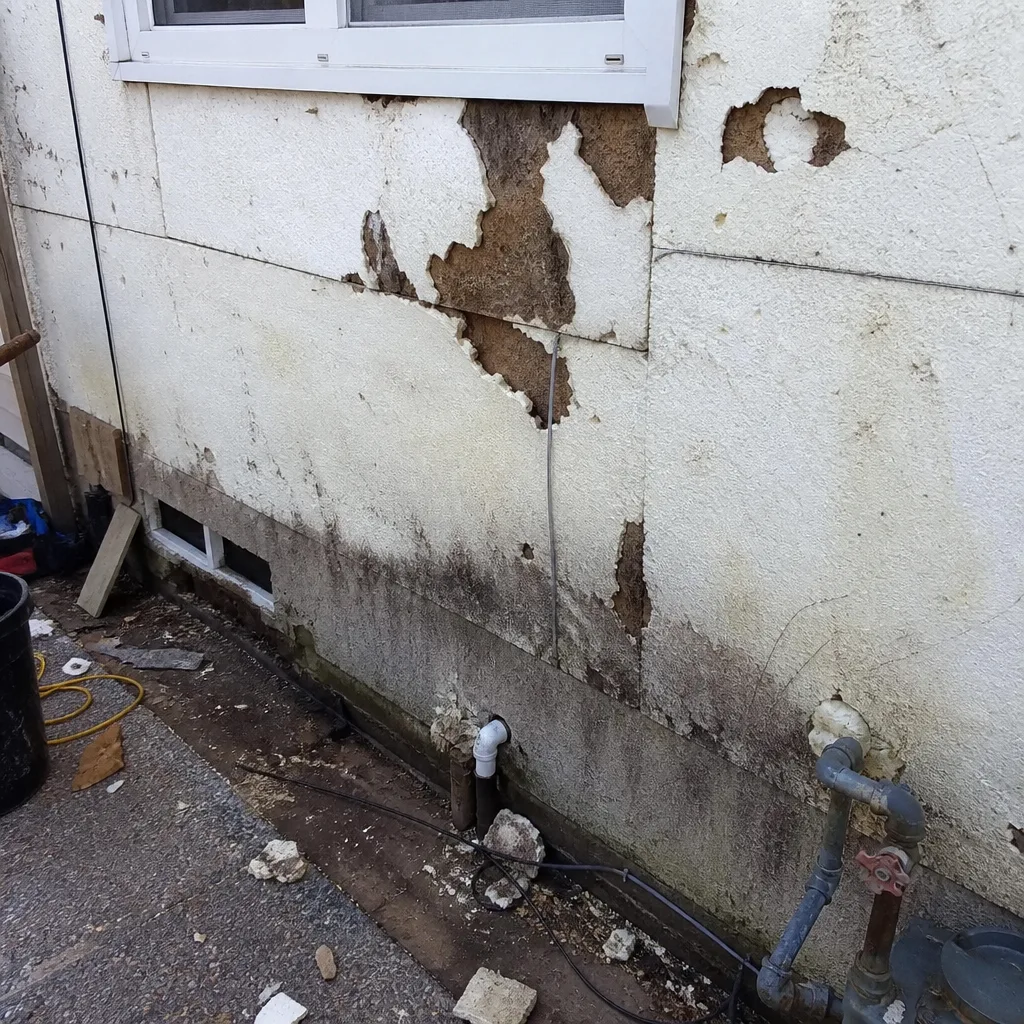 Before
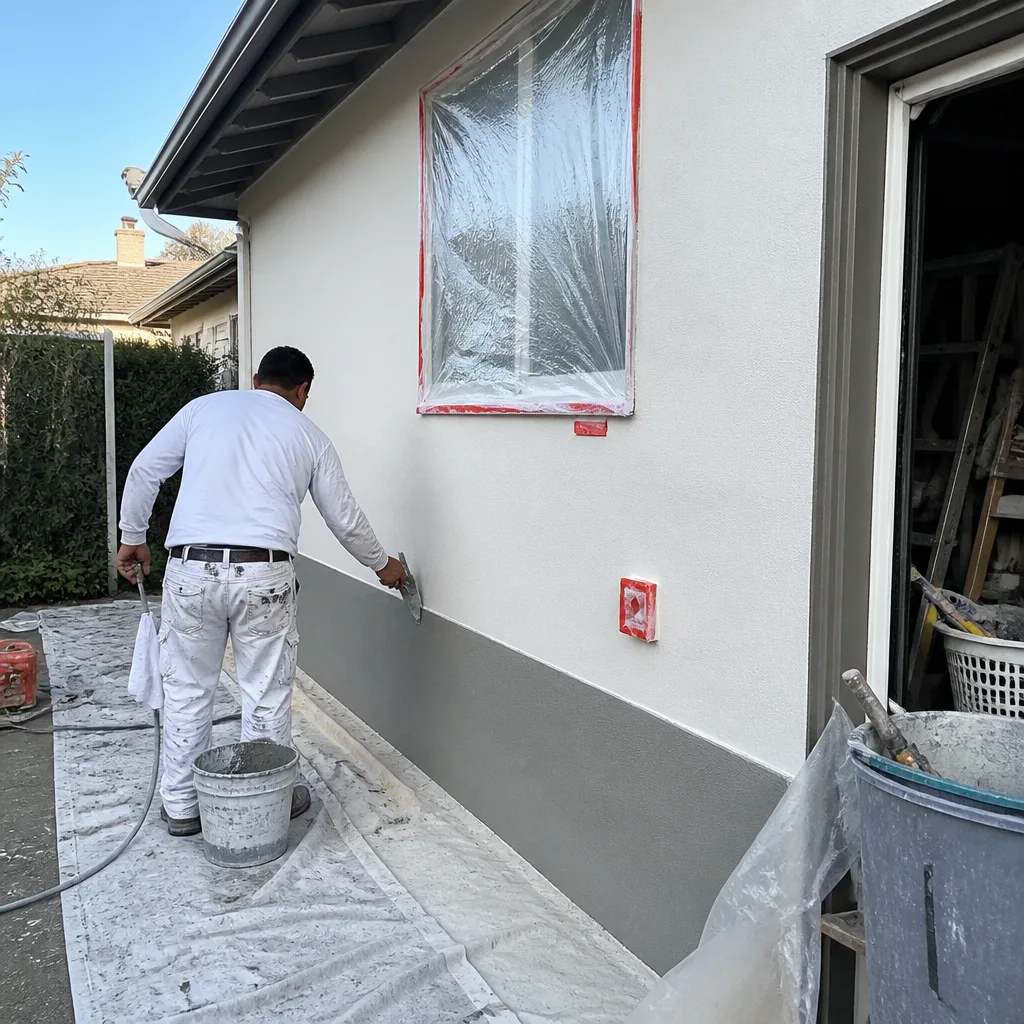 After
AfterReplacement Cost & What’s Included
| Component | Campbell Price Range |
|---|---|
| Demilec-compatible radiant barrier material (per 1,000 sq ft attic) | $680-$1,100 |
| Attic air sealing (top plates, penetrations, can lights) | $420-$780 |
| Labor for removal, prep, and installation | $520-$920 |
| Blower-door test with printed before/after report | Included |
| Documented Photo Record | Included |
| Typical total installed | $1,800-$3,400 |
The range depends on three factors: attic square footage, whether we need to remove degraded existing material, and how much air sealing the floor requires before the barrier goes in. We never install radiant barrier over an unsealed attic floor; the pressure dynamics will pull conditioned air up through gaps and negate the reflective benefit. Under Haven Standard Clause 1, you get a flat written price before anyone lifts a tool, plus a written scope and warranty. The 365-Day Done Right Promise covers all completed work. Every job closes with a Documented Photo Record and, on applicable jobs, before-and-after blower-door readings so you can verify the air-sealing result.
DIY or Call Us?
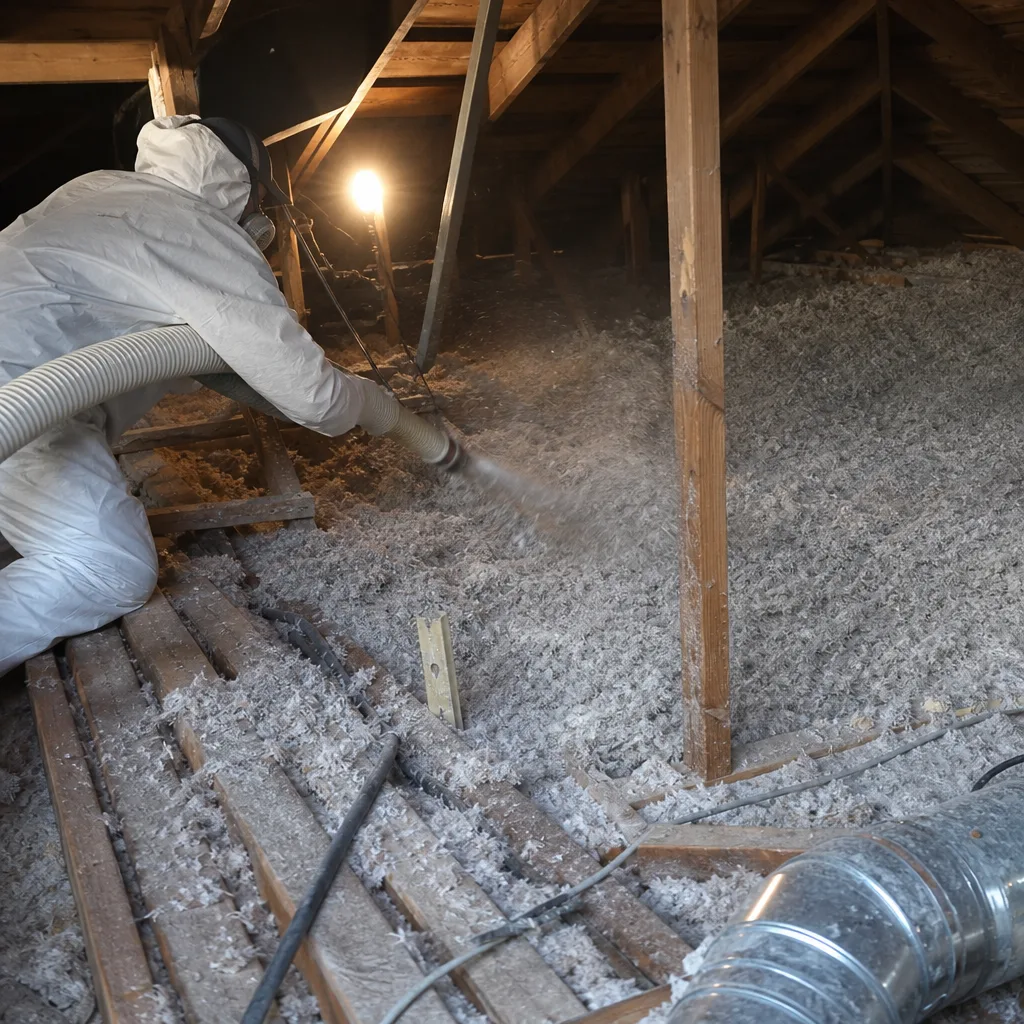
There’s a short list of what a Campbell homeowner can safely check: verify your attic access is secure, confirm bathroom exhaust fans vent outside (not into the attic), and look for obvious foil damage from the hatch. Do not walk the attic unless you can clearly see the joist layout; sheetrock ceilings won’t hold your weight.
Where DIY goes wrong with radiant barrier: improper installation traps moisture against the roof deck, voiding shingle warranties and creating mold conditions. Stapling foil to the attic floor instead of the roof deck (or proper standoffs) turns it into a conductor, not a reflector. And without a blower-door test, you cannot know whether your air sealing is sufficient to make the radiant barrier investment worthwhile. We’ve seen $2,000 in foil laid over a sieve.
Seal the leaks first. The insulation has nowhere useful to go until you do. Call (831) 534-3206 for a free estimate. We’ll read any competing quote with you - our Free Second Opinion on any written estimate is part of how we work.
FAQs
In Campbell’s dry, hot-summer Mediterranean climate, a properly installed Demilec radiant barrier typically performs for 15-25 years before the reflective surface degrades. Roof deck temperatures in South Bay attics regularly hit 150-170°F June through September, which accelerates oxidation of the aluminum-oxide coating compared to milder regions. We verify remaining performance with an infrared camera during our assessment. Call (831) 534-3206 for an exact quote - estimates are free.
Localized patching is possible if less than 10% of the surface has failed and the substrate foam is intact. We cut back to sound material and seam in new reflective facing with compatible tape. For delamination exceeding that threshold, or where the underlying foam has degraded, full replacement is more cost-effective than repeated patchwork. We document both options in your written scope before you decide. Call (831) 534-3206 for an exact quote - estimates are free.
Most Campbell homes between 1,200 and 2,400 square feet require one full day for removal, air sealing, and new radiant barrier installation. Larger homes or those with complex rooflines and multiple attic zones may extend to a second day. We schedule to complete air sealing and barrier installation as a continuous sequence; splitting the work defeats the purpose. Call (831) 534-3206 for an exact quote - estimates are free.
We carry Demilec-compatible reflective materials and equivalent-specification products from Owens Corning and Reflectix on our trucks. For specific Demilec OEM matching, we verify batch compatibility and order if needed, typically with 24-48 hour turnaround. We do not claim exclusive or preferred status with Demilec; Topside Attic Insulation Campbell is an independent service provider. Call (831) 534-3206 for an exact quote - estimates are free.
Written by Wes Okafor, Owner & Lead Insulation Technician, Topside Attic Insulation Campbell at Topside Attic Insulation Campbell, serving Campbell and nearby areas.