
Blown-In Attic Insulation in Campbell, CA
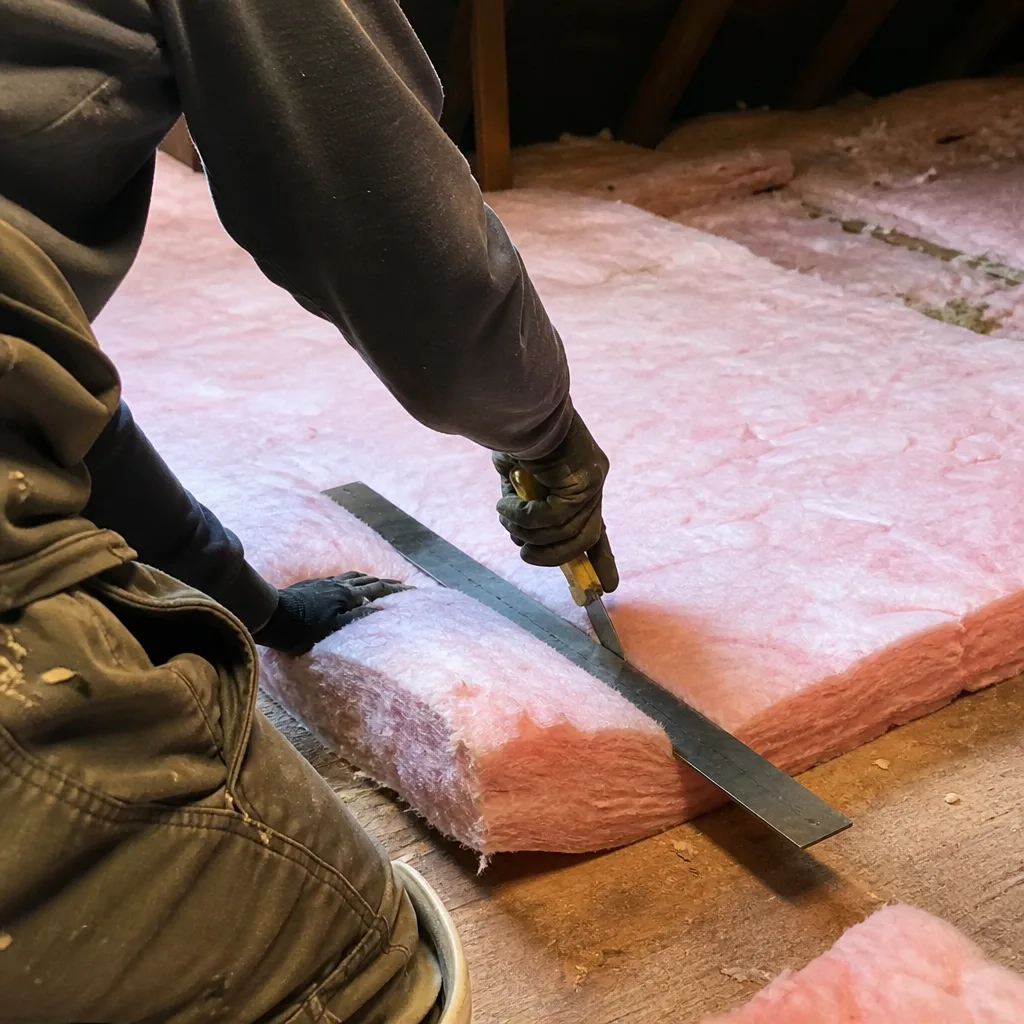
Blown-in attic insulation is a loose-fill material – cellulose or fiberglass – machine-blown to a uniform depth across your attic floor, filling gaps and irregular framing that batt rolls simply can’t reach. For most Campbell homes, a properly installed blown-in job brings the attic to R-38 or R-49, and when air sealing is done first, that R-value actually performs the way the label says it should. At Topside Attic Insulation Campbell, we don’t add insulation to an unsealed attic – not ever. Learn more about our Attic Insulation services. Air sealing of top plates, recessed can lights, and all penetrations is completed before the first pound of material goes in the hopper.
If your home runs warm upstairs in July, if your PG&E bills have climbed without a clear reason, or if you had a contractor tell you your attic “just needs more insulation” without mentioning blower-door testing, call us at (831) 534-3206 before spending a dollar. We’ll give you a written price before any work starts – that’s not a promise we make after you hire us; it’s how every job begins. Our broader Attic Insulation in Campbell work covers the full picture, but this page covers blown-in specifically.
When You Need Blown-In Attic Insulation
- Your attic reads below R-19. Most Campbell homes built before 1990 have settled, compacted insulation that measures R-13 or less when we probe it. At that level, your HVAC system is fighting a losing battle through most of summer.
- You have existing batts that are falling, displaced, or moisture-damaged. Batts that have lost contact with the surface they’re covering do almost nothing. Blown-in fills around and over damaged batt areas without requiring a full tear-out in every case – though we assess each job individually.
- Rooms above the garage or near the roofline stay noticeably hotter. Campbell’s inland summer heat – regularly above 90°F through July and August – pushes radiant heat through thin attic floors faster than coastal zip codes. Blown-in adds uniform coverage to the flat ceiling areas where that heat transfer happens most.
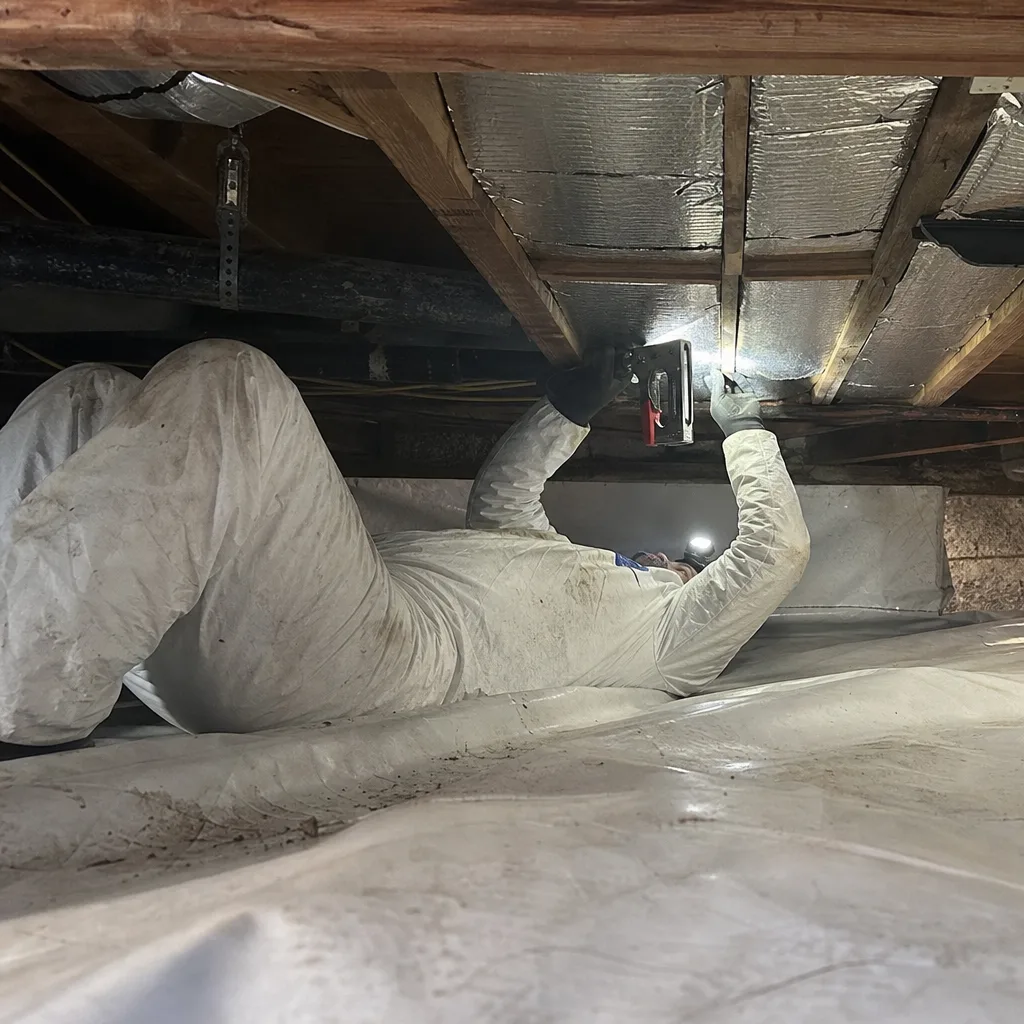
- You’re adding a radiant barrier and want to pair it with insulation work. Radiant barrier foil stapled to the underside of roof decking performs best when the attic floor is also insulated to code. Doing both in one visit reduces labor cost and minimizes time your attic is open.
- Your home has an irregular attic floor – trusses, diagonal braces, HVAC platforms. Blown-in conforms to every shape. Batts cut around obstructions leave voids; blown-in doesn’t.
- You’re preparing for an energy audit or a home sale. Campbell buyers increasingly request energy disclosures. A documented R-value with before-and-after blower-door readings – which we provide on every applicable job – gives you something concrete to put in front of a buyer or an auditor.
Our Blown-In Attic Insulation Process
-
Scoped inspection and written price – before anything else.
A named Envelope technician inspects the attic, measures square footage, probes existing depth, identifies all air-leakage points, and notes any moisture or rodent issues. You receive a flat written price and a written scope before we schedule crew. Under Haven Standard Clause 1, no work starts without it. -
Air sealing – the step most contractors skip.
We seal top plates, electrical and plumbing penetrations, recessed can lights, attic hatch perimeters, and any HVAC boot gaps using fire-rated caulk, foam, or rigid blocking, depending on the penetration size and type. This is not an upsell. It is a prerequisite. Blown-in insulation over an unsealed attic floor moves conditioned air the same way an open window does – it just does it slowly enough that you don’t notice until the utility bill arrives. -
Blower-door test – before insulation is added.
On applicable jobs, we run a blower-door test – a pressurization reading that shows, in one number, how much air the building envelope is losing – after sealing and before the insulation goes in. That reading becomes the “before” figure in your documented record. -
Material selection and depth calculation.
We calculate the bags-per-square-foot needed to reach your target R-value using the manufacturer’s published coverage tables – Knauf or CertainTeed, depending on the job. No rounding down. Depth rulers are installed across the attic floor so depth is verifiable by anyone who walks up there after us. -
Machine blowing to uniform depth.
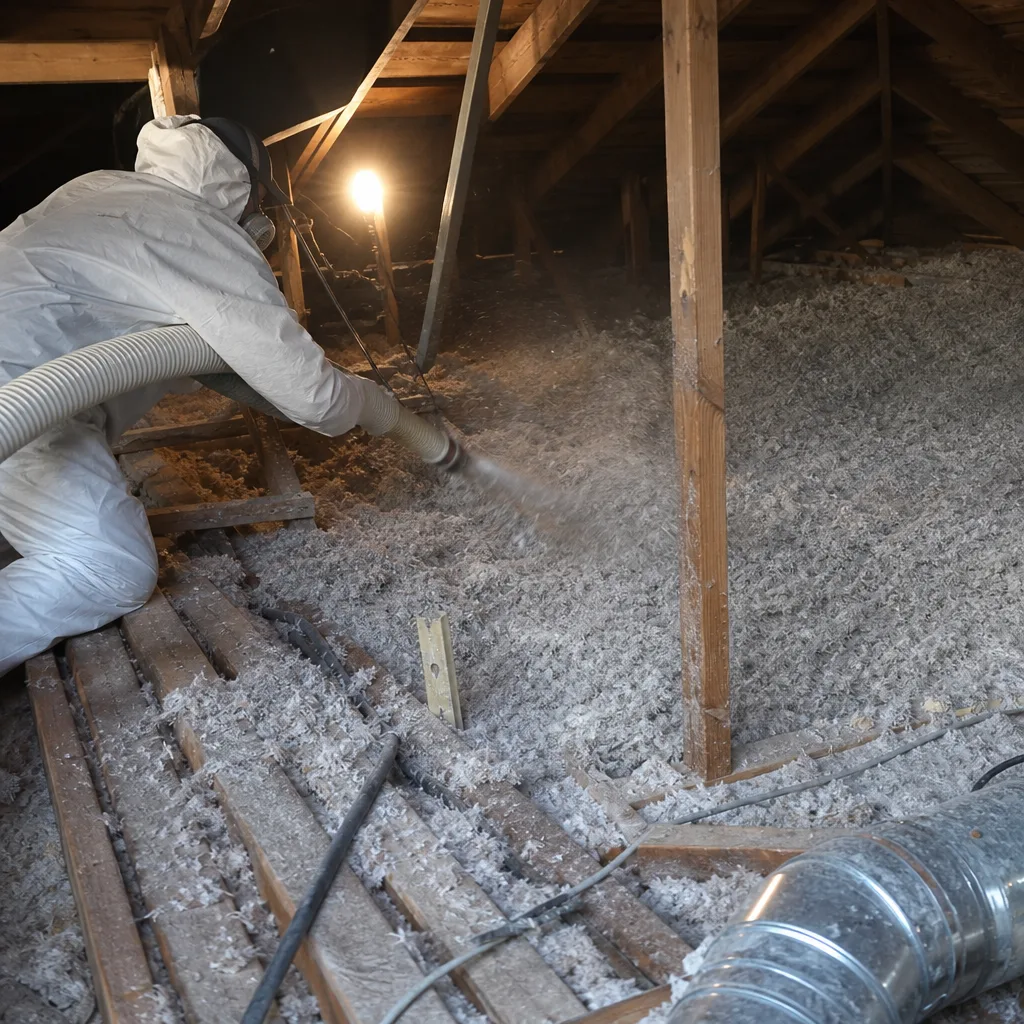
The blowing machine runs from outside the home; the flex hose feeds through the attic hatch. We work in a pattern that avoids trampling fresh material and ensures the perimeter – the area closest to the eaves, where most contractors leave gaps – is filled to the same depth as the center. -
Post-job blower-door reading and documented photo record.
After the attic is closed, we run a second blower-door test on applicable jobs. Both numbers – before and after – go into your written record alongside timestamped photos of the sealed penetrations, the depth rulers, and the finished insulation surface. You leave with a document that shows what we did, not just an invoice that says we did it.
 Before
 After
AfterBlown-In Attic Insulation Pricing in Campbell
Blown-in attic insulation in Campbell runs between $1.50 and $2.80 per square foot for material and installation combined, not counting air sealing or removal of existing material. For a detailed breakdown, see How Much Does Attic Insulation Cost? (2026 Price Guide) - Campbell, CA. For a typical 1,200-square-foot ranch attic – common in the Campbell and surrounding neighborhoods built in the 1960s and 70s – that puts a straightforward blown-in job at roughly $1,800 to $3,400. Larger two-story homes with 1,800-to-2,200-square-foot attic footprints run $2,700 to $6,200 depending on depth target and site conditions.
Here’s what moves the number:
- Target R-value: R-38 requires roughly 12 inches of blown fiberglass; R-49 requires closer to 16. More material is more cost, but R-49 is the current California Title 24 standard for new construction, and it’s the target we aim for on most full installations.
- Existing insulation condition: If existing material is contaminated, rodent-damaged, or wet, removal is required before new insulation goes in. Insulation removal typically adds $1.00 to $1.80 per square foot. We note this in the written scope upfront so there are no surprises on job day.
- Air sealing scope: A lightly penetrated attic with few recessed lights seals faster than one with 30 can lights and a gas line running through the top plate. We itemize the air sealing scope separately in the written price so you can see exactly what you’re paying for.
- Attic access and configuration: A standard pull-down hatch adds no access surcharge. A fixed panel, a tight knee wall, or a split-level attic over a garage addition may add $150 to $400 for the additional setup and handling time.
We publish these ranges because a written price before any work starts is the foundation of how we operate – Haven Standard Clause 1. A phone estimate without a site inspection isn’t a price; it’s a guess that tends to grow after we’re already in your attic. Our inspection is the step that produces the actual number. Call (831) 534-3206 to schedule it – estimates are free and come with no obligation to proceed.
Why Air Sealing Comes First – Every Time
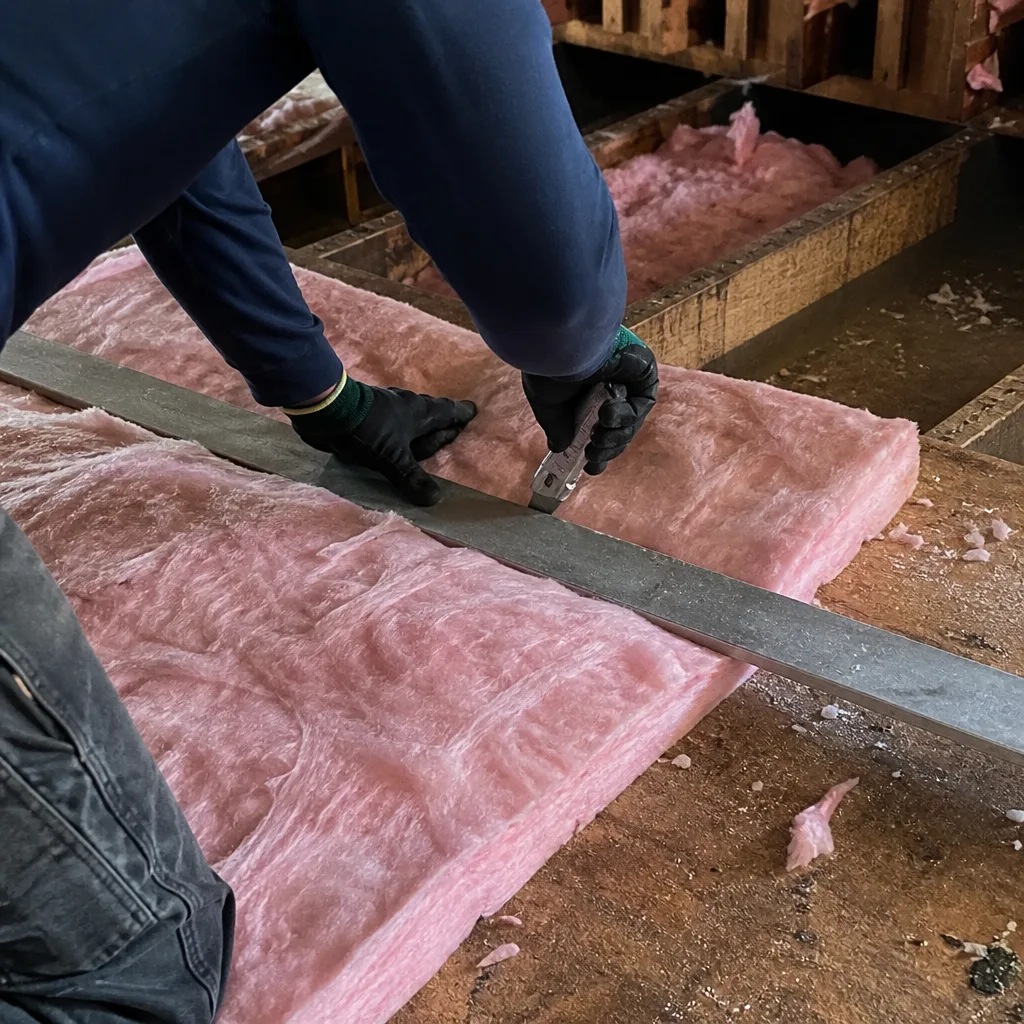
This is the part of blown-in insulation that most contractors in Campbell either don’t mention or position as an optional add-on. It isn’t optional. Here’s the practical reason: insulation slows the conduction of heat through a material. It doesn’t stop air from moving. If your top plates have gaps around wiring and pipes – and in homes built before 1995, they almost always do – conditioned air from your living space rises into the attic continuously, regardless of how thick the insulation layer above it is.
We’ve measured attics in Campbell homes, particularly in the older neighborhoods near the Pruneyard and the established streets off Union Avenue, where blower-door readings dropped from 3,800 CFM50 to under 1,900 CFM50 after sealing alone – before a single inch of insulation was added. That’s nearly half the air loss eliminated by caulk, foam, and blocking. The insulation then performs on top of a sealed envelope rather than trying to compensate for one that leaks.
If you’ve received a quote from another contractor that does not include air sealing or blower-door testing, bring it to us. Under our Free Second Opinion on Any Written Estimate, we’ll read it with you and tell you exactly what’s included and what isn’t.
Materials We Use
We source from Knauf, CertainTeed, and other manufacturers depending on the application and job specifications. We don’t have a proprietary product or a material we’re required to push. Knauf’s blown fiberglass is a common choice for attic floors in Campbell’s climate – it’s moisture-resistant, dimensionally stable, and its coverage tables are well-documented. CertainTeed’s blown insulation products carry similar ratings and we use them interchangeably based on availability and project requirements.
For every job, the material brand, R-value, and bag count go into your written scope before work starts. You’re not finding out what went into your attic from the invoice after the fact.
What the 365-Day Done Right Promise Covers
If blown-in insulation settles below the documented depth, if air sealing fails at a location we sealed, or if anything about the finished work doesn’t match the written scope, we come back and make it right. No negotiation, no service call fee, no “that’s outside our warranty” conversation. The 365-Day Done Right Promise is written into the scope document you receive before work starts – so the terms are clear before we lift a tool, not after something goes wrong.
In nine years of work across the Campbell area and surrounding communities, we’ve built that promise on over 9,000 homes. The documented photo record from each job is what makes the promise enforceable – we both know exactly what the finished state looked like on day one.
FAQs – Blown-In Attic Insulation
How long does blown-in attic insulation last in a Campbell home?
Blown fiberglass and blown cellulose in a properly sealed, dry attic hold their rated R-value for 20 to 30 years without meaningful degradation. The conditions that shorten that lifespan – moisture intrusion, rodent activity, or attic ventilation problems – are things we document in the inspection phase. If we find a roof leak or inadequate soffit-to-ridge ventilation during the attic inspection, we note it in the written scope and won’t proceed with insulation until the underlying problem is addressed. We also install Attic Baffles & Ventilation Prep when needed to ensure proper airflow. Covering a wet attic with new insulation traps moisture and turns an insulation job into a mold problem within a few seasons. Call (831) 534-3206 if you want an honest assessment of your attic’s current condition before committing to any work.
How much does blown-in insulation cost per square foot in Campbell?
Material and installation for blown-in attic insulation in Campbell runs between $1.50 and $2.80 per square foot, depending on target R-value, site access, and whether existing material needs to come out first. A 1,200-square-foot attic brought to R-49 typically lands between $2,200 and $3,400 for a clean attic with no removal needed. Air sealing is priced separately in the written scope – it is not bundled into a per-square-foot rate because the scope varies significantly from one attic to the next. You’ll see both line items before we start. Call (831) 534-3206 to schedule the free on-site inspection that produces the actual number.
Can blown-in insulation be added over my existing batts?
Yes, in most cases. If existing Attic Batt Insulation is dry, uncontaminated, and still making contact with the attic floor, blown-in can be added directly over them to bring total depth to the target R-value. If batts are wet, compressed, or rodent-damaged, removal is the right call first – covering compromised material seals in the problem. During the inspection, we probe existing depth and condition at multiple points across the attic and document what we find. That finding goes into the written scope before any decision is made.
Do you provide blower-door test results, and what do those numbers actually mean?
On applicable jobs, yes – before-and-after blower-door readings are included in your documented record. A blower-door test measures airflow in CFM50 (cubic feet per minute at 50 Pascals of pressure), which is a standardized way of expressing how leaky your building envelope is. A reading of 4,000 CFM50 means your home is losing air at a rate equivalent to a roughly 40-square-inch hole in the wall running continuously. After sealing, a well-executed air seal on a Campbell home of around 1,500 square feet often brings that number down to 2,000 CFM50 or below. Both figures go into your written record so the performance change is documented, not just asserted. You can see exactly what our home page says about the standard we apply to every job.
Key Takeaways
- Blown-in attic insulation in Campbell costs $1.50 to $2.80 per square foot installed; most 1,200-to-1,500-square-foot attic jobs run between $1,800 and $3,400.
- Air sealing of top plates, can lights, and penetrations is completed before any insulation is added – not offered as a separate upsell.
- Before-and-after blower-door readings are documented on every applicable job so you can verify the air-sealing result in a single number.
- A written price and written scope are delivered before work starts, every time – Haven Standard Clause 1.
- The 365-Day Done Right Promise covers all completed work; if it doesn’t match the written scope, we fix it.
- Material sourced from Knauf, CertainTeed, and others – no proprietary product lock-in.
To get a written price for blown-in attic insulation at your Campbell home, call (831) 534-3206. The inspection is free, the price is flat and written before we start, and the estimate carries no obligation to proceed. Wes Okafor and the Topside Attic Insulation Campbell team are available to walk you through what we find in your attic and what it will cost to fix it – in writing, before anyone touches a tool. You can also read more about our full approach on the Attic Insulation in Campbell page.
Written by Wes Okafor, Owner at Topside Attic Insulation Campbell, serving Campbell.