
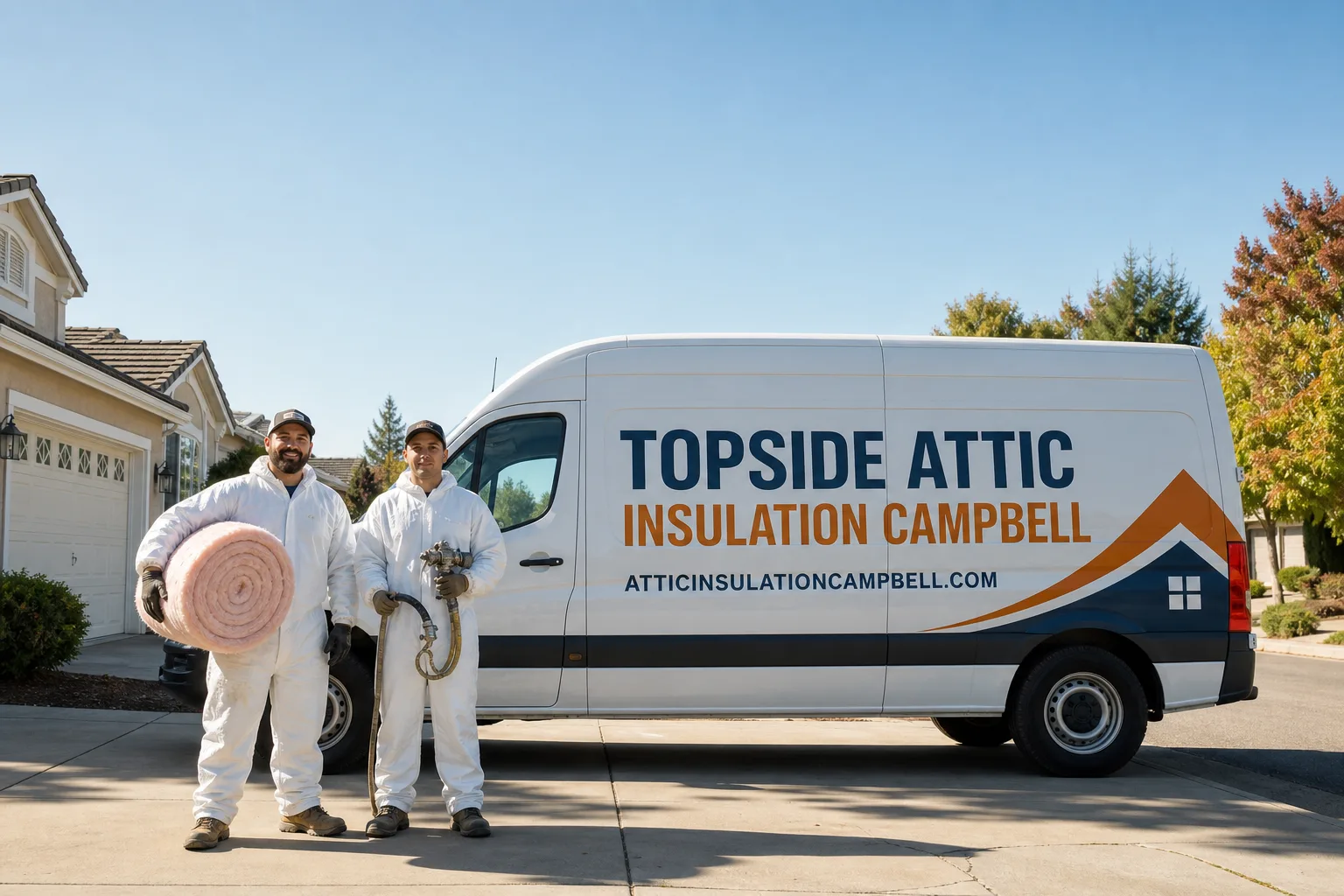
Fast, Reliable Attic Insulation Across East Foothills
Most attic insulation jobs in East Foothills run $2,800-$6,500 depending on whether we’re topping up existing material or stripping failed batts and starting fresh with fire-rated assemblies. Our crews are dispatched from the San Francisco Bay Area office and typically reach East Foothills properties within 45 minutes to an hour. We carry Rockwool, CertainTeed, and Icynene materials rated for Santa Clara County’s Wildland-Urban Interface zone, so we don’t waste a trip ordering compliant stock after we arrive. Call (831) 534-3206 for a written price before any work starts.
Why Topside Attic Insulation Campbell Is East Foothills’s Preferred Attic Insulation Company
We’ve worked enough hillside homes off Mount Hamilton Road and along the eastern slope corridors to know where the knee walls taper and where crawl spaces pinch to nothing. That familiarity means we show up with the right material cuts and the right access equipment, not a generic load meant for flat-lot Campbell ranches.
East Foothills homeowners have left us reviews mentioning specifically that we didn’t need a return trip. That’s not luck. It’s knowing the terrain before we quote.
Our response time to East Foothills averages under an hour from dispatch. Calls are answered by a live person 24/7, and you’ll get a text with your technician’s name when they’re en route.
We understand the WUI fire-rated material requirement that applies to East Foothills but not to the valley floor below. Out-of-area contractors miss this regularly, which means a permit delay or a redo. We specify compliant materials in the written scope from the first visit.
Our Attic Insulation Services in East Foothills
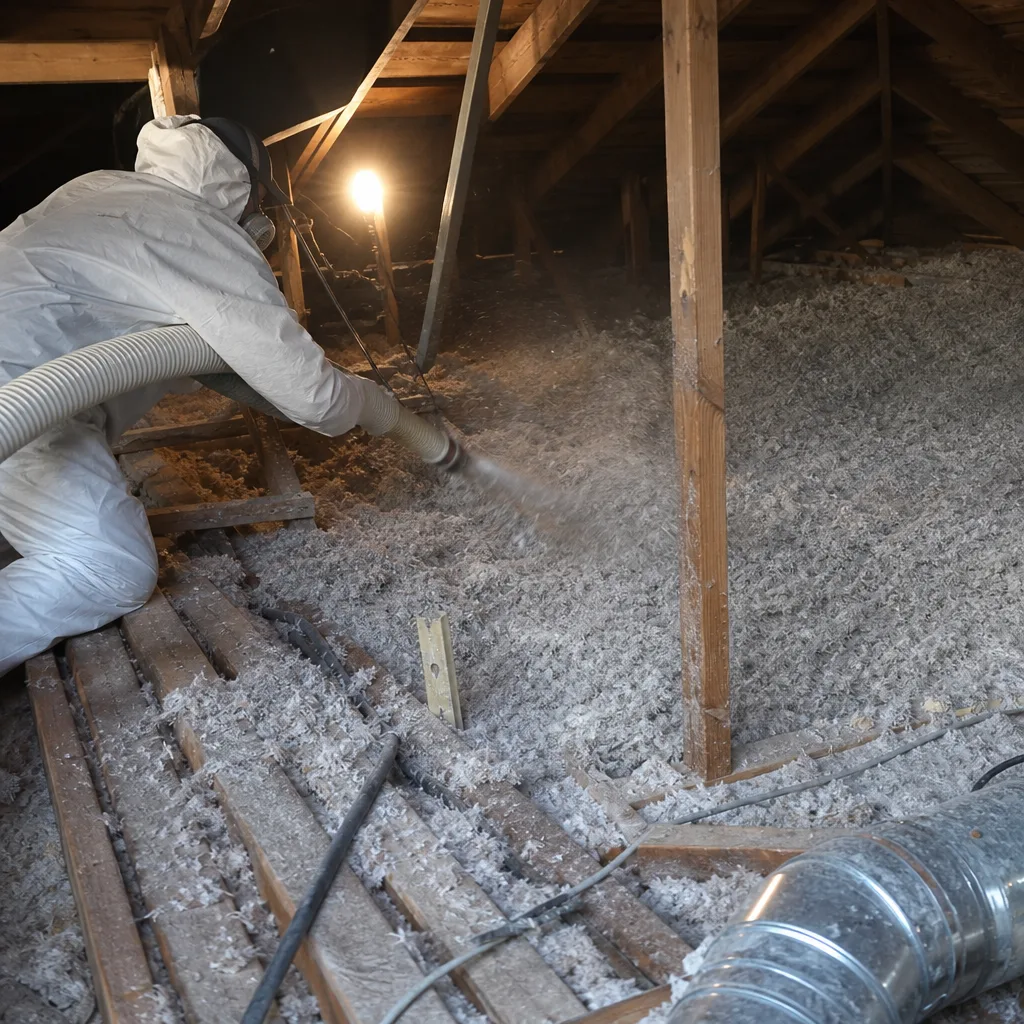
Blown-In Attic Insulation
Blown-in loose-fill is our most common specification for East Foothills homes with flat or low-slope attic centers, especially the 1950s-70s ranches that dominate the hillside. We blow to a uniform depth, typically R-38 to R-49 depending on the roof structure, after air sealing is complete. On a recent job near the junction of Mount Hamilton Road and the eastern ridge, we blew GreenFiber cellulose to R-49 across a 1,200-square-foot attic floor after sealing top plates that had been leaking conditioned air for sixty years. The blower-door reading dropped from 3,800 CFM50 to 1,900. We publish those numbers on every applicable job.
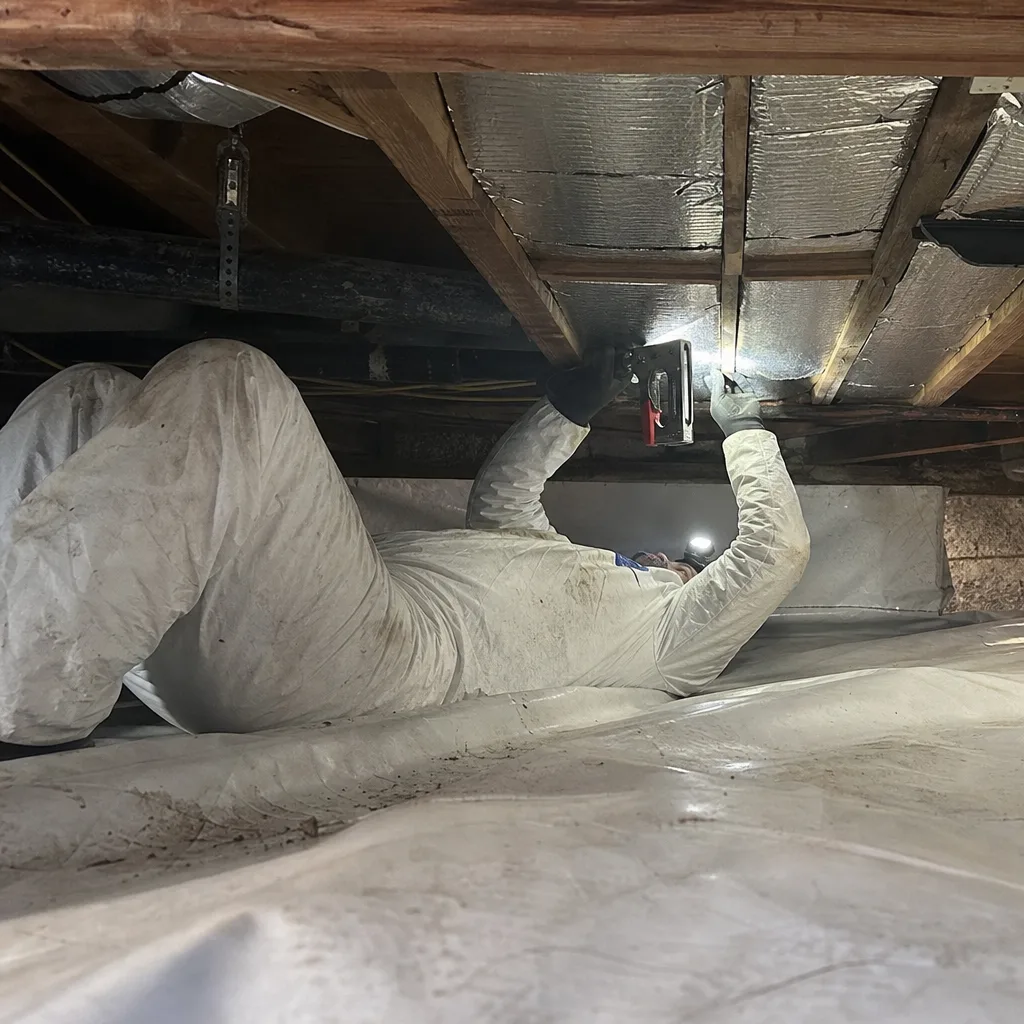
Attic Batt Insulation
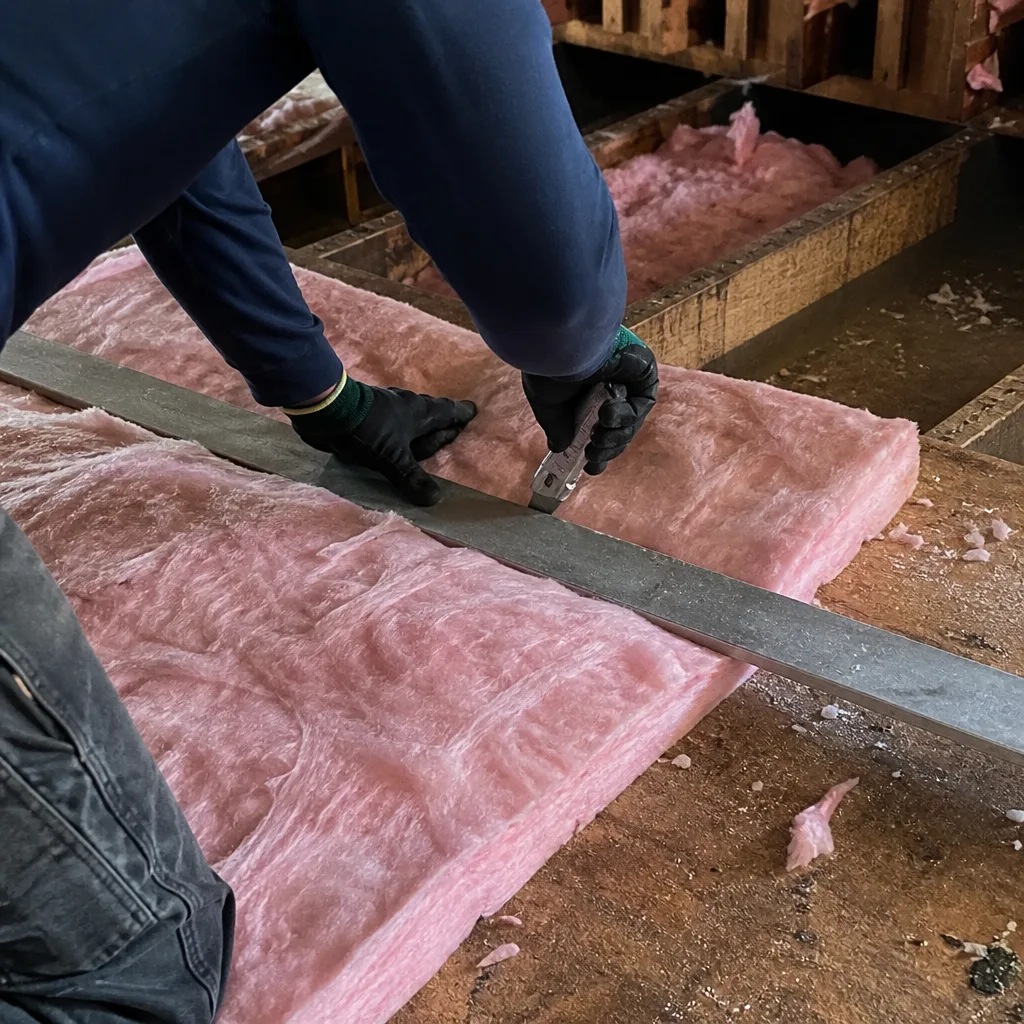
Batt insulation still has a place in East Foothills, but not the way valley contractors often use it. Hillside homes here have irregular knee-wall cavities and attic sections that follow the roof pitch down to near-zero clearance. Standard batts can’t fill those tapering spaces. We hand-cut Rockwool batts to fit these sloped cavities, or we switch to spray foam where access allows. The WUI fire rating on Rockwool makes it our default batt specification for East Foothills rather than standard fiberglass. We don’t quote valley-standard materials for hillside homes.
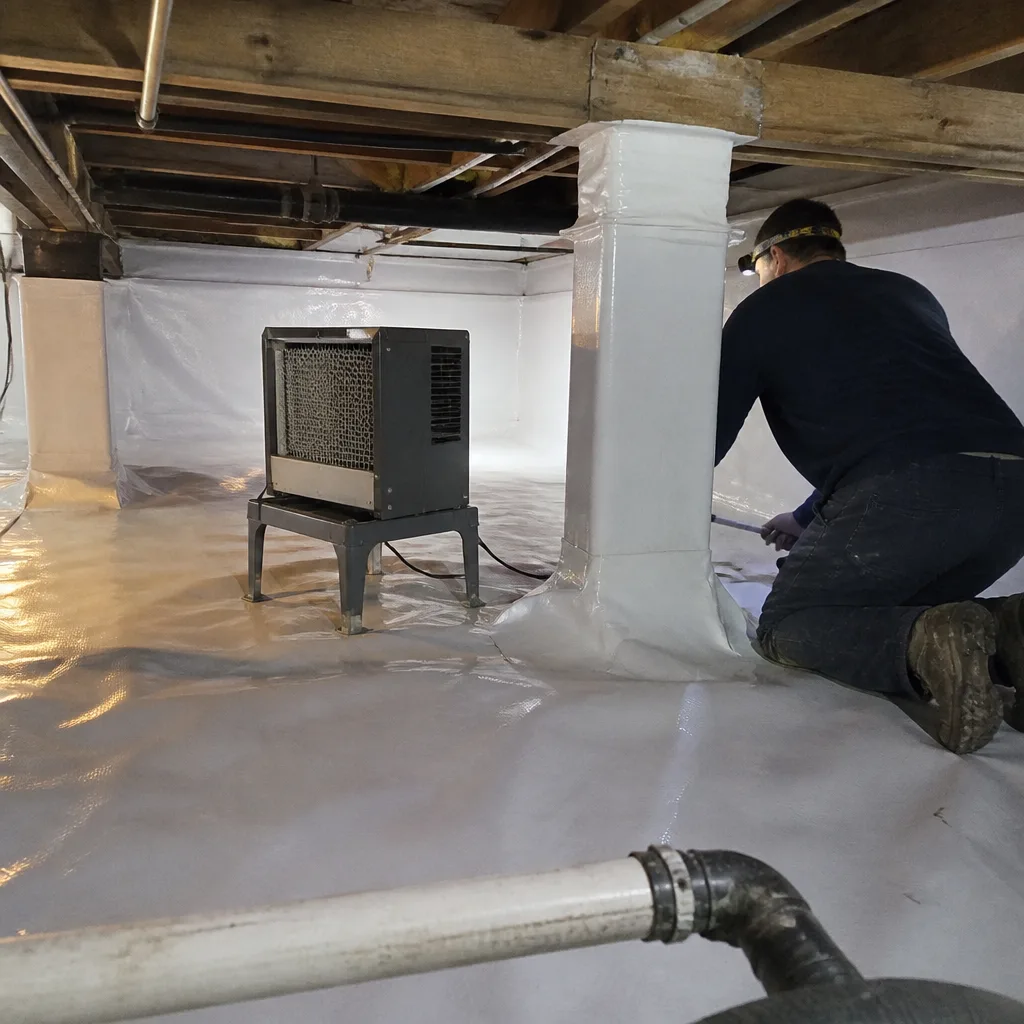
Attic Insulation Top-Up
Top-ups make sense when the existing insulation is in decent shape and the air barrier is already sealed. In East Foothills, we rarely find both conditions true in the older housing stock. Original batts from the 1960s and 1970s are typically compressed, dust-loaded, and sitting over unsealed top plates. Blowing new material on top just buries the problem. We’ll tell you honestly if a top-up is viable or if you’re better off with removal and replacement. Our Attic Insulation team documents the existing condition with photos before recommending anything.
Attic Insulation Replacement
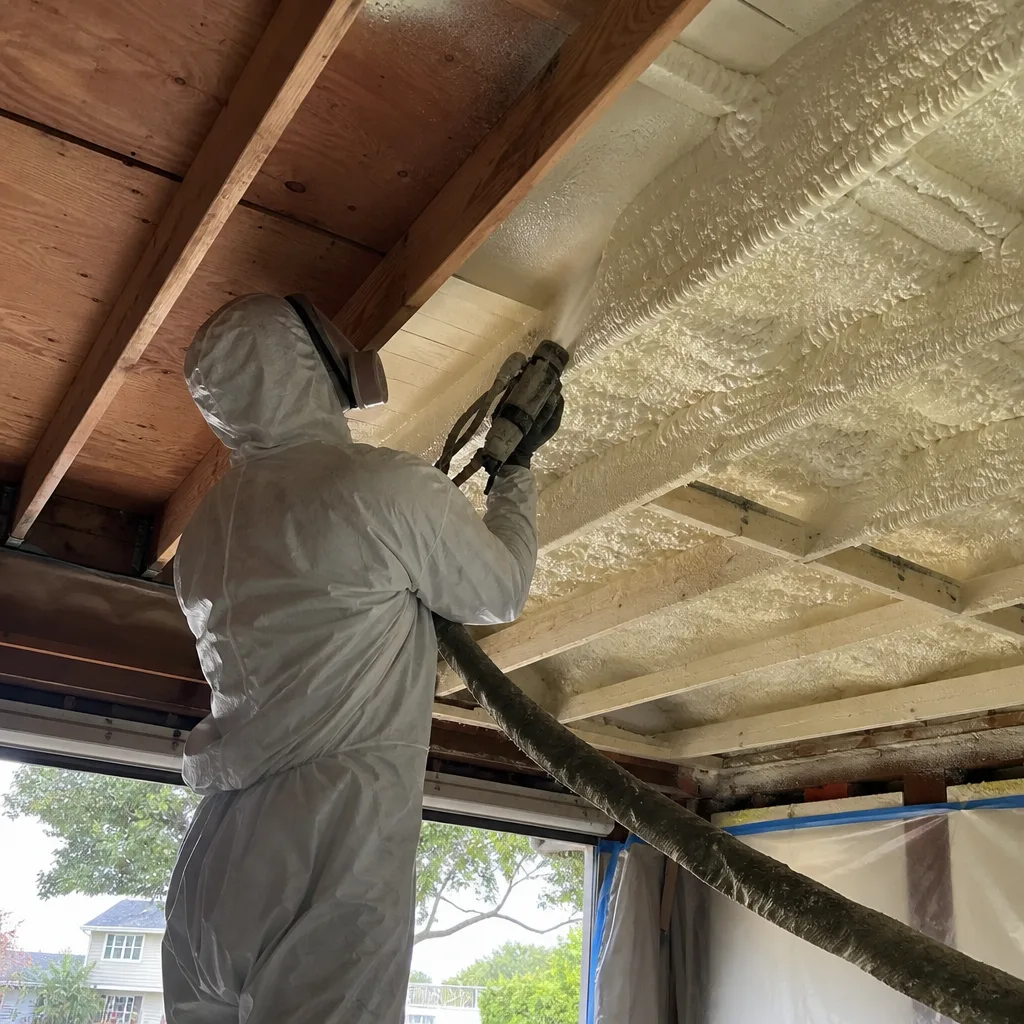
Full replacement is more common in East Foothills than in newer markets. We remove failed batts, debris, and rodent contamination if present, then air seal the full attic floor before installing new material. On stepped-grade foundations, we often find the attic floor intersects with conditioned wall assemblies in ways that weren’t properly sealed when the home was built. We address those junctions as part of the replacement scope. The written price covers removal, disposal, air sealing, and new fire-rated insulation installed to the depth specified in your scope.
Attic Baffles & Ventilation Prep
East Foothills’s hotter-than-valley attic temperatures make ventilation prep non-optional. We install baffles at every eave to maintain soffit-to-ridge airflow, preventing the moisture buildup that degrades insulation performance. On south- and west-facing slopes, we often pair this with radiant barrier upgrades that reduce radiant heat transfer through the roof deck.
What happens when you call
- 1
A real person answersNo phone trees - you reach a local pro.
- 2
You get an upfront price rangeHonest numbers before anyone is dispatched.
- 3
A background-checked tech heads outLicensed & insured, dispatched right away.
- 4
You approve before work beginsNothing starts until you say go.
 Before
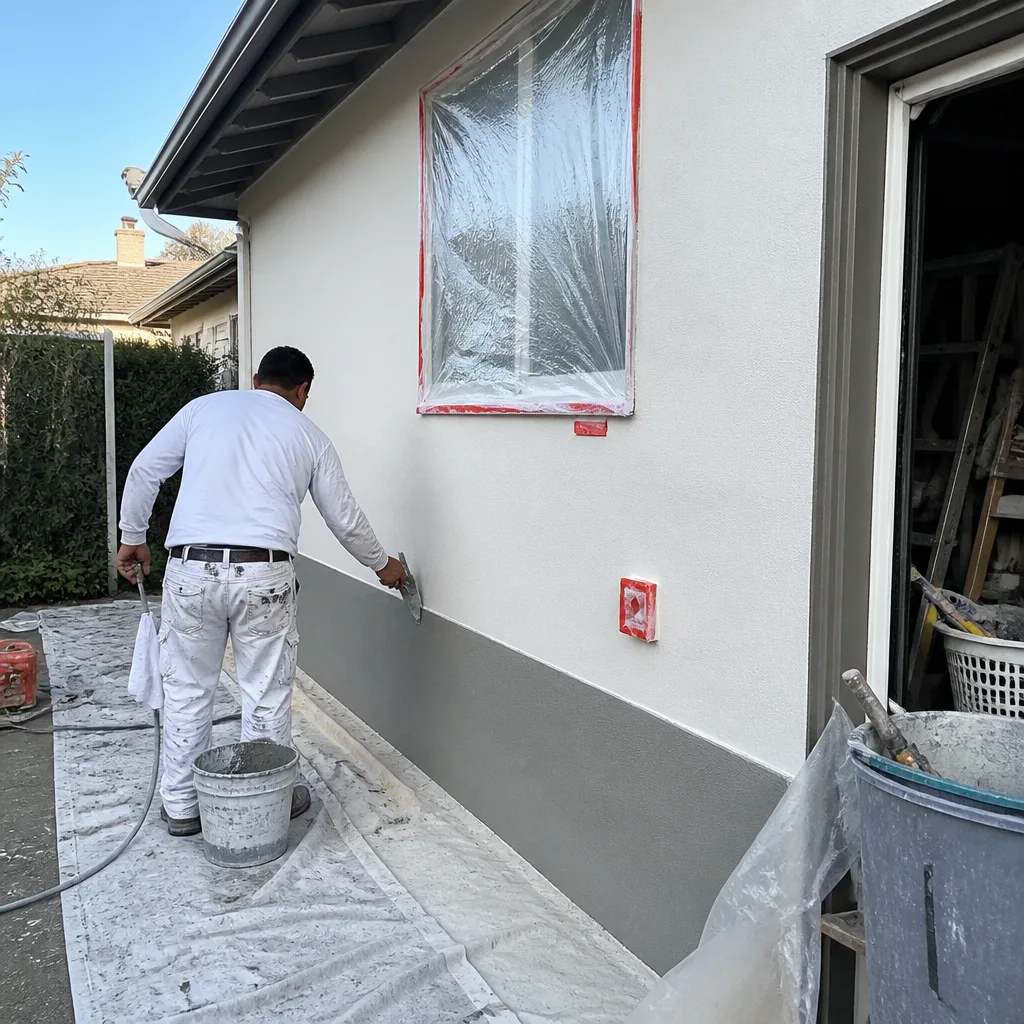 After
AfterTrusted Brands We Service in East Foothills
We stock Rockwool, CertainTeed, and Icynene materials rated for WUI-zone applications, with no proprietary lock-in that limits your options. Rockwool’s fire resistance makes it our default batt for East Foothills knee walls. CertainTeed blown fiberglass works well for flat attic centers where we’re targeting high R-value per inch. Icynene open-cell spray foam handles the irregular cavities that batt products can’t fill. We source from these manufacturers directly, not through middlemen, so turnaround on material orders doesn’t delay your job. Every product carries the documentation needed for Santa Clara County permit review.
Common Attic Insulation Problems We See in East Foothills Homes
- WUI-zone jobs bid with valley-standard materials. Contractors from Campbell or west San Jose often quote standard fiberglass batts not rated for Wildland-Urban Interface fire exposure. The permit gets flagged, the job stops, and the homeowner pays for material swap labor they shouldn’t have needed.
- Knee-wall cavities left completely bare. Hillside attics taper with the roofline on the low side of the slope. Crews who only treat the flat center run miss these cavities entirely. We account for them in every East Foothills quote.
- Original batts compressed over unsealed top plates. The 1950s-70s housing stock here predates modern air-sealing standards. A top-up alone stacks new material on a failed air barrier. The blower-door number barely moves, and the homeowner doesn’t feel the difference.
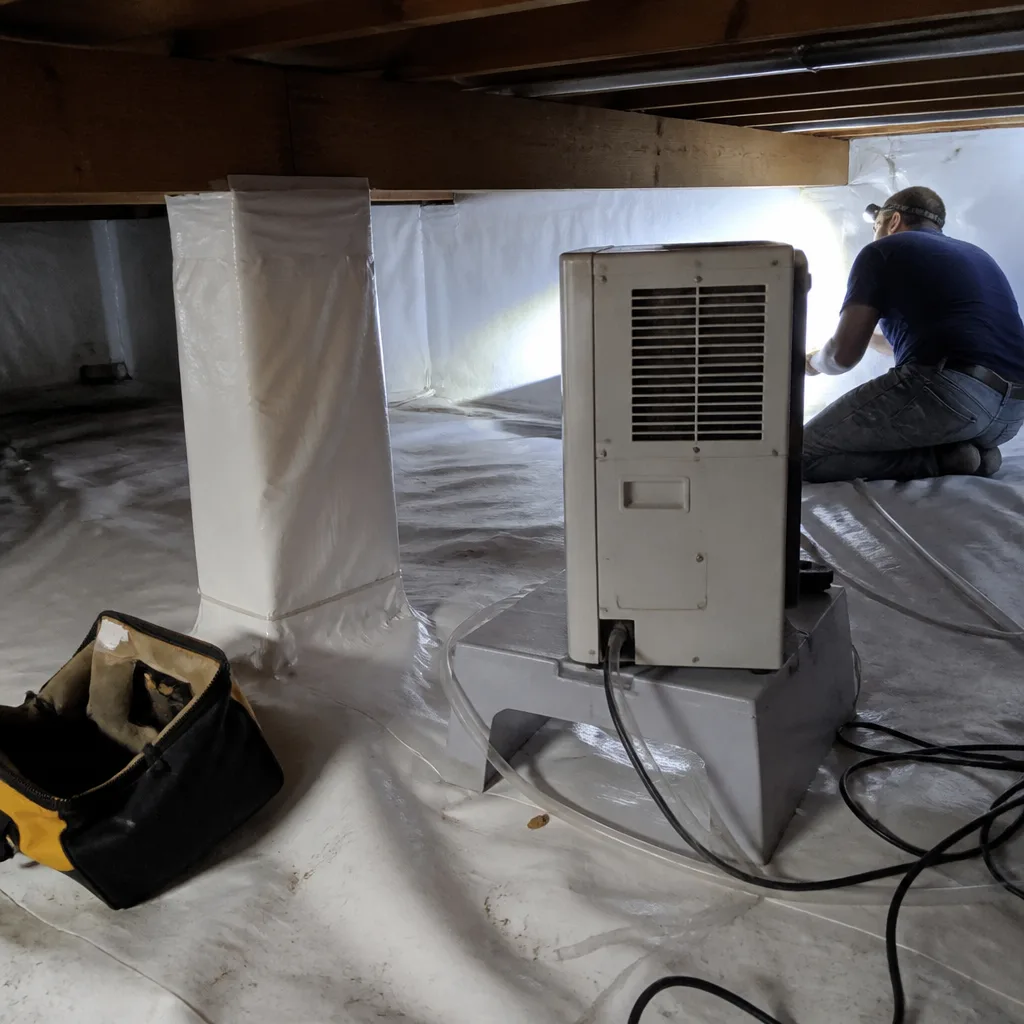
- Sloped crawl spaces and stepped foundations creating thermal bypasses. Pier-and-beam construction on hillside lots leaves large areas where conditioned space meets unconditioned crawl space with no insulation boundary. We treat these as part of the full envelope, not as a separate trade.
Pricing for Attic Insulation in East Foothills, CA
Here’s what most East Foothills jobs look like in dollars. These ranges assume a typical 1,200-2,000 square foot hillside home with attic access:
| Service | Typical Range in East Foothills |
|---|---|
| Attic Insulation Top-Up (existing material viable) | $1,800 - $3,200 |
| Blown-In Attic Insulation (new, flat attic) | $2,800 - $4,500 |
| Attic Batt Insulation (knee walls + flat areas) | $3,200 - $5,200 |
| Attic Insulation Replacement (remove + replace) | $4,500 - $6,500 |
| Air Sealing + Blower-Door Verification | $1,200 - $2,400 |
What moves you within these ranges: attic square footage, existing material condition, accessibility (steep roof pitches and tight knee walls add labor), and whether WUI fire-rated materials are required. Every East Foothills home we’ve worked sits in the WUI zone, so we quote compliant materials by default. The written price you receive before any work starts includes material, labor, disposal, and documentation. No additions later. Call (831) 534-3206 for your specific estimate.
We Also Serve Cities Near East Foothills
Our crews work throughout the southern Santa Clara County hills, including East Foothills, Campbell, Los Gatos, Saratoga, and Cupertino. Dispatch is coordinated from our San Francisco Bay Area office. Each city gets the same written-price-first protocol and documented photo record, with material specifications adjusted for local code requirements.
Serving East Foothills, CA - Our Local Coverage Area
We’re based in the East Foothills area and know this community well. Use the map below to see our service coverage - if you’re nearby, we can almost certainly help.
FAQs - Attic Insulation in East Foothills
Yes. Santa Clara County’s Wildland-Urban Interface fire hazard zone requires fire-rated insulation assemblies that standard valley contractors often don’t stock. We specify Rockwool batts or other WUI-compliant materials on every East Foothills job, and we include the fire-rating documentation in your permit packet. Call (831) 534-3206 and we’ll confirm your property’s WUI status before quoting.
No. Standard batts are cut for uniform cavities and leave large gaps in tapering knee-wall spaces. We hand-cut Rockwool batts to fit these irregular slopes, or we use spray foam where access allows. On a 1960s split-level off Mount Hamilton Road in the East Foothills, we found the original fiberglass batts collapsed and dust-filled, with the hillside knee-wall cavities on the low side completely bare. We pulled the failed batts, air-sealed the top plates and can lights, then blew GreenFiber loose-fill to a uniform depth across the flat center and hand-cut Rockwool batts to fit the sloped knee walls - one trip, one crew, no return visit. Because the property sits in the WUI zone, we used fire-rated materials throughout rather than the standard batts a valley contractor would have quoted.
East Foothills sits on inland-facing foothills without the marine layer moderation that cools western San Jose. Summer afternoons run several degrees hotter, and the elevation exposes rooflines to more direct solar gain. Greater diurnal temperature swings mean your attic is working harder as a thermal buffer. Air sealing and radiant barrier upgrades here show faster payback than in flat-grid neighborhoods at the same latitude. The blower-door numbers we publish prove the reduction in conditioned air loss.
Almost always full replacement. Original batts from that era are compressed, dust-loaded, and installed over unsealed top plates. A top-up buries the failed air barrier under new material. We remove the old batts, seal the leaks, and install new fire-rated insulation to a uniform depth. The 365-Day Done Right Promise applies either way, but replacement is the only path to the performance change you’re paying for.
We treat them as envelope junctions, not afterthoughts. Stepped foundations create thermal bypasses where the attic floor meets conditioned walls at irregular heights. We seal these intersections during the air-sealing phase before insulation goes in. Sloped crawl spaces that taper to near-inaccessible depths are documented in your photo record, and we quote access time honestly rather than discovering the condition mid-job.
Written by Wes Okafor, Owner at Topside Attic Insulation Campbell, serving East Foothills since 2016.