
Insulation Before & After in Campbell, CA
Photos don’t lie. A compressed fiberglass batt from 1987 looks nothing like a properly air-sealed attic floor topped with blown-in cellulose. We’ve documented every job we’ve done in Campbell since 2016, and the difference between where these homes started and where they ended up is why we publish before-and-after blower-door numbers on every air-sealing project.
Recent Transformations
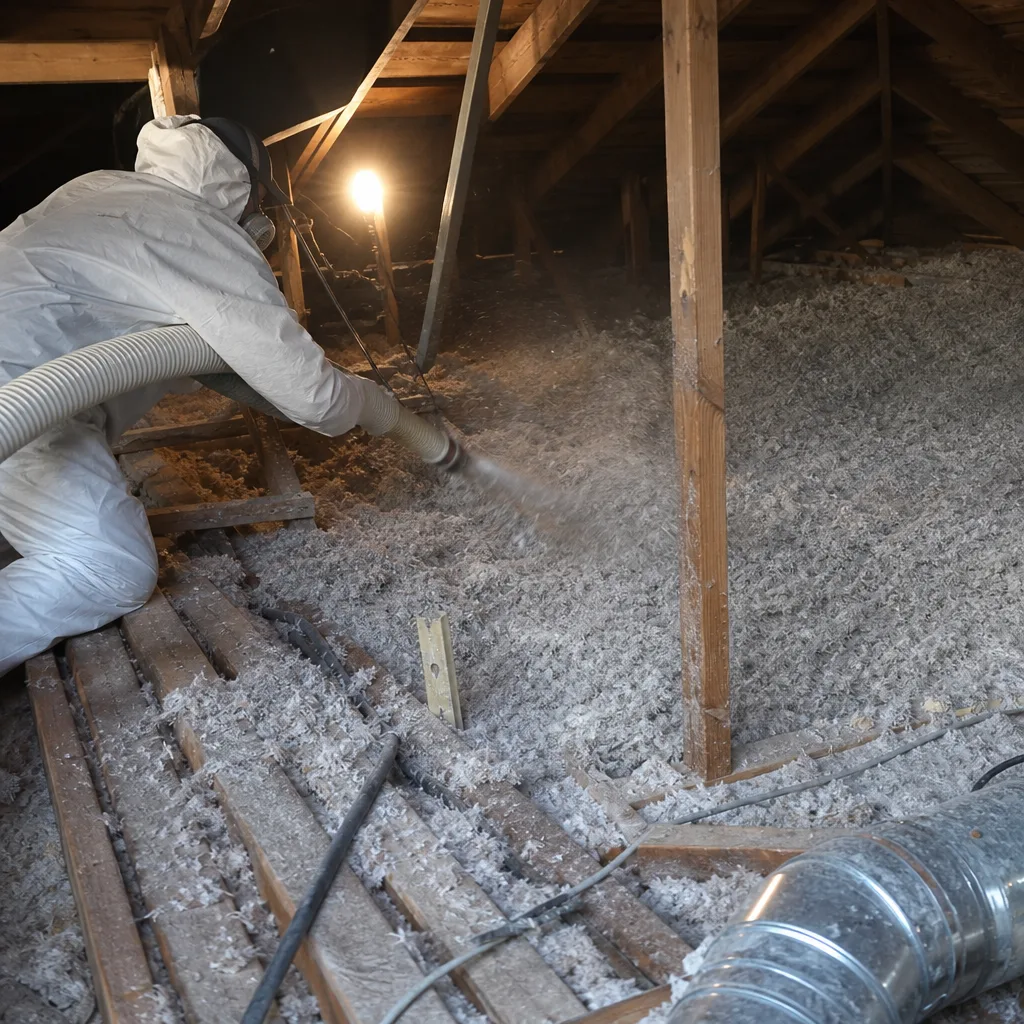
Attic Insulation Removal & Replacement - Westmont Neighborhood, Campbell
The homeowner bought this 1974 ranch in Westmont knowing the upstairs bedrooms ran ten degrees hotter than the downstairs. We pulled out batts that had been walked on by three decades of cable installers and HVAC techs. The top plates were open to the wall cavities below. We sealed every penetration with Owens Corning Foamular and fire-rated caulk, then blew cellulose to a consistent 14-inch depth. Blower-door test read 3,800 CFM50 before sealing and 2,200 after. The south-facing master bedroom now tracks within two degrees of the thermostat setpoint.
Crawl Space Encapsulation & Vapor Barrier - Campbell Avenue Corridor
This 1950s cottage near Campbell Avenue had a crawl space that smelled like mildew in January and grew mold on the floor joists by March. The previous owner had stuffed R-19 batts up there, which is the wrong product for a vented crawl in Campbell’s clay-heavy soil. We removed the wet fiberglass, graded the soil, installed a sump pit at the low point, and laid a 20mil white vapor barrier sealed with tape at every seam. The rim joists got two inches of Demilec closed-cell spray foam. Relative humidity dropped from 78% to 52% within 48 hours of sealing.
Spray Foam Insulation - Wall Cavities, Pruneyard Area Townhome
The owner was doing a full gut remodel on a Pruneyard-adjacent townhome and wanted to stop hearing every conversation through the shared wall. Standard batt insulation leaves 4-5% gaps by volume; open-cell spray foam fills the cavity completely and adds air-sealing value that batts cannot match. We sprayed Icynene at 3.5 inches in the 2×4 walls, giving a nominal R-13 with an air permeance near zero. The shared-wall STC rating improved measurably, and the owner reported the unit held temperature through a 105-degree Campbell afternoon without the AC cycling.
Radiant Barrier Installation - Attic Retrofit, East Campbell Near Highway 17
This single-story near the 17 interchange had no shade and a south-facing roof that turned the attic into a convection oven by 2 PM. The existing R-30 fiberglass was doing its job against conductive heat, but radiant heat from the 150-degree roof deck was overwhelming it. We installed LP TechShield radiant barrier directly to the roof deck, maintaining the existing soffit-to-ridge ventilation path. Attic air temperature dropped from 140°F to 105°F on a test day in August. The homeowner’s PG&E summer bill dropped 22% the following year, and the upstairs hallway no longer feels like a greenhouse at 4 PM.
Attic Air Sealing & Blown-In Top-Up - Cambrian Park Adjacent, Campbell Zip 95008
The 2005 insulation was still in decent shape, but the installer had blown right over an unsealed chimney chase and a leaky attic hatch. We pulled back the existing material, built a sheet-metal dam around the brick chase with fire-rated foam at all edges, taped the flex-duct connections at the plenum, and added a weatherstripped hatch cover with insulation on top. Then we blew in additional GreenFiber to bring the entire attic to a consistent R-49. Blower-door reading went from 4,100 CFM50 to 2,400. The furnace, which had been cycling every 12 minutes in January, now runs 22-minute cycles and the house stays within one degree of setpoint overnight.
Insulation Removal After Rodent Damage - Downtown Campbell Historic District
A 1920s bungalow near the downtown Campbell strip had a roof rat problem that started in the palm fronds and ended in the attic insulation. The fiberglass was tunneled through, compressed, and contaminated. We removed it entirely with HEPA containment, vacuumed and sanitized the deck, and found three entry points: a missing vent screen, a gap where a plumbing stack passed through the fascia, and a construction gap at the ridge beam. We screened all three with 1/4-inch hardware cloth, sealed with copper mesh where appropriate, and blew in new cellulose to R-49. The homeowner got a Documented Photo Record of every entry point before and after repair, plus the sanitization step, for their insurance file.
Want Results Like These?
Every job starts with a written price before any work starts, and ends with a Documented Photo Record. If we’re air sealing, you get before-and-after blower-door numbers in writing. Call (831) 534-3206 anytime, day or night, and a live person will pick up. We’ll read any competing estimate with you for free, and if we do the work, it’s covered by our 365-Day Done Right Promise.
Written by Wes Okafor, Owner at Topside Attic Insulation Campbell, serving Campbell since 2016.