
How Much Does Blown-In Insulation Cost in Campbell?
Blown-in insulation in Campbell, CA typically costs between $1,800 and $4,200 for a standard attic in a 1,500-2,500 sq ft home, with most jobs landing around $2,400-$2,900 when the attic floor is air-sealed before insulation is added. Homes in older Campbell neighborhoods like Orchard City and Dry Creek – Lynbrook often start at the higher end of that range because of aging top plates and more penetrations to seal. Most jobs are completed in a single day.
Blown-In Insulation Cost Breakdown (2026)
Blown-In Insulation services in Campbell break down across a few clear variables: square footage, current R-value (the existing insulation’s resistance to heat flow), material choice, and whether air sealing is done first – which it always should be. Here’s how the numbers look in the current Campbell market.
| Scope of Work | Typical Cost Range (Campbell, 2026) |
|---|---|
| Attic blown-in insulation only (1,000 sq ft attic) | $1,200 - $1,900 |
| Attic blown-in insulation only (1,500 sq ft attic) | $1,700 - $2,500 |
| Attic blown-in insulation only (2,000 sq ft attic) | $2,100 - $3,100 |
| Attic air sealing + blown-in insulation (1,000-1,500 sq ft) | $2,200 - $3,400 |
| Attic air sealing + blown-in insulation (1,500-2,500 sq ft) | $2,900 - $4,200 |
| Existing insulation removal before new blown-in | $600 - $1,400 (added to above) |
| Dense-pack blown-in for exterior walls | $1,800 - $3,500 depending on linear footage |
| Blown-in cellulose (per bag installed) | $22 - $32 per bag installed |
| Blown-in fiberglass (per bag installed) | $26 - $38 per bag installed |
| Blower-door test (pre- and post-work) | $200 - $350 standalone; often bundled with air sealing |
A few things are worth spelling out here. First, these ranges reflect actual bids written in Campbell in 2026 – not a national average adjusted downward for California. The Bay Area labor market pushes labor costs above what you’d see quoted on most national pricing calculators, which tend to underestimate by 20-35% for Santa Clara County. Second, the air sealing line item isn’t optional padding – it’s the work that determines whether the insulation you pay for actually performs. Blowing R-38 of cellulose over an attic floor full of open top plates and unsealed can lights is like insulating a leaky tent. The material does nothing for the air moving through the gaps underneath it.
For context on materials: cellulose (recycled paper fiber, treated with borate) is the most common choice for Campbell attics because it handles the mild but real diurnal temperature swings of the South Bay well and sits at a lower cost per R than fiberglass. Fiberglass blown-in costs slightly more per bag but is lighter and sometimes preferred when the existing framing has load concerns. Both are available through our supplier network, which includes Owens Corning, Johns Manville, GreenFiber, and Knauf – no proprietary product lock-in means we specify what performs, not what margins favor.
What Affects Blown-In Insulation Pricing in Campbell
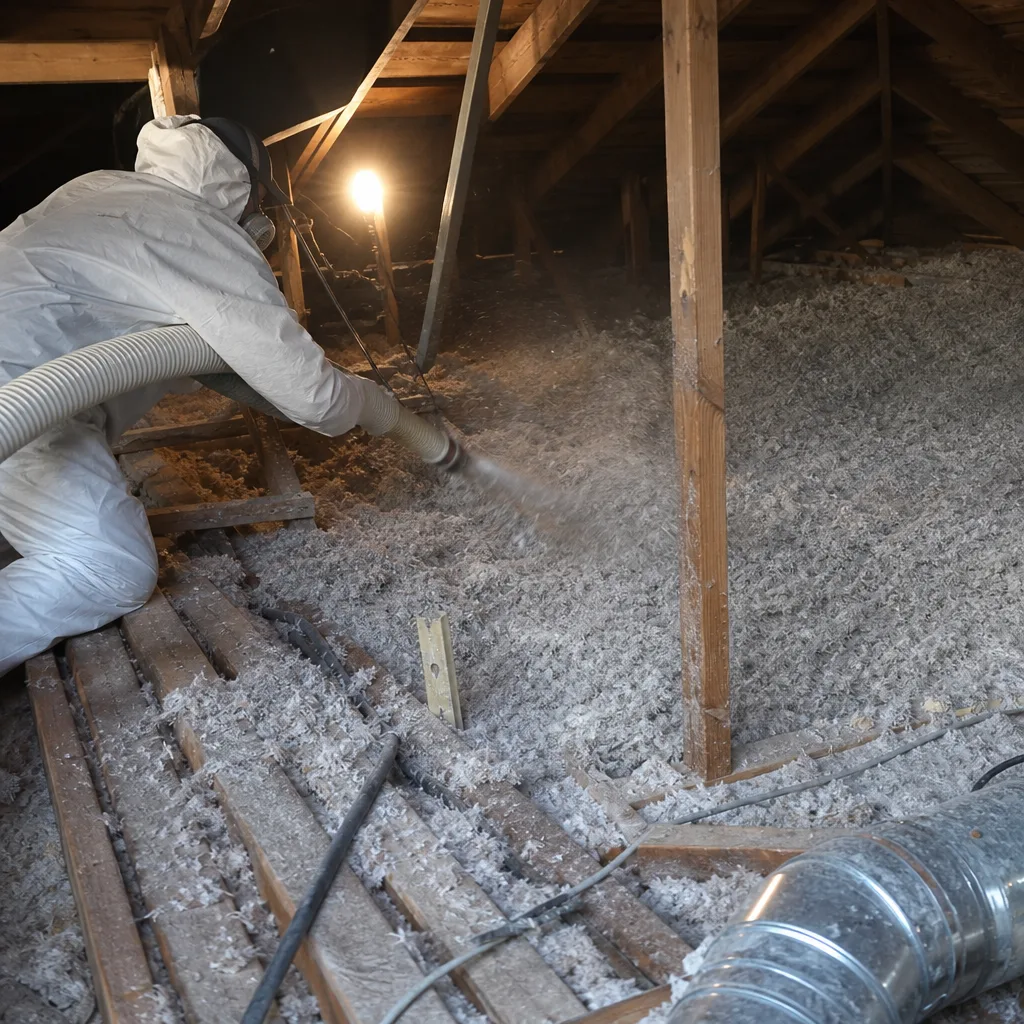
- Attic square footage and access: The primary cost driver is simply how much area needs to be covered. But access matters almost as much – tight attics with low ridge heights, common in ranch-style homes along Dell Avenue and near the Winchester corridor, take longer to work in safely and slow bag throughput on the blower hose.
- Current insulation depth and condition: If there’s already insulation in the attic, the question is whether it can be topped off or needs to come out first. Old, compressed fiberglass batts that have lost their loft, or insulation showing signs of rodent activity or moisture damage – both of which show up regularly in Campbell’s pre-1980 housing stock – need removal before new material goes in. Removal adds $600-$1,400 to the job depending on depth and contamination.
- Air sealing complexity: The number of penetrations through the attic floor is the variable most homeowners don’t know about until someone crawls up there with a flashlight. Recessed can lights (especially the older non-IC-rated fixtures that are still common in 1970s-1990s Campbell homes), top plate gaps, plumbing chases, and HVAC boots all need to be sealed with fire-rated foam or caulk before insulation is added. A simple attic might have 10 penetrations; a more complex one might have 60. That spread affects labor hours and total price more than any other single factor.
- Target R-value: California’s Title 24 energy code recommends R-38 as the minimum for attics in Climate Zone 4, which covers Campbell. To reach R-38 with cellulose from zero, you need roughly 10-11 inches of material. Many homes in Campbell’s older Orchard City and Campbell Park neighborhoods are sitting at R-11 or R-13 – the original 3.5-inch fiberglass batts laid during construction – meaning there’s a significant top-off needed. The deeper the required fill, the more material and time.
- Material choice (cellulose vs. fiberglass): Cellulose costs less per R-value achieved and performs slightly better in the mild, occasionally humid conditions of the Santa Clara Valley. Fiberglass blown-in is lighter, doesn’t compact over time the way cellulose can if it gets wet, and is sometimes preferred in attics with ventilation concerns. The price difference between the two on a 1,500 sq ft attic top-off is typically $150-$350.
- Wall dense-pack work: If blown-in is going into exterior walls rather than (or in addition to) an attic, the pricing model changes. Dense-pack requires drilling access holes in each stud bay, inserting a tube to pack material under pressure, and patching afterward. This is slower, more material-intensive work, and in older Campbell homes with balloon framing or irregular stud spacing, it can be genuinely time-consuming. Wall blown-in jobs are priced per linear foot of wall section rather than per square foot of floor area.
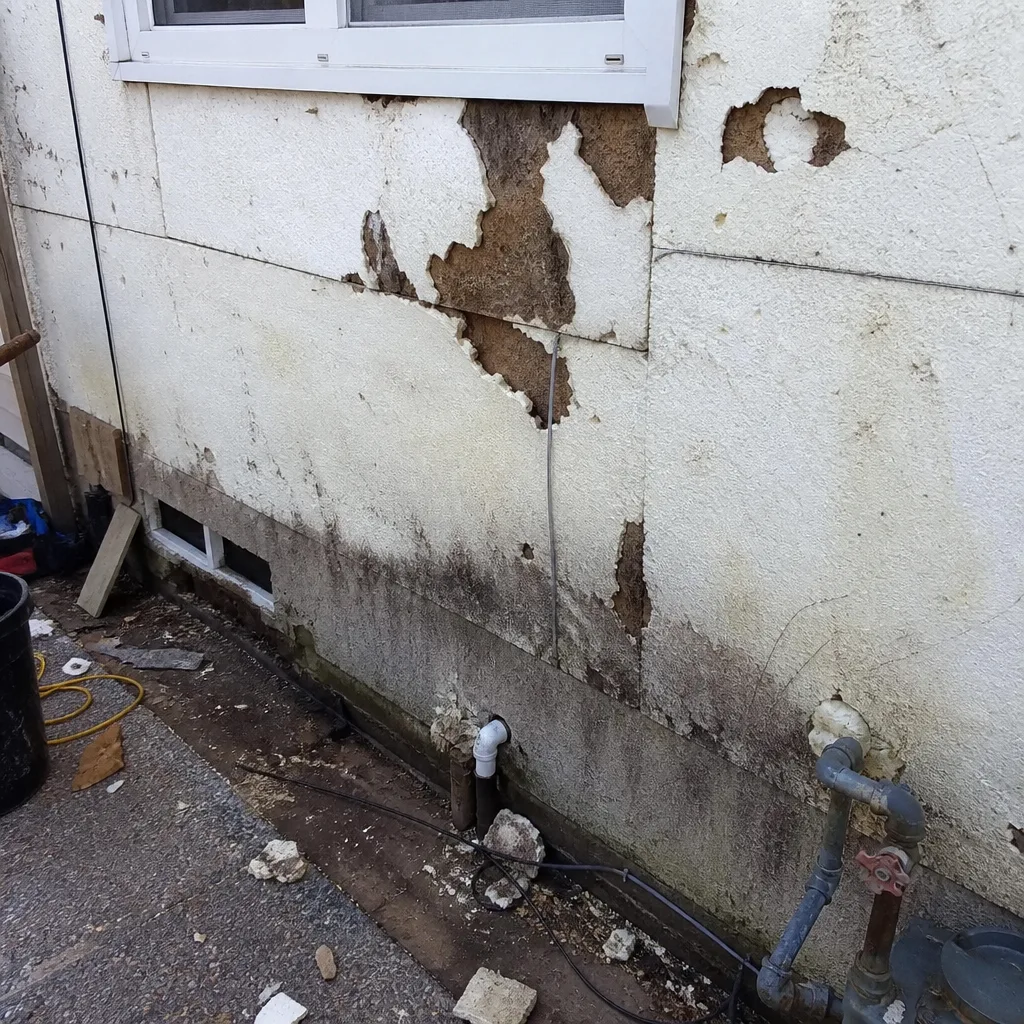 Before
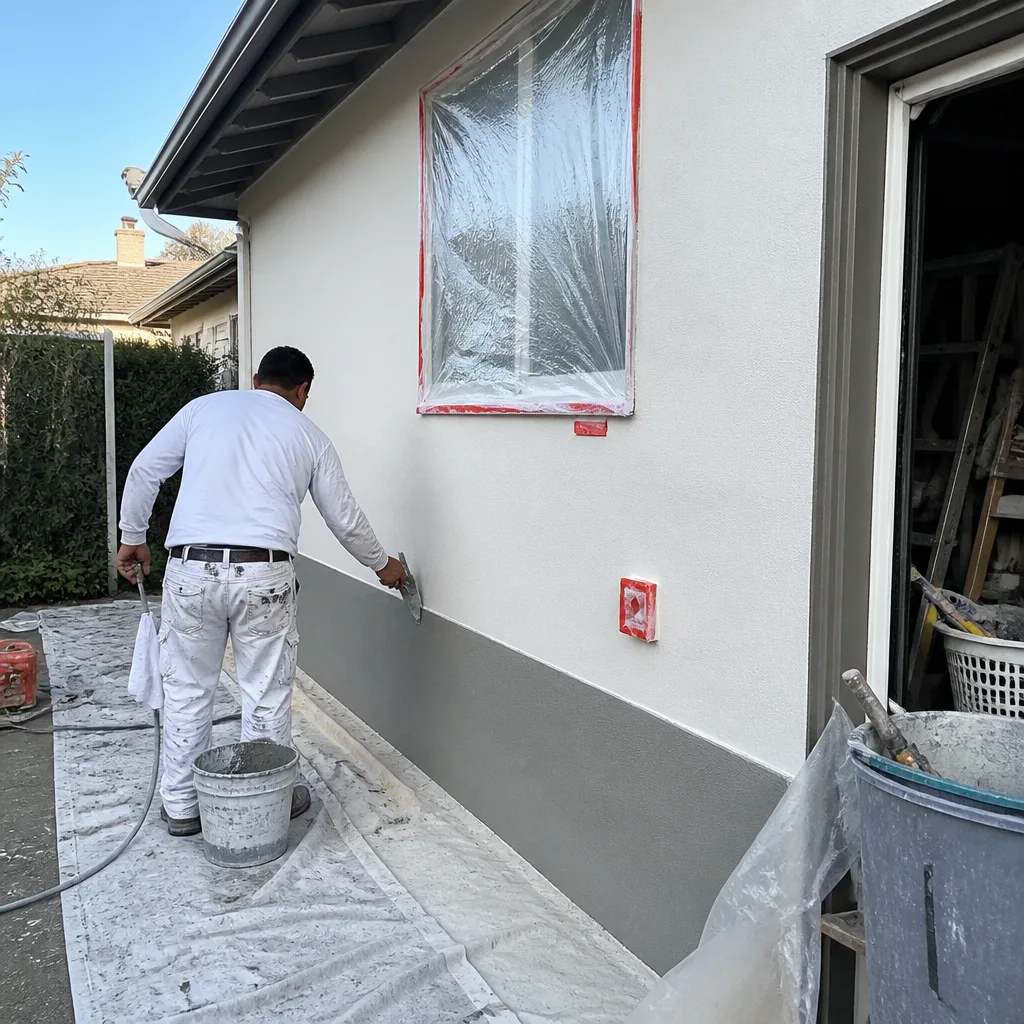 After
AfterCampbell Climate and Why It Matters for Insulation Depth
Campbell sits in California’s Climate Zone 4 – a classification that most of the Bay Area shares, but one that masks real variation within it. The city’s summers regularly hit 90°F+ for stretches in July and August, while overnight lows in December and January drop into the upper 30s. That’s a meaningful swing, and an under-insulated attic transfers both directions: heat pours in on summer afternoons and conditioned air bleeds out on winter nights.
What makes Campbell slightly different from coastal Santa Clara County is the inland position. The marine layer that keeps San Jose’s west side and Los Gatos cooler in summer reaches Campbell later and less reliably, which means attic temperatures on a hot August day can reach 140-150°F in spaces with poor ventilation and thin insulation. Cellulose’s higher thermal mass (it stores and releases heat more slowly than fiberglass) makes it the more common recommendation for attics here. In Cambrian Park, where a lot of the 1960s-1970s tract housing sits with original insulation, we regularly measure attic temperatures that confirm this – the thermal penalty for staying at R-13 in Campbell’s summers is real and measurable on an energy bill.
The city’s older housing stock is also a factor. Campbell had a building boom from the late 1950s through the 1970s, and many of those homes used knob-and-tube wiring, older HVAC equipment, and attic framing with minimal thought to air sealing. Before any insulation goes in on a pre-1980 home, the electrical situation needs to be confirmed safe – blown-in insulation covering active knob-and-tube wiring is a fire hazard, and any reputable contractor should flag this before picking up the hose.
Air Sealing: Why It Has to Come Before Blown-In
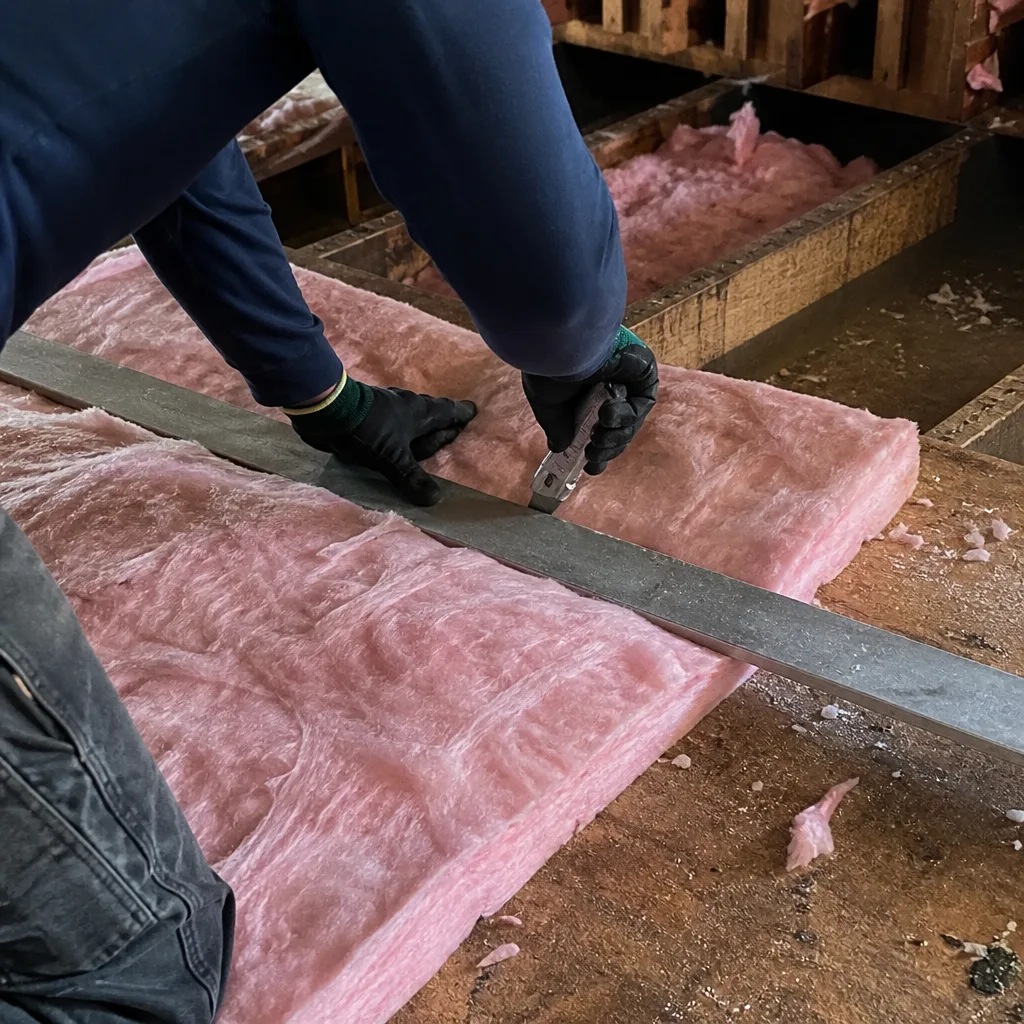
This is the part that separates a properly installed job from one that will underperform for its entire service life. Blown-in insulation slows conductive heat transfer – the kind that moves through solid material. It does very little to stop convective heat transfer, which is heat carried by air moving through gaps. If the attic floor has open top plates, can light boxes, and plumbing chases, conditioned air from the living space is moving through those gaps regardless of how deep the insulation is.
At Envelope Insulation Co., air sealing of top plates, can lights, and penetrations is completed before any insulation is added – not as an optional add-on, but as a prerequisite. We document this with a blower-door test – a pressurization reading that shows, in one number, how much air your building envelope is losing – before and after the sealing work. A home that reads 3,800 CFM50 before sealing and 2,100 CFM50 after has a number that means something: the building is losing roughly half as much conditioned air per minute as it was before the crew arrived. That number goes in the written record that leaves with you when we do.
We publish those before-and-after blower-door numbers on every applicable job. Not because it’s a marketing gesture, but because it’s the only way a homeowner can verify that the air-sealing component of the job actually worked. A number that doesn’t change, or barely changes, is information too – it means the leakage was elsewhere, and the homeowner deserves to know that.
For a deeper look at the full scope of what a blown-in project involves in this market, the Blown-In Insulation in Campbell service page covers materials, process, and what the job looks like from the homeowner’s side.
How to Save on Blown-In Insulation in Campbell
There are real ways to reduce the cost of blown-in insulation in Campbell, and there are false economies that look like savings and aren’t. Here’s the honest breakdown.
Get a second opinion on any written quote
If you’ve received a written estimate from another contractor, bring it to us. Under the Haven Standard, we offer a Free Second Opinion on any written estimate – we’ll read it with you, line by line, and tell you what we see. Sometimes a competing quote is fair and we’ll say so. Sometimes it’s missing the air sealing scope entirely, which means the insulation it prices will underperform. Either way, you leave with more information than you came with. Call (831) 534-3206 to schedule.
Pursue California energy rebates before the job starts
Pacific Gas and Electric (PG&E) serves Campbell and has historically offered rebates for attic insulation upgrades, particularly when combined with air sealing and when the home is brought to or above Title 24 minimum R-values. The specific rebate amounts change annually – in 2025, attic insulation rebates through PG&E’s residential program ranged from $150 to $400 depending on scope and existing conditions. Check the current PG&E rebate portal or ask us to walk you through what’s currently available before we write the price. A rebate captured before work starts is money that doesn’t leave your account at all.
Don’t skip the air sealing to lower the quote
This is the false economy worth naming directly. Removing air sealing from the scope to get a lower number means the insulation you pay for will perform at a fraction of its rated R-value. In Campbell’s summer heat, an attic at R-38 over a sealed floor outperforms R-60 over an unsealed one in real energy terms. Spending less now on a job that doesn’t work is spending more in total.
Bundle work when the attic is already open
If the attic is going to be accessed anyway, it’s the right time to address a radiant barrier, replace damaged insulation in localized areas, or handle any attic cleaning or rodent proofing that’s needed. Mobilization is a fixed cost – a crew that’s already in the attic can add adjacent scope at a lower incremental cost than a separate visit would carry.
Ask what documentation you’ll receive before agreeing to anything
Written scope, written price, blower-door readings before and after, and a Documented Photo Record are what you should expect to walk away with. If a contractor can’t tell you clearly what documentation they provide, that’s a pricing signal too – it means there’s no accountability built into the job, which affects long-term performance and warranty claims.
What the Written Price Covers – and What It Doesn’t
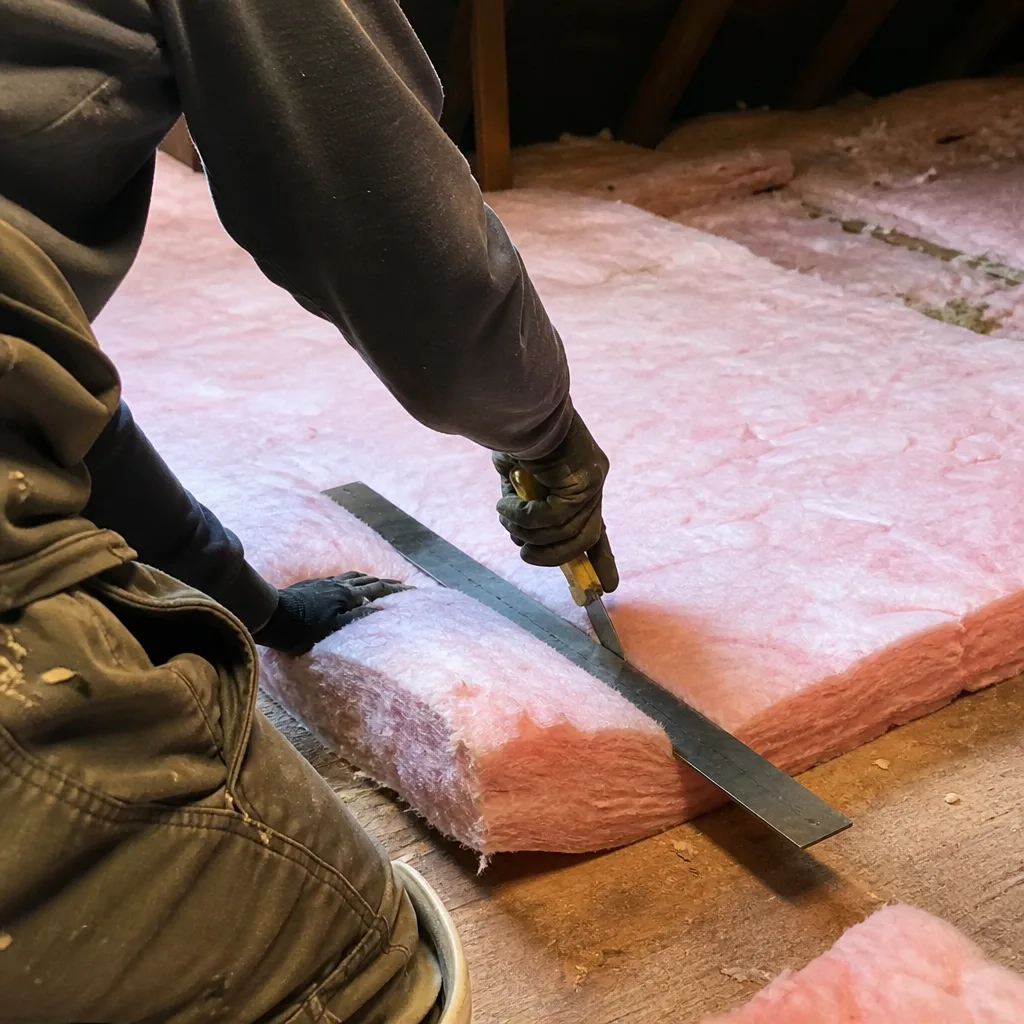
Under Haven Standard Clause 1, you receive a flat written price and written scope before anyone lifts a tool. That price doesn’t change because the crew found more bags were needed than estimated, and it doesn’t expand because access was tighter than expected. What the written scope covers is what you pay for.
What’s not typically included in an attic blown-in quote unless explicitly specified: insulation removal (if old material needs to come out first), knob-and-tube electrical remediation (an electrician’s scope, not an insulation contractor’s), HVAC duct work, or structural repairs. If any of these are discovered during the job assessment, they go into a separate written document with a separate price – no verbal change-order conversations, no surprise additions on the day of installation.
The 365-Day Done Right Promise applies to all completed work. If it’s not done right, we make it right – and that’s in writing before anyone starts.
Comparing Blown-In Cellulose vs. Fiberglass in Campbell’s Attics
Both materials work. The question is which one works better given the specific attic, the existing conditions, and the homeowner’s priorities.
Cellulose blown-in
Cellulose is made from recycled paper fiber treated with borate, which gives it fire resistance and pest-deterrent properties. It settles slightly after installation – a settled R-value is accounted for in the depth calculation at install, so this isn’t a problem when the job is done right. It performs well in Campbell’s climate, handles modest humidity without issue, and costs less per R achieved than blown fiberglass. It’s the more common choice for attic top-offs in Campbell. Sourced from GreenFiber and similar manufacturers.
Fiberglass blown-in
Fiberglass doesn’t settle, which makes it easier to guarantee depth consistency. It’s lighter, which matters in attics where the framing has any structural concerns. It doesn’t absorb moisture at all, which is relevant in attics with ventilation issues. The cost per bag is slightly higher, and reaching the same R-value requires more material by volume because the density is lower. Sourced from Owens Corning, Johns Manville, and Knauf, depending on what’s specified for the job.
For most Campbell attic top-offs, the performance difference between the two materials is modest – the air sealing underneath matters more. We’ll tell you which we’re recommending for your specific attic and why, in writing, before the job starts.
FAQs – Blown-In Insulation Cost in Campbell
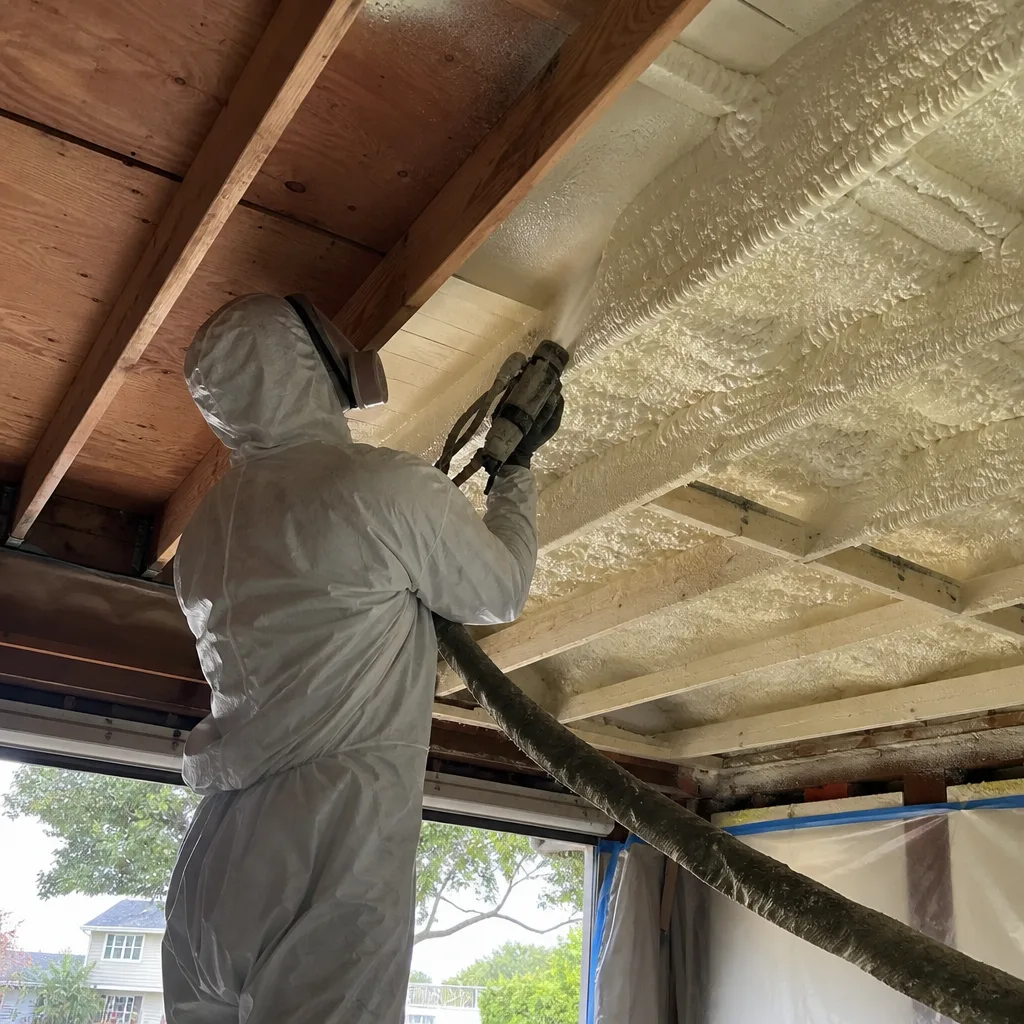
How much does blown-in insulation cost for a typical Campbell home?
Most blown-in insulation jobs in a Campbell home with a 1,500-2,000 sq ft attic run between $2,400 and $3,800 when air sealing is included – which it should be. Insulation-only (no air sealing) on the same attic runs $1,700-$2,500. Those ranges reflect current labor and material costs in Santa Clara County. For an exact written price on your specific attic, call (831) 534-3206 – estimates are free and the price is written before any work starts.
Is it cheaper to do blown-in insulation or batt insulation in Campbell?
Blown-in is typically $0.30-$0.60 per square foot less expensive than batt insulation for attic applications, and it covers irregular spaces, framing obstructions, and existing partial insulation more thoroughly than batts. For new construction with open, clear attic bays, the cost difference narrows. For the majority of existing Campbell homes – especially pre-1990 construction with partial insulation already in place – blown-in is both the more cost-effective and better-performing choice.
Does blown-in insulation qualify for a PG&E rebate in Campbell?
In most cases, yes. PG&E serves Campbell and has offered rebates for attic insulation upgrades as part of its residential energy efficiency programs. In 2025, those rebates ranged from approximately $150 to $400 depending on scope, the home’s starting conditions, and whether air sealing was combined with the insulation work. Rebate amounts and eligibility requirements change annually, so confirm current availability through PG&E’s portal or ask us before we write the estimate – capturing a rebate before the job starts reduces your net cost directly.
How long does blown-in insulation last in a Campbell attic?
Properly installed cellulose or fiberglass blown-in insulation in a Campbell attic lasts 20-30 years without significant performance loss, assuming no moisture intrusion or rodent activity disturbs it. The main threats to longevity in Campbell attics are roof leaks (which compact and degrade cellulose), rodent nesting (common in the area’s tree-lined neighborhoods), and HVAC condensation issues. A Documented Photo Record at installation gives you a baseline to compare against if you have the attic inspected years later.
Can I add blown-in insulation on top of existing insulation in Campbell?
Often yes, but not always. If the existing insulation is in good condition (no moisture, no rodent damage, not compressed to the point of losing R-value), blown-in can be added directly on top of it. If the existing material is contaminated, wet-damaged, or covering active knob-and-tube wiring – a real concern in Campbell’s pre-1980 housing stock – it needs to come out first. Removal runs $600-$1,400 added to the base job cost. An in-attic assessment before any work starts will tell you which situation you’re in. That assessment, the written scope, and the written price are all included before anyone starts working.
Is it worth air sealing before blown-in insulation, or can I skip it to save money?
Skipping air sealing to reduce the quote is the most common way homeowners end up disappointed with insulation results. Blown-in material slows conductive heat transfer through solid surfaces – it does not stop air from moving through gaps around can lights, top plates, and plumbing chases. In Campbell’s Climate Zone 4, those gaps are the primary source of summer heat gain and winter heat loss in the typical attic. We won’t blow insulation over an unsealed attic floor; air sealing is a prerequisite, not an upsell. The before-and-after blower-door numbers we document on applicable jobs exist specifically so you can see, in a single figure, what the sealing work actually accomplished.
What Wes Okafor Looks for in a Campbell Attic
Wes Okafor has assessed attics across Campbell since 2016 – everything from postwar bungalows near Campbell Avenue to newer construction in the Hacienda neighborhood. The consistent finding in Campbell’s pre-1990 stock is that the insulation isn’t the primary problem; the air leakage underneath it is. Homes that added insulation in the 1990s or early 2000s often have 6-8 inches of cellulose or fiberglass batts sitting over completely unsealed top plates and open can light boxes. The R-value is technically there. The performance isn’t.
The other thing Wes flags regularly in Campbell attics is the relationship between attic ventilation and insulation depth. Blocking soffit vents with blown-in material is a code violation and a moisture problem – proper installation keeps the insulation clear of the eaves using baffles, maintaining the ventilation channel. On every job, the written scope documents this explicitly so there’s no ambiguity about what the crew did or didn’t do at the eaves.
For homeowners who want to understand the broader building-envelope picture – not just the attic – the home page covers the full service line, from crawl space encapsulation to home energy audits.
Key Takeaways
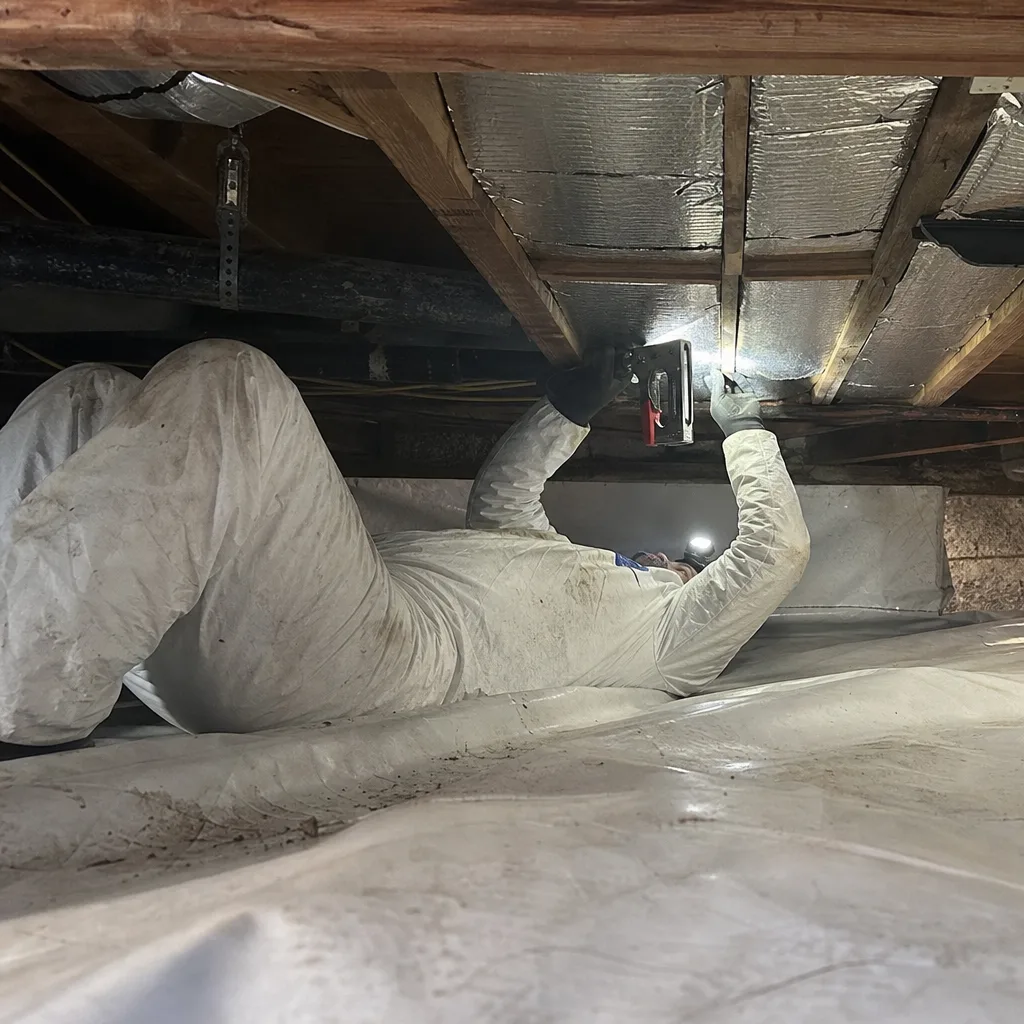
- Blown-in insulation in Campbell typically costs $2,400-$3,800 for a standard attic with air sealing included, and $1,700-$2,500 for insulation only.
- Air sealing must come first – insulation over unsealed penetrations underperforms its rated R-value regardless of depth.
- California’s Title 24 recommends R-38 minimum for Campbell (Climate Zone 4); many existing homes in the area are sitting at R-11 to R-19.
- PG&E rebates may reduce net cost by $150-$400; confirm current availability before the job is written.
- Cellulose is the more common choice for Campbell attics; fiberglass blown-in is preferred in certain ventilation and moisture situations.
- Before-and-after blower-door readings are documented on applicable jobs so you have a number, not just a promise.
- A written price before any work starts, a written scope, and a Documented Photo Record are included on every job – not optional.
- The 365-Day Done Right Promise applies to all completed work.
Get a Written Price for Your Campbell Home
If you know your attic square footage and have any sense of what’s currently up there (or not), we can give you a ballpark range on this call. If you want an exact written price, we come out, assess the attic, document what we find, and give you a flat number in writing before any decision is made. No work starts without it – that’s not a sales pitch, it’s just how every job at Envelope Insulation Co. works under the Haven Standard.
Call (831) 534-3206 to schedule a free estimate. A live person answers – not a voicemail, not a callback window measured in business days. If you’ve already received a written estimate from another contractor and want a second opinion, bring it. We’ll read it with you.
Written by Wes Okafor, Owner at Envelope Insulation Co. (operating as Topside Attic Insulation Campbell), serving Campbell and Santa Clara County since 2016.
Pricing reflects the Campbell, CA market as of 2026. Topside Attic Insulation Campbell offers free estimates – call (831) 534-3206.
What Our Customers Say
"They photographed rodent damage in the old insulation that we had no idea about, and priced the exclusion work separately so we could decide."
- Harriet N."Crawl space encapsulation done properly. Photographs of the vapour barrier at every seam, and the damp smell in the hallway is gone."
- Ainsley P."Two other companies quoted to blow more insulation on top of what was there. These were the only ones who said the existing material had to come out first, and explained why."
- Clifford E.