
Demilec Vapor Barrier Installation: The Campbell Owner’s Guide
Demilec vapor barrier installation in Campbell typically runs $1,800-$3,400 for a standard crawl space or attic application, and we stock Demilec-compatible membrane on every truck for same-day starts. Most Campbell homeowners discover their existing vapor barrier has failed when they notice musty odors returning after winter rains, or when a home inspector flags elevated moisture readings during a sale - the poly sheeting has either torn at penetration points or the seams have delaminated, letting ground moisture migrate straight into the floor assembly.
We see this pattern constantly in Campbell’s older neighborhoods near the Pruneyard Plaza corridor, where original 1960s and 1970s vapor barriers were installed before modern air-sealing standards existed and have now become brittle from seasonal clay-soil expansion.
Which Demilec Models This Applies To
Demilec does not sell vapor barrier as a standalone consumer product with model numbers in the way a water heater or furnace does. What we are matching is the Demilec closed-cell spray foam system that was previously installed in your assembly, and selecting a vapor barrier membrane that performs compatibly with that foam’s permeability rating.
If your home was treated with Demilec Heatlok HFO Pro, Heatlok XT, or Sealection 500, the existing foam likely has a perm rating below 1.0 - meaning it already functions as a vapor retarder on one side. The critical compatibility question is whether we need a Class I vapor barrier (0.1 perm or less, typically 6-mil poly) or a Class II retarder (1.0 perm or less, often kraft-faced or certain coated membranes) to avoid creating a double-vapor-barrier trap that sandwiches moisture in your floor joists.
We identify this by cutting a small inspection port and reading the spray foam’s density and cell structure. Demilec Heatlok HFO Pro, common in Campbell retrofits from 2018 onward, is a 2.0 lb/ft³ medium-density closed-cell foam. Pairing it with a 6-mil polyethylene sheet on the ground in a vented crawl space is standard. Pairing it with another low-perm layer on both sides of a wall cavity is not - and that is where we see the worst rot in Campbell’s tighter, renovated homes near downtown.
Topside Attic Insulation Campbell is an independent service provider with no affiliation to Demilec. We source membrane from multiple manufacturers including Demilec-compatible specifications, and we will show you the perm rating printed on the roll before we cut it.
Signs Your Demilec Vapor Barrier Installation Is Failing
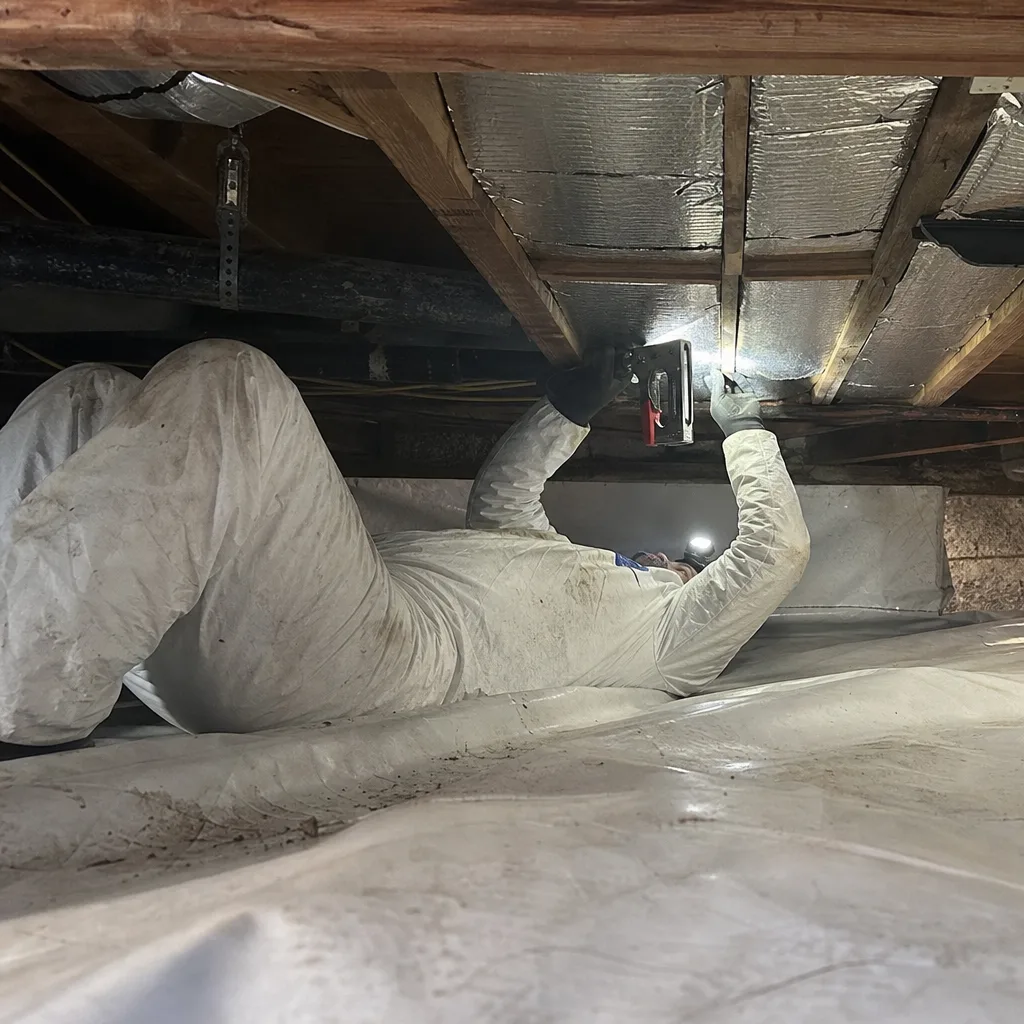
- Musty odors that worsen after rain. Campbell’s clay-heavy soil holds moisture for weeks. When the ground-facing poly tears at plumbing penetrations or the seam tape fails, that moisture evaporates directly into your floor assembly. The smell is your first indicator - by the time you see staining, the subfloor has been absorbing vapor for months.
- White or gray mineral deposits on the barrier surface. These are efflorescence, salts left behind as moisture moves through concrete or soil and evaporates at the membrane. They mean water is getting past the barrier and condensing against it, which tells us either the barrier has punctured or the perimeter seal has detached from the foundation wall.
- Sagging or pooled water on top of the vapor barrier. A properly installed barrier is laid over a thin layer of drainage gravel and graded toward a sump or daylight exit. When we find standing water, either the original grade was wrong or the barrier has sunk where it was not fully supported - common in Campbell crawl spaces where previous installers skipped the gravel bed to save on material.
- Mold or mildew on floor joist undersides. This is the failure mode that costs real money. Once mold establishes on wood, remediation extends the job scope significantly. In Campbell’s mild, humid winters, a 20% moisture content in joists sustained over 60 days triggers fungal growth. The vapor barrier’s job is to keep that moisture below 16%.
- Increased energy bills with no other explanation. Wet insulation conducts heat faster than dry. When your crawl space vapor barrier fails, the batt insulation between joists absorbs moisture and its effective R-value drops by 40-60%. Your HVAC works harder to maintain setpoint, and the blower-door number we measure post-repair almost always improves - not because we sealed new leaks, but because we stopped the moisture load that was driving air exchange through stack effect.
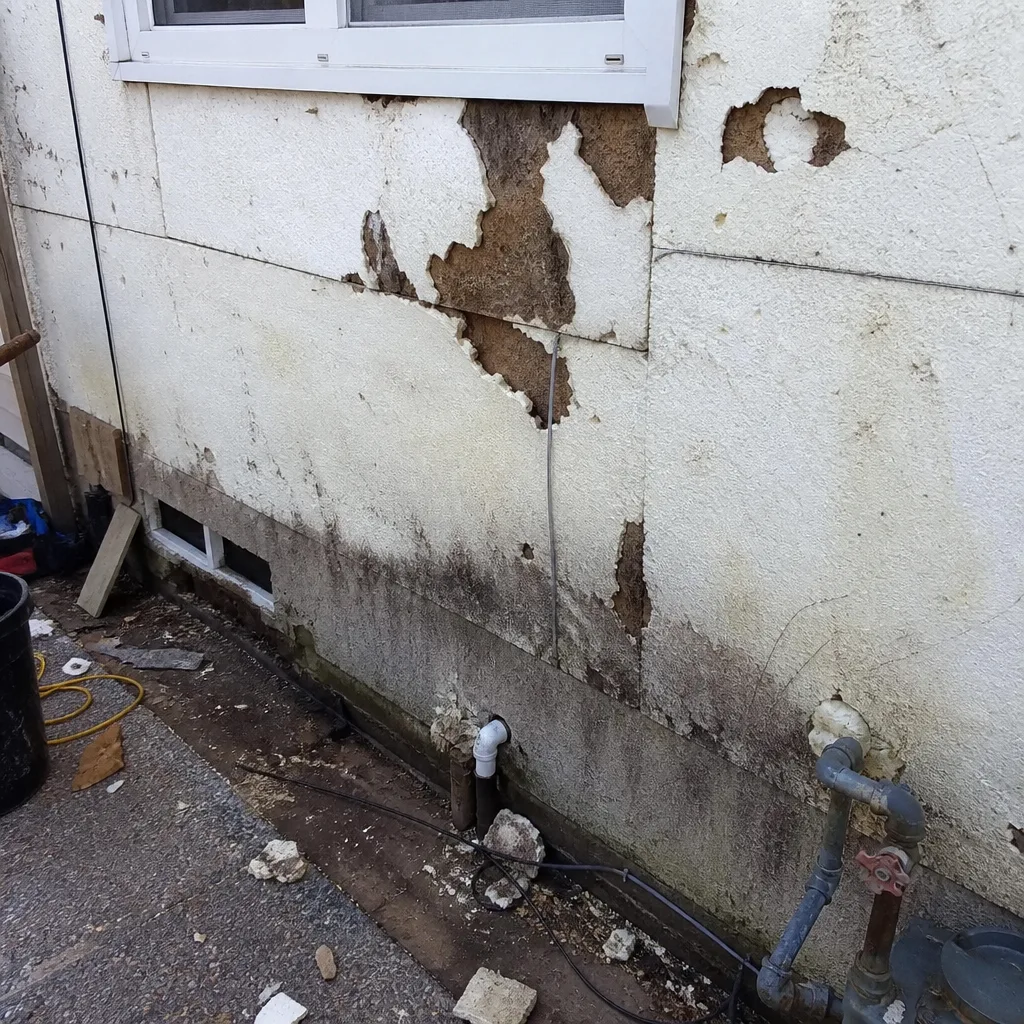 Before
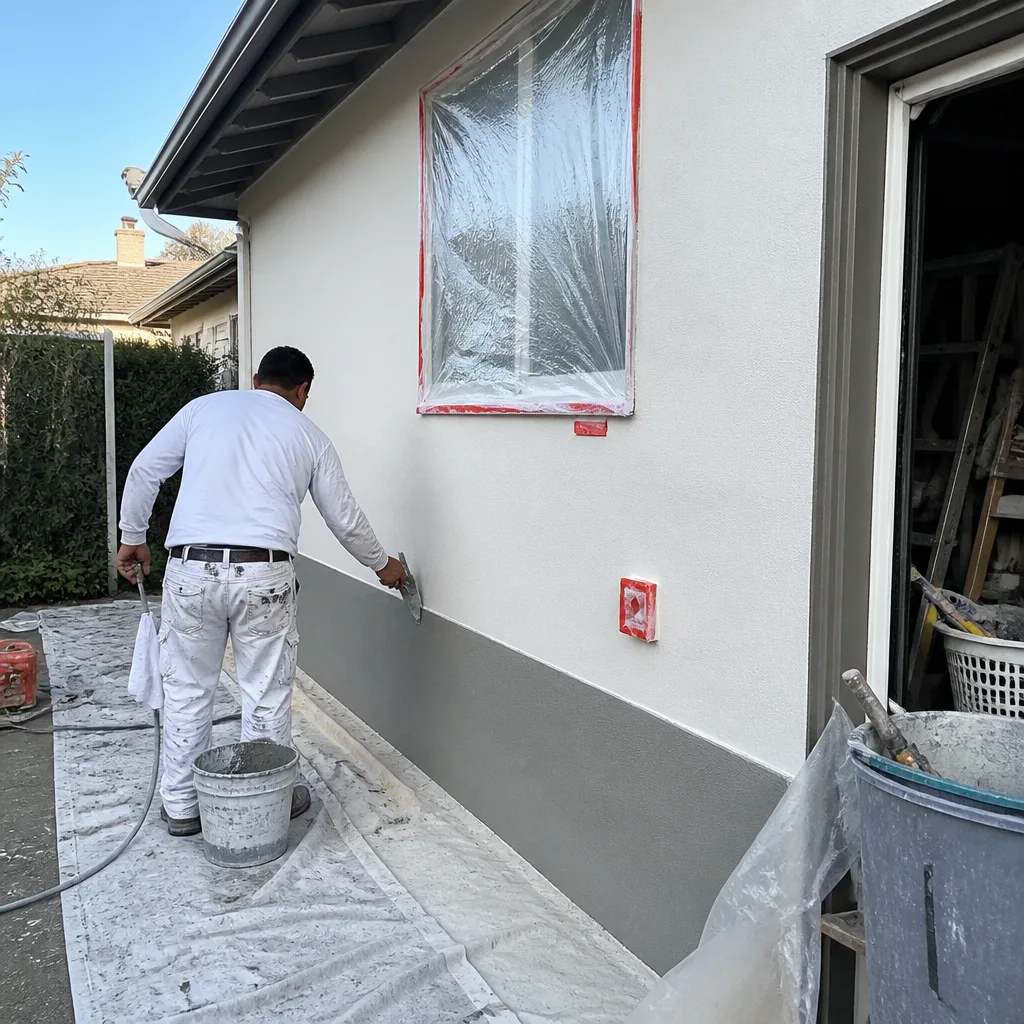 After
AfterReplacement Cost & What’s Included
Most Demilec vapor barrier replacements in Campbell run $1,800-$3,400 for a crawl space under 1,200 square feet. The range depends on four factors we assess during our free site visit: whether the old barrier requires removal (it usually does, and it is never fun), the condition of the soil grade underneath, how many plumbing and pier penetrations we must seal around, and whether we find mold remediation needs once the old layer comes out.
| Component | Typical Range (Campbell) |
|---|---|
| 6-mil polyethylene membrane, seams taped | $0.45-$0.65/sq ft material |
| Removal and disposal of failed barrier | $400-$800 |
| Soil regrade and drainage gravel bed | $300-$600 |
| Perimeter seal to foundation wall | $200-$400 |
| Penetration boots (plumbing, piers, HVAC) | $75-$150 each |
| Labor and installation | $800-$1,400 |
Every job includes our Documented Photo Record - before, during, and after shots of the crawl space - and a written scope with your exact price before anyone starts. Under Haven Standard Clause 1, the price you sign is the price you pay. The 365-Day Done Right Promise covers all workmanship, and we publish before-and-after blower-door numbers on every job where air sealing is part of the scope. Vapor barrier replacement alone does not always include blower-door testing, but if we are pairing it with attic air sealing - which we often recommend in Campbell’s older stock - you will receive both readings in a printed report.
DIY or Call Us?
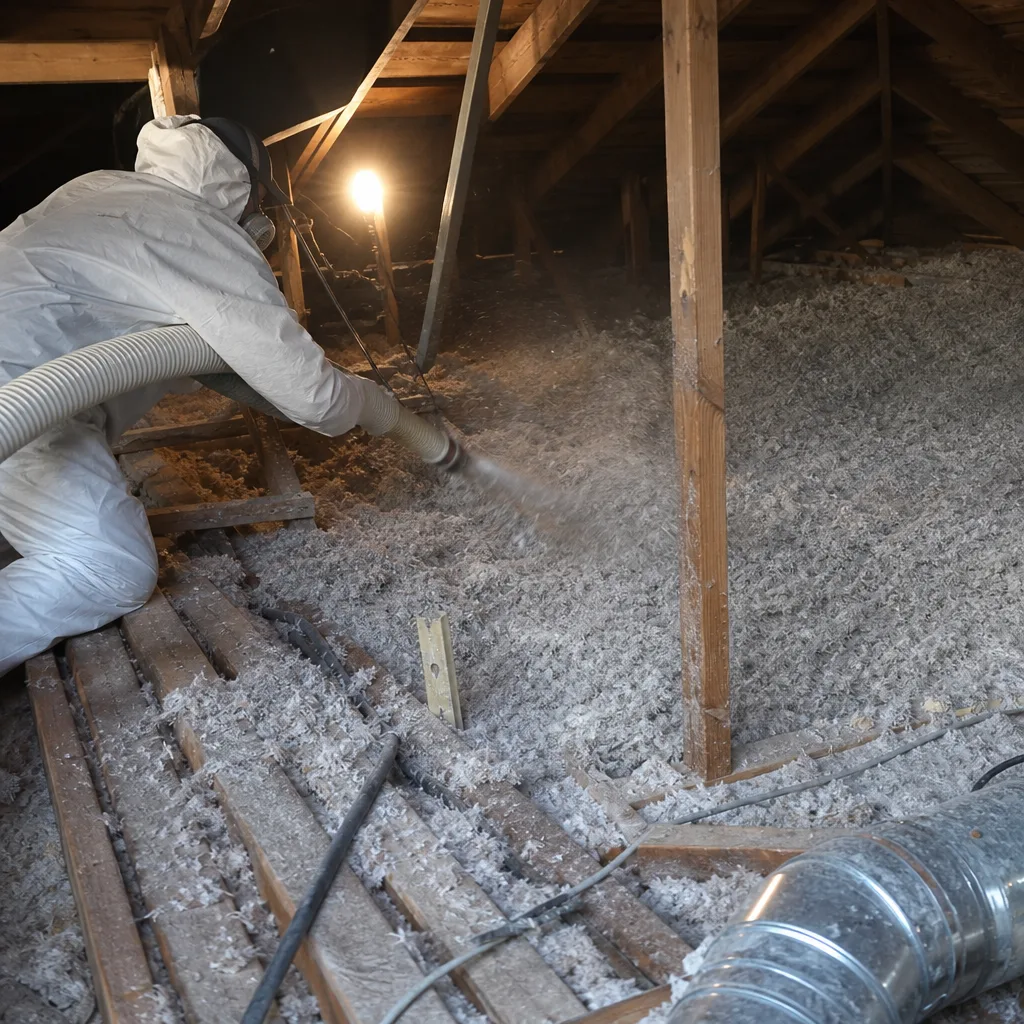
There is nothing inherently dangerous about laying polyethylene sheeting. The hazard is what you discover once you are in the crawl space.
A homeowner can safely check three things from the access hatch: whether the existing barrier has standing water on it, whether you can see tears or gaps at the perimeter, and whether you detect musty odors. Use a flashlight, not your phone, and do not enter if the space is less than 18 inches clear - that is where we find the most black widow activity in Campbell’s older neighborhoods.
Where DIY goes wrong: grading the soil properly so water flows to a sump or exit point, sealing around plumbing penetrations without creating stress points that tear in the first heat cycle, and knowing whether your existing Demilec foam already constitutes a vapor retarder on the opposing surface. We have been called to three Campbell homes in the past two years where a well-meaning owner installed a second 6-mil layer over their existing Demilec-sprayed rim joist, trapping moisture and rotting the sill plate. That repair started at $4,200.
Seal the leaks first. The insulation has nowhere useful to go until you do.
If you are unsure what Demilec product is in your assembly, or whether your crawl space needs barrier replacement or full encapsulation, call us at (831) 534-3206. We will read your existing setup with you and give you a written price before any work starts.
FAQs
In Campbell’s climate, a properly installed 6-mil polyethylene vapor barrier lasts 15-25 years before UV degradation and soil movement cause brittleness at stress points. The seam tape typically fails first, around year 10-14, which is why we double-tape critical seams and use mechanical fasteners at the perimeter. Call (831) 534-3206 if you are past the 12-year mark on an existing installation - we offer free second opinions on any written estimate.
Small punctures under 6 inches can be patched with compatible tape and a reinforcing patch, but widespread seam failure, UV embrittlement, or any mold-affected section requires full replacement. We do not patch over mold - the source must be remediated and the affected wood treated before new membrane goes down. We will show you the scope in photos before we quote either approach.
Most single-crawl-space vapor barrier replacements in Campbell are completed in one day, assuming no mold remediation or structural repairs. Jobs requiring soil regrade, sump installation, or pairing with attic air sealing extend to two days. We give you a written schedule with your price, and we text when the crew is en route.
Yes. We carry 6-mil and 10-mil reinforced polyethylene, seam tape, and penetration boots for all common Demilec foam configurations. For Campbell jobs, we also stock Reflectix as an alternative radiant barrier where attic conditions suit it. If your assembly requires a specific perm rating to match existing Demilec foam, we source and show you the specification sheet before installation.
Written by Wes Okafor, Owner & Lead Insulation Technician, Topside Attic Insulation Campbell at Topside Attic Insulation Campbell, serving Campbell and nearby areas.