
Johns Manville Wall Insulation in Campbell: What to Know First
Most Johns Manville wall insulation jobs in Campbell run between $2,400 and $5,800 depending on wall area, cavity condition, and whether we’re working around existing JM Spider or ComfortTherm batts. We’re an independent Johns Manville service provider, not a factory-authorized dealer, which means we source OEM and quality aftermarket materials based on what your walls actually need rather than what a single product line dictates. Typical turnaround from signed written scope to completion is 3-5 business days for standard drill-and-fill work, 5-8 days if we’re pulling failed batts and re-insulating behind lath-and-plaster in the older pockets near Campbell Avenue.
This page is for homeowners who’ve found Johns Manville insulation in their walls, are seeing cold spots or settling, and want to know whether to repair in place or pull and replace. If that’s your situation, call (831) 534-3206. We’ll read your walls with you and give you a written price before any work starts.
How Johns Manville Products Fail - and How We Fix Them
- JM Spider blown-in fiberglass settling in balloon-framed walls. Spider’s loose-fill binder breaks down faster in Campbell’s seasonal humidity swings, especially in pre-1980s homes near the Pruneyard where walls lack proper venting. We see 30-40% settling in cavities that should hold R-13. Our fix: extract the collapsed material with reverse-flow vacuum, seal top plates and electrical penetrations with acoustic sealant, then re-blow at calibrated density or switch to stabilized cellulose if the cavity geometry demands it.
- ComfortTherm batts degrading at exterior wall intersections. The poly-encapsulated facing on ComfortTherm splits at staple points and around plumbing stacks, creating convection loops you can feel as cold stripes on interior drywall. In Campbell’s mild but damp winters, this shows up first in north-facing bedrooms. We pull the compromised batts, air-seal the intersection with the rim joist using closed-cell foam, then reinstall with proper friction-fit and no compression at electrical boxes.
- Formaldehyde-free batts absorbing moisture in stucco-clad walls. JM’s formaldehyde-free fiberglass performs poorly when bulk water gets past cracked stucco, common in 1960s-70s Campbell tract homes with original Portland cement finishes. The batt density increases, R-value drops, and mold risk climbs. We diagnose with borescope inspection, remove wet material, repair the drainage plane with a fluid-applied membrane, then replace with hydrophobic mineral wool or closed-cell injection foam depending on cavity depth.
- Sound Control batts installed without decoupling. Homeowners near the Los Gatos Creek Trail buy JM Sound Control for interior noise, but contractors often stuff standard batts against drywall without resilient channel or mass-loaded vinyl. The STC improvement is half what the label promises. We assess the wall assembly, add clips and channel where structurally feasible, then reinstall batts at proper compression - or recommend Green Glue and double-layer drywall if the budget allows a proper retrofit.
- Polyiso wall sheathing tape failures at panel seams. JM AP Foil-faced polyiso used as exterior continuous insulation in Campbell’s few mid-century modern retrofits fails at tape joints when the original acrylic adhesive ages out. Thermal bridging returns at every seam. We remove failing tape, clean the foil face with isopropyl, then re-tape with Siga Wigluv or similar high-performance acrylic - or switch to fluid-applied joint treatment if the panel edges are too degraded for tape adhesion.
Our Johns Manville Wall Insulation Process
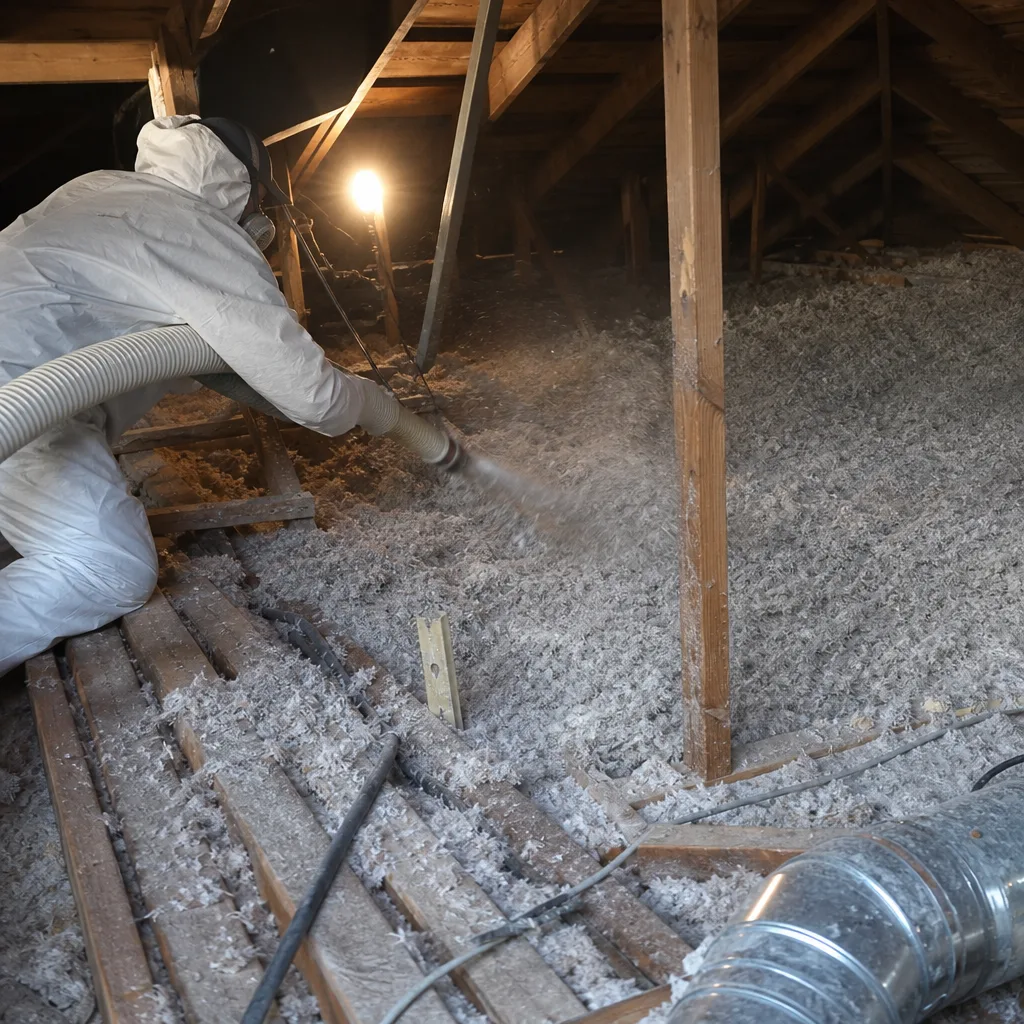
- 1
Site survey and blower-door baseline. We run a pressurization test to quantify envelope leakage before touching walls. In Campbell’s older stock, we regularly see 3,800-5,200 CFM50 on homes with unsealed top plates. You get the number in writing.
- 2
Cavity inspection with borescope and infrared. We map voids, moisture, and compressed batts without opening walls unnecessarily. Photos go into your Documented Photo Record.
- 3
Written scope and price. Haven Standard Clause 1: flat price, material spec, warranty terms, and blower-door target - all in writing before anyone lifts a tool. No exceptions.
- 4
Air sealing first, then insulation. Seal the leaks first. The insulation has nowhere useful to go until you do. We seal top plates, electrical penetrations, and window bucks with acoustic sealant or closed-cell foam depending on cavity access.
- 5
Material installation per manufacturer density spec. For JM Spider re-blows, we calibrate to 0.6 lbs/ft³ minimum. For batts, we verify friction fit without compression at wiring or plumbing. OEM or quality aftermarket - your scope specifies which and why.
- 6
Blower-door verification and photo record. We test again, hand you the before-and-after CFM50 readings, and deliver your Documented Photo Record before the crew leaves. The 365-Day Done Right Promise begins at that moment.
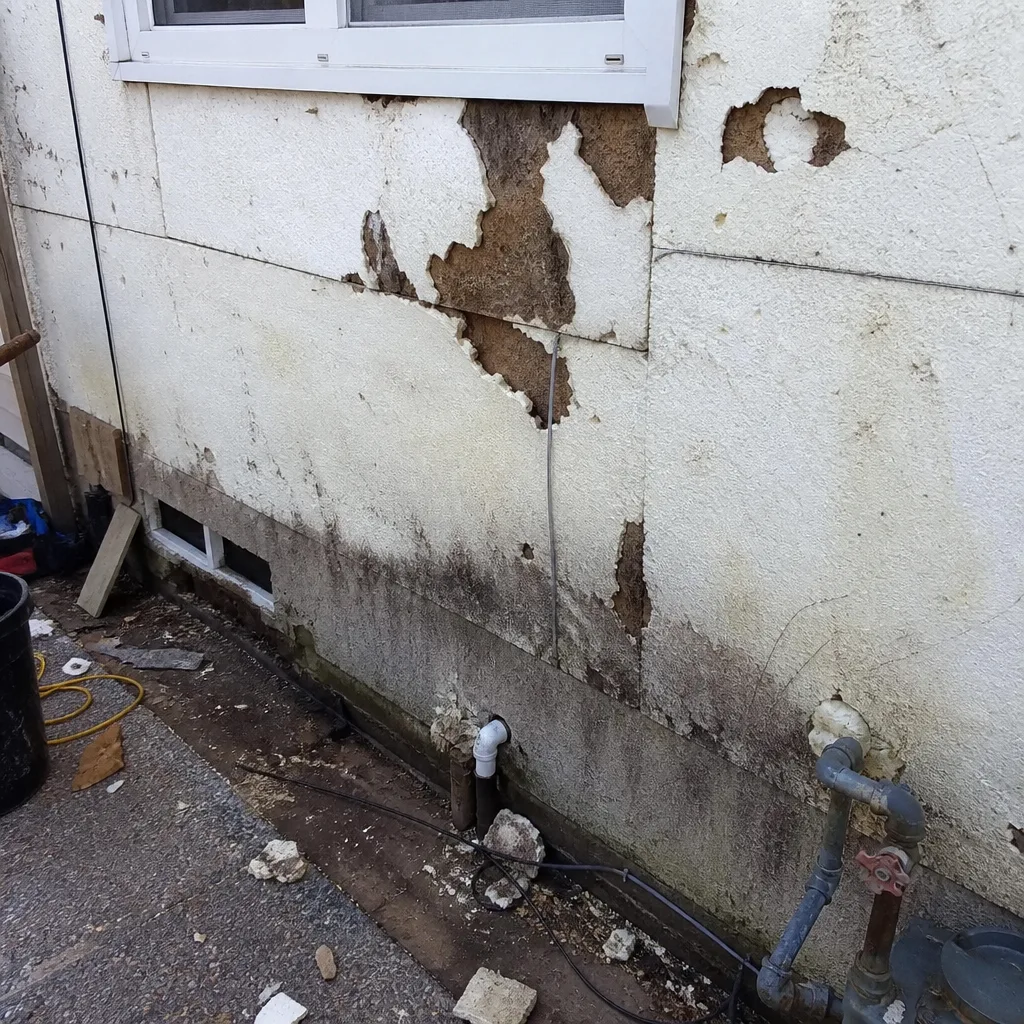 Before
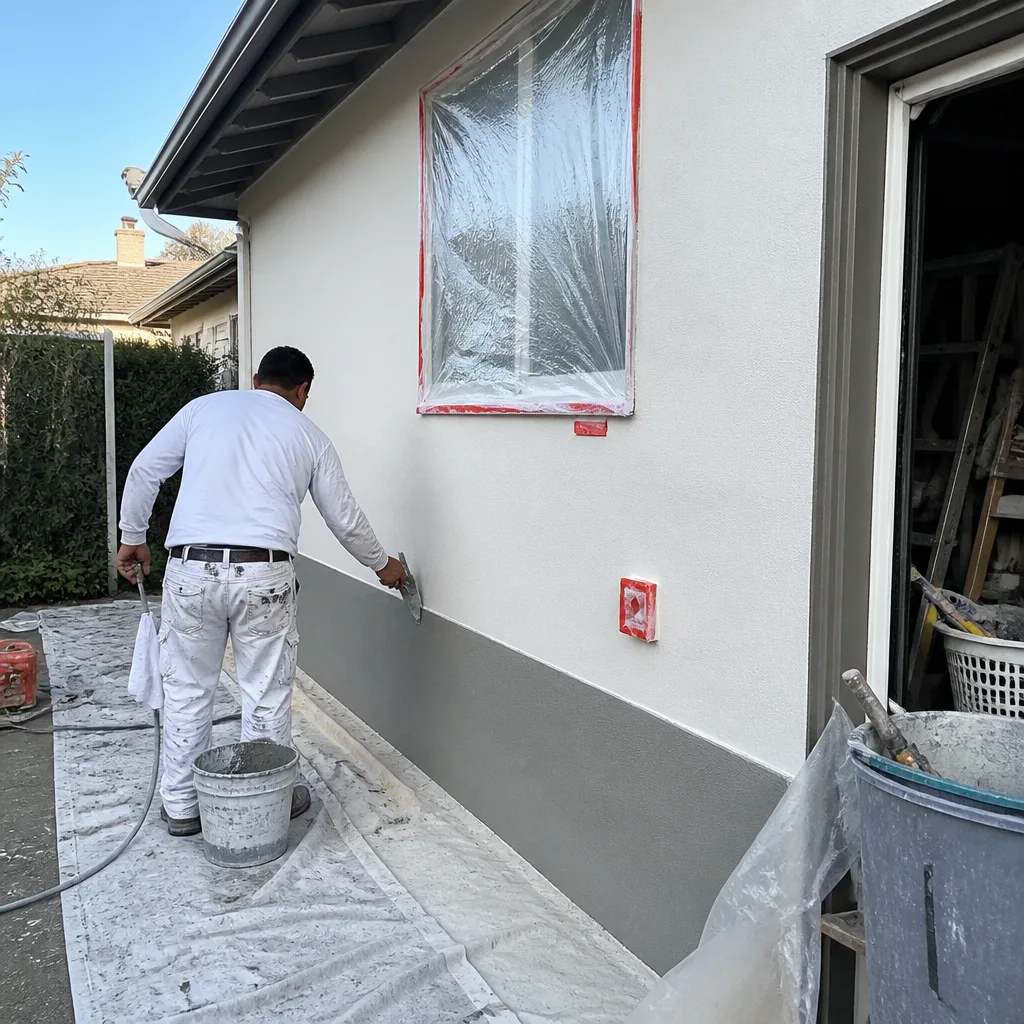 After
AfterWhat Johns Manville Wall Insulation Costs in Campbell
| Scenario | Typical Range | What Moves It |
|---|---|---|
| Drill-and-fill fiberglass (1-story, 1,200 sq ft walls) | $2,400-$3,600 | Cavity depth, stucco vs. wood siding repair |
| Drill-and-fill with existing batt extraction | $3,200-$4,800 | Plaster repair, electrical relocation, mold remediation |
| Interior wall soundproofing with JM Sound Control | $4,200-$5,800 | Resilient channel, double-layer drywall, Green Glue |
| Exterior continuous insulation (polyiso retrofit) | $5,500-$8,200 | Scaffolding, siding removal/reinstall, fluid-applied membrane |
These are Campbell-specific ranges based on jobs we’ve completed near the Pruneyard, on Rincon Avenue, and in the older pockets off Bascom. Your written price comes after inspection, not before. Bring us any competing written estimate for a Free Second Opinion - we’ll read it with you line by line. Call (831) 534-3206 to schedule.
Why Campbell Homeowners Call Topside Attic Insulation Campbell for Johns Manville Work
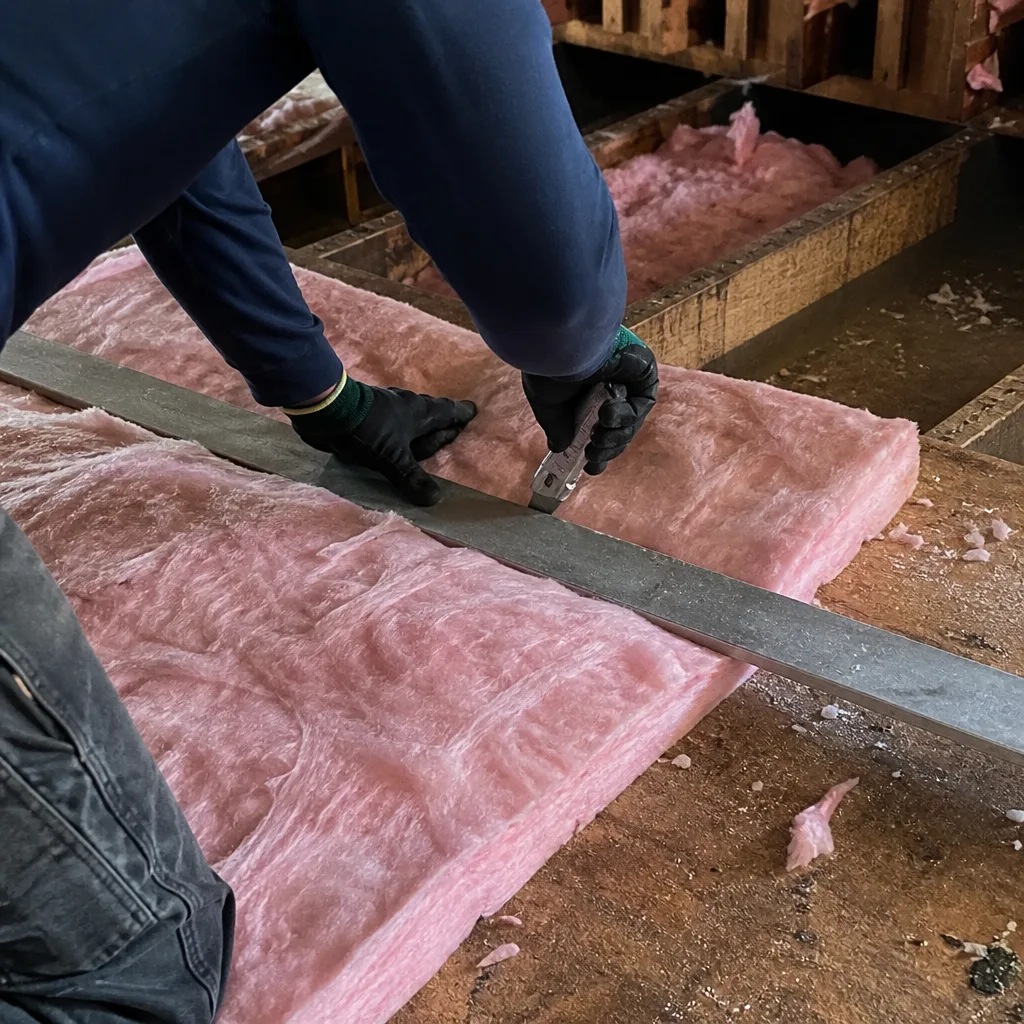
We’ve been serving Campbell since 2016, and the homes near the Pruneyard Plaza corridor taught us early that this vintage carries a specific set of air-sealing problems. Wes Okafor, our owner and lead technician, grew up on Chicago’s South Side and learned the trade at Olive-Harvey College before spending two decades in attic and wall assemblies across the South Bay. He still runs blower-door tests on every applicable job and hands customers a printed report with both numbers.
We don’t lock you into a single brand. Our materials come from Johns Manville, Owens Corning, Knauf, Rockwool, and others - we specify what performs, not what we’re obligated to move. Every job carries the 365-Day Done Right Promise, a written scope, and a Documented Photo Record. Calls are answered by a live person 24/7. No voicemail loops.
FAQs
No. Johns Manville’s product warranties cover manufacturing defects, not installation method, and they don’t restrict who handles the material. Our concern is installing to spec so any legitimate product claim remains valid. If we find a factory defect during extraction, we document it and advise you on the JM claim process. Call (831) 534-3206 if you’ve got a specific warranty question - we’ll look at your paperwork with you.
Most Johns Manville products arrive within 3-5 business days through our San Jose distributor. ComfortTherm with the poly facing you sometimes see in Campbell retrofits can take 7-10 days if the warehouse is light on that SKU. We don’t start work until materials are on-site and inspected - no partial jobs left open to weather. If your timeline is tight, we’ll discuss quality aftermarket equivalents in your written scope.
Repair is cheaper only if settlement is under 20% and the cavity geometry allows proper re-densification. Beyond that, extraction and re-blow usually costs 15-25% more than topping off, but the performance difference is substantial - we’ve measured 40% better effective R-value after full replacement with proper air sealing. We give you both numbers in writing and let the math decide. Call (831) 534-3206 for an exact quote - estimates are free.
Yes. Knauf EcoSeal and CertainTeed Safer Choice both meet the same emissions standards, and Rockwool is inherently formaldehyde-free. If indoor air quality is your priority, we spec accordingly. Your written scope names the exact product and its certification so there’s no ambiguity.
We don’t treat insulation as an emergency trade - there’s no burst-pipe urgency that justifies rushed work. For active moisture intrusion or mold, we can inspect same-day and scope temporary measures, but proper remediation follows a written plan. Calls are answered live 24/7, and we can usually inspect within 48 hours in Campbell.
Written by Wes Okafor, Owner & Lead Insulation Technician, Topside Attic Insulation Campbell at Topside Attic Insulation Campbell, serving Campbell and nearby areas.