
Knauf Attic Insulation: The Campbell Owner’s Guide
We stock and install Knauf-compatible blown-in fiberglass and EcoBatt insulation for Campbell homes, with most attic retrofits running between $2.40 and $4.20 per square foot depending on the target R-value and the condition of what’s already up there. Same-day installation is available when we have your target density and thickness in the warehouse, which we usually do for Knauf’s standard Jet Stream and Atticat blowing wool lines. Most Campbell homeowners realize their Knauf insulation is underperforming when the upstairs bedrooms won’t hold temperature in July or their PG&E bill spikes 30% year-over-year despite no change in thermostat setting - the material hasn’t vanished, it’s settled, compressed, or was blown over an attic floor that was never properly sealed.
Which Knauf Models This Applies To
Knauf’s residential attic line breaks into three main blowing wools you’ll find in Campbell homes built from the mid-1990s forward: Jet Stream ULTRA, Jet Stream MAX, and the Atticat system (the pink-bagged product sold through retail channels and often installed by homeowners or handymen). Jet Stream ULTRA is a 0.5 pcf density fiberglass designed for open-blow attic floors at R-38 to R-60; Jet Stream MAX runs slightly higher density at 0.6 pcf and is what we spec when the homeowner wants R-60 in a 2×10 joist bay without overfilling into the eaves. Atticat is the consumer-grade cousin - same base glass, but the bagged format and lower installed density mean it settles faster, especially in Campbell’s dry summers where thermal cycling is aggressive.
Identification is straightforward: Jet Stream bags carry a blue-and-white label with the density printed in the lower right corner; Atticat is pink-labeled with a cartoon cat. The critical compatibility gotcha is the blowing machine. Jet Stream MAX requires a high-pressure hopper - we run a Krendl 425 or equivalent - and feeding it through a standard rental unit designed for Atticat will fracture the fibers and drop your effective R-value by 15-20%. For retrofits where we’re adding over existing Knauf, we match the fiber type (glass over glass) to avoid compression mismatches that create thermal bridges. We also stock Reflectix radiant barrier rolls for Campbell homes where the roof deck runs hot, though that’s a separate decision from the insulation body.
Topside Attic Insulation Campbell is an independent service provider with no affiliation to Knauf Insulation or its parent company. We source Knauf, Owens Corning, Johns Manville, and other brands based on what the assembly actually needs.
Signs Your Knauf Attic Insulation Is Failing
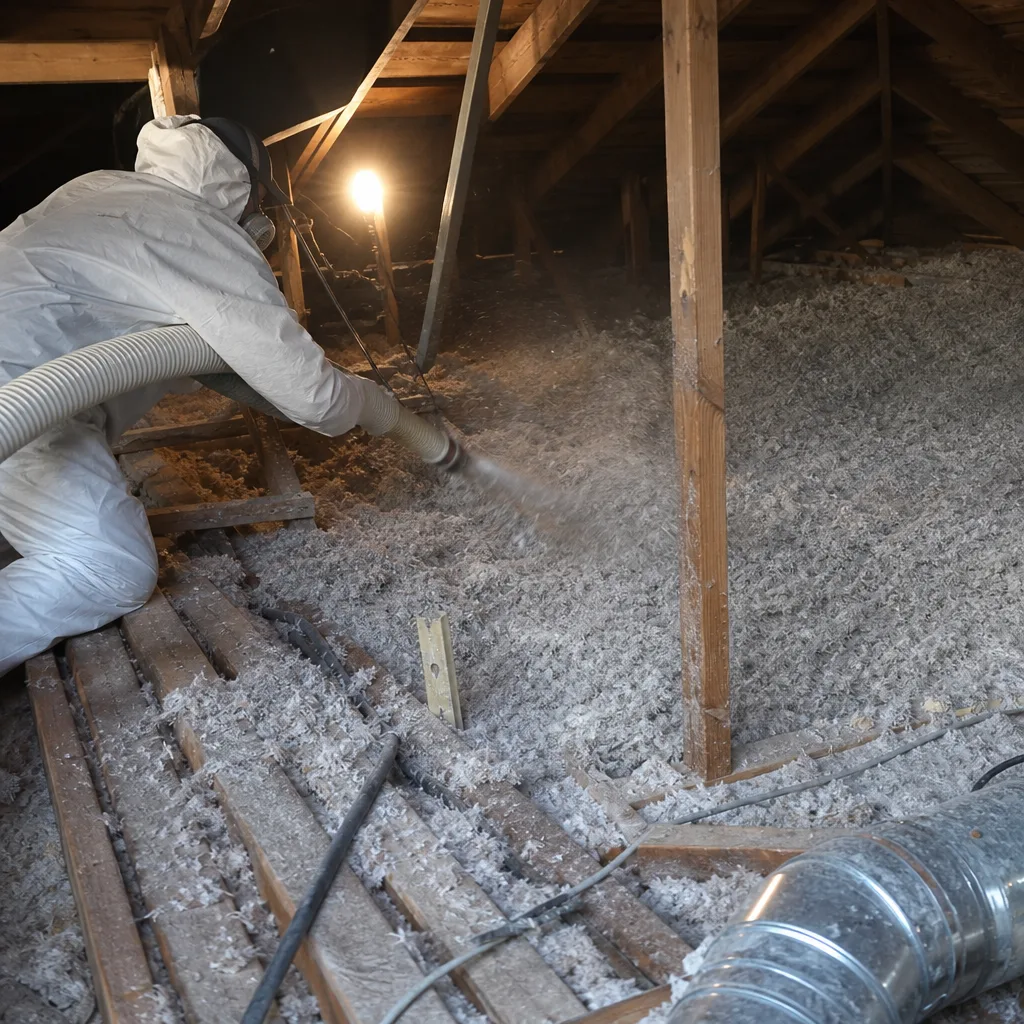
- Uneven temperature between rooms. The hallway thermostat reads 72 but the back bedroom hits 78 by 3 p.m. This usually means the Knauf has settled away from the eaves or was never blown to full depth in the perimeter bays, leaving thermal short-circuits where the ceiling drywall is effectively uninsulated.
- Dust streaking at ceiling penetrations. Dark lines around recessed can lights or bathroom fan housings indicate conditioned air is leaking into the attic, carrying drywall dust that deposits on the Knauf surface. The insulation isn’t the problem yet, but it’s being bypassed - and every cubic foot of air that escapes is one your HVAC has to recondition.
- Ice damming or persistent roof-edge moisture. Rare in Campbell, but we see it in shaded pockets near the Los Gatos Creek corridor. Warm attic air melts roof snow; water refreezes at the eave. The Knauf is doing its job in the middle of the attic but missing at the perimeter where air sealing failed first.
- Visible compression or foot-trail paths. If you can see joists poking through or pathways where an electrician walked last year, the Knauf has been disturbed and not restored. Compressed fiberglass loses up to 50% of its rated R-value; a 12-inch depth crushed to 6 inches performs like R-19, not R-38.
- Insulation age exceeding 15 years with no air sealing. Knauf fiberglass doesn’t rot, but in Campbell’s climate - hot, dry summers, occasional winter rain intrusion through undetected leaks - the material accumulates dust and occasional rodent debris that degrades its loft. More critically, the house beneath it has shifted, settled, and developed new penetrations that the original installation never addressed.
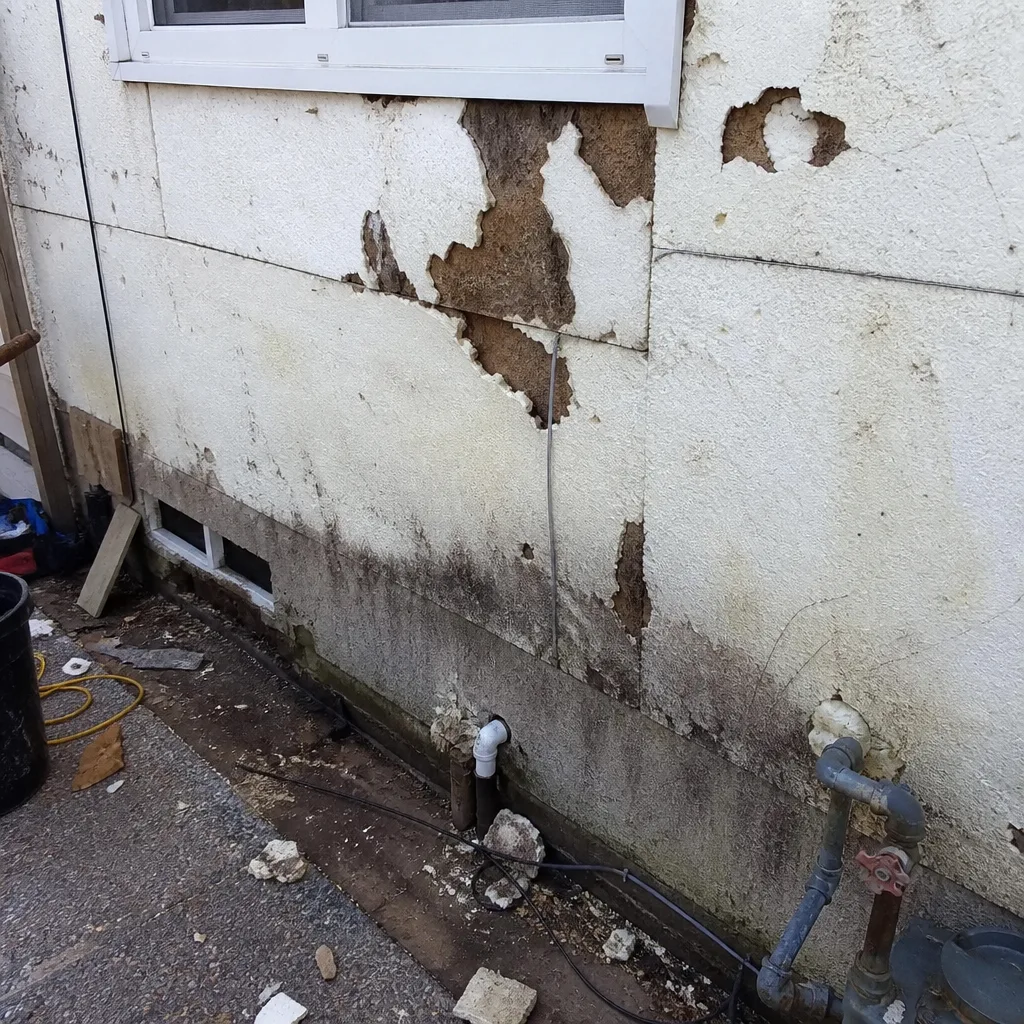 Before
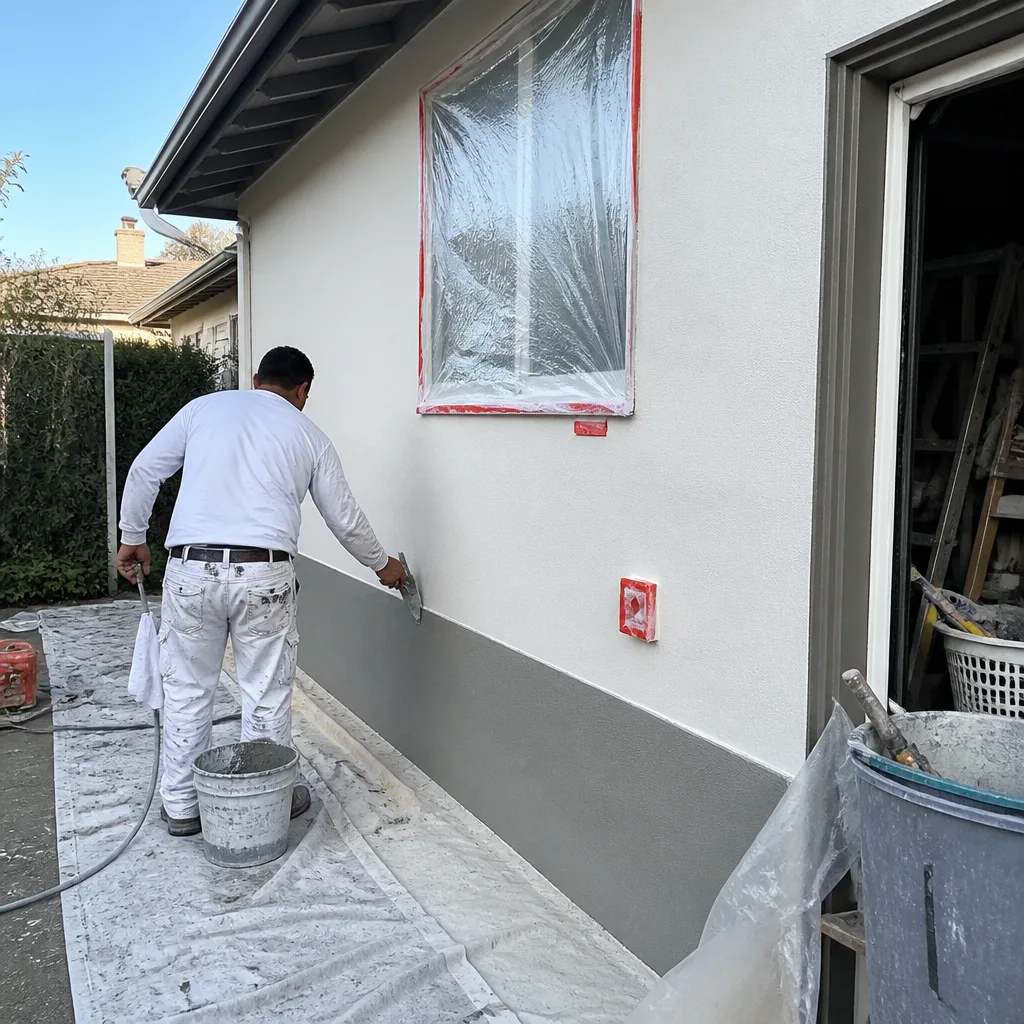 After
AfterReplacement Cost & What’s Included
For a typical Campbell ranch or split-level between 1,200 and 2,200 square feet of attic floor, a full Knauf replacement with air sealing runs $3,800 to $7,200. That includes removal of the existing degraded material, sealing of top plates, wire penetrations, and can-light housings with fire-rated caulk and cover boxes, then blowing new Knauf Jet Stream to the specified depth. Add $600-$1,400 if we’re also installing baffles at every eave to maintain vent channel clearance, which we recommend on any home with soffit vents.
The price spread comes from three factors: how much existing material has to come out (heavier, dirtier removal costs more), whether the attic floor is walkable or requires plank staging, and the target R-value - California Title 24 now calls for R-38 minimum in Climate Zone 4, but we quote R-49 as our standard for Campbell because the incremental material cost is modest and the performance difference is measurable. Every job gets a Written Price Before Any Work Starts under Haven Standard Clause 1, and the 365-Day Done Right Promise covers both the air sealing and the insulation install. We publish before-and-after blower-door numbers on every job so you can verify the envelope tightened - typical Campbell homes start around 3,500 CFM50 and finish near 2,000 after proper sealing.
DIY or Call Us?
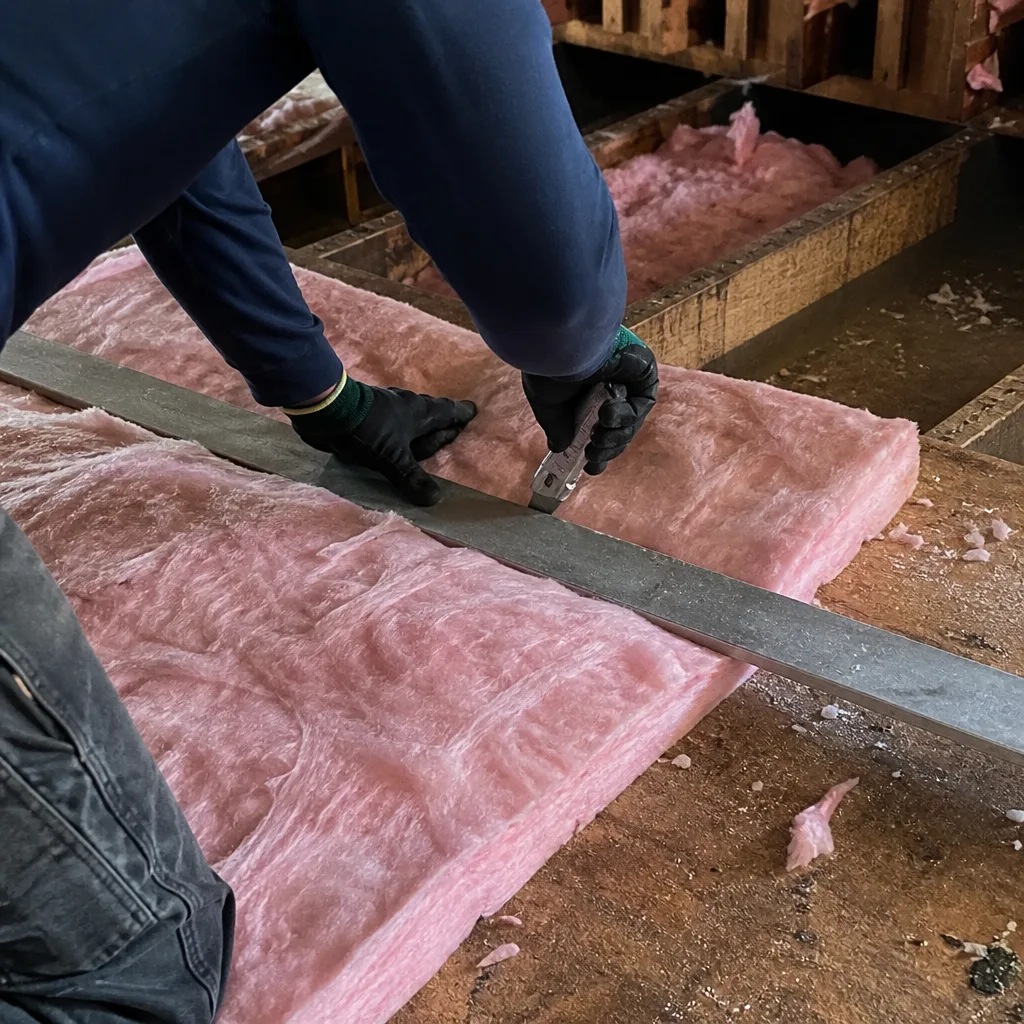
There’s nothing inherently dangerous about handling Knauf fiberglass - wear a respirator, long sleeves, and don’t track it into your living space. What goes wrong is the sequence. We’ve walked dozens of Campbell attics where the homeowner blew new insulation over the old, never sealed the leaks, and now has a thicker blanket doing the same ineffective job. The blower-door test is the honest scorecard, and most homeowners don’t own one.
What you can safely check: measure your existing depth with a yardstick in five spots, look for visible gaps at the eaves, and verify your bathroom fans vent through the roof, not into the attic. What we handle: the combustion safety check before we change attic ventilation, the hot-work permits if we’re sealing around chimneys, and the blower-door verification that proves the assembly actually improved. Seal the leaks first. The insulation has nowhere useful to go until you do.
Call (831) 534-3206 for a free estimate. We’ll bring a written price, not a sales pitch.
FAQs
The fiberglass itself is inert and doesn’t degrade chemically, but its installed performance declines as it settles, compresses, or gets contaminated. In Campbell’s dry, thermally-cycling climate, we see effective lifespans of 15-25 years for well-installed, undisturbed material, and as little as 8-12 years when it was blown over an unsealed attic floor or installed at inadequate depth. Call (831) 534-3206 and we’ll measure what you have now - estimates are free.
Sometimes, but only after the attic floor is properly air sealed and the existing material is dry, uncontaminated, and not compressed below its original thickness. We’ve added over old Knauf in Campbell homes where the previous install was clean and simply under-depth; we’ve also pulled out saturated or rodent-compromised material that would have trapped moisture against the ceiling drywall. We make that call during the initial inspection and give you a written scope either way. Call (831) 534-3206 for an exact quote - estimates are free.
Most Campbell homes are a one-day job for removal plus air sealing, and a second day for blowing the new Knauf to depth. Larger homes or those with extensive recessed lighting that needs cover-box installation may run into a third day. We don’t rush the blower-door test - it’s the last thing we do before we leave, and it takes about 45 minutes to set up and run properly. Call (831) 534-3206 to check availability.
We keep Jet Stream ULTRA and MAX in both standard and high-density formulations at our Campbell warehouse, along with the full range of fire-rated sealants, cover boxes, and baffles the job actually requires. Atticat and specialty Knauf products like ECOSEAL Plus spray-applied air barrier are ordered to spec with a 2-3 day lead time. For most Campbell retrofits, we can inspect this week and install next. Call (831) 534-3206 to schedule.
Written by Wes Okafor, Owner & Lead Insulation Technician, Topside Attic Insulation Campbell at Topside Attic Insulation Campbell, serving Campbell and nearby areas.