
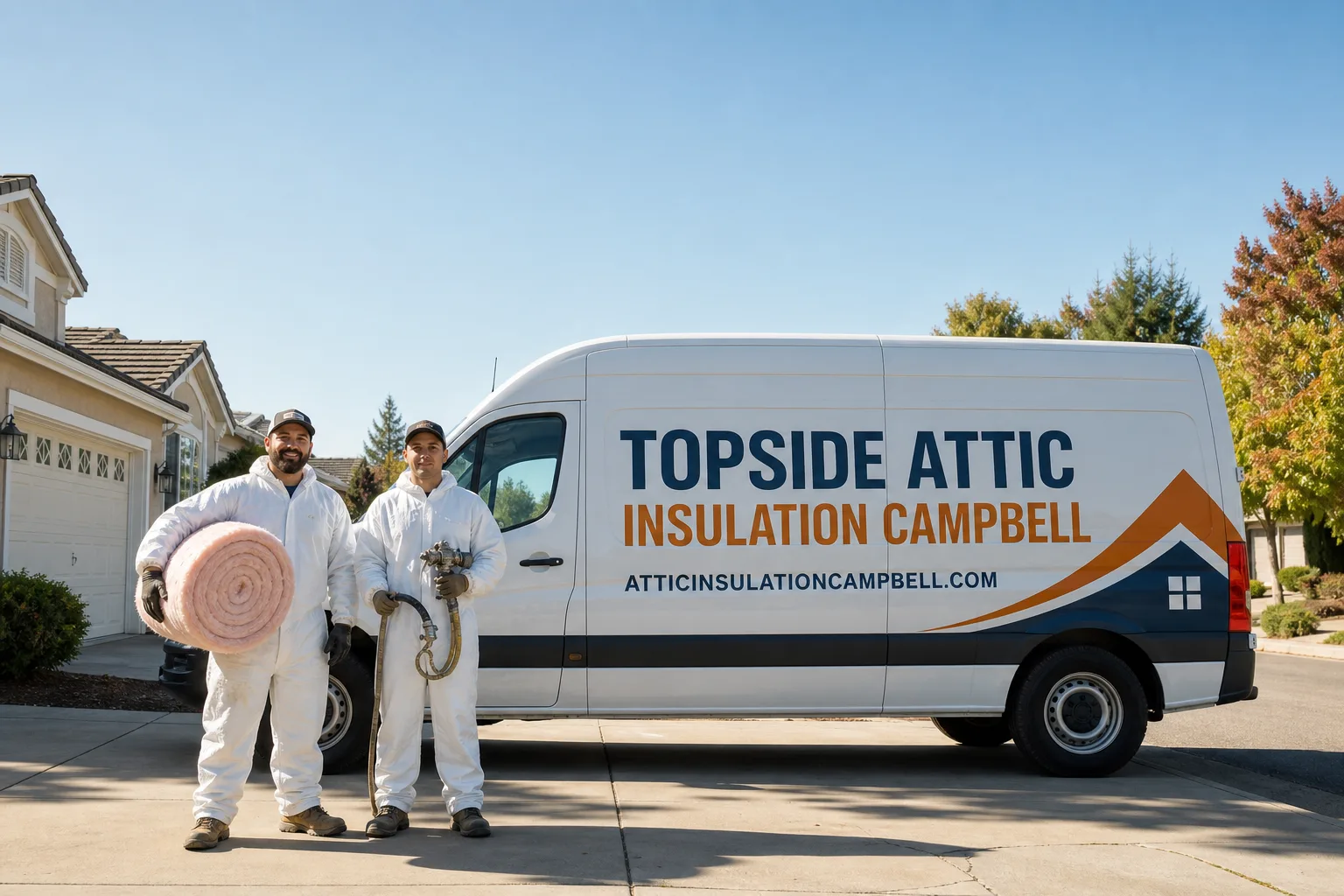
How Much Does Wall Insulation Cost in Campbell?
Wall insulation in Campbell, CA typically costs between $1.50 and $4.25 per square foot of wall cavity, depending on the insulation type, access method, and whether air sealing is completed first. For a standard 1,500-square-foot Campbell ranch home, most homeowners pay between $2,800 and $7,400 for a full exterior-wall insulation project. Blown-in retrofits through small drilled holes tend to land in the middle of that range; open-wall new construction or gut-rehab work sits at the lower end per square foot but higher overall because more wall surface is involved.
Those numbers reflect what we actually see on jobs in Campbell – not a national average pulled from an aggregator. Campbell’s housing stock skews toward 1950s-1970s wood-frame construction, and many of those walls were built with either no insulation or degraded fiberglass batts that have settled and lost their R-value. That context matters for pricing because it determines the access strategy before anything else.
Wall Insulation Cost Breakdown (2026)
Wall insulation pricing breaks down by method and material. Here is what each option typically runs in the Campbell market right now:
| Method / Material | Typical Cost per Sq Ft (Wall Cavity) | Typical Project Total (1,400-2,000 sq ft home) | Best Fit |
|---|---|---|---|
| Dense-pack blown cellulose (retrofit, drill-and-fill) | $1.80 – $2.80 | $3,200 – $5,800 | Existing closed walls, no demo |
| Dense-pack fiberglass (retrofit, drill-and-fill) | $2.00 – $3.10 | $3,600 – $6,400 | Existing closed walls, moisture-sensitive areas |
| Blown-in fiberglass batts (open wall, new or gut rehab) | $1.50 – $2.20 | $2,800 – $4,500 | Walls open during remodel |
| Spray foam – closed-cell (open wall only) | $3.50 – $5.50 | $6,200 – $11,000+ | High-performance builds, moisture control |
| Spray foam – open-cell (open wall only) | $2.20 – $3.50 | $4,000 – $7,200 | Sound control, open-wall additions |
| Mineral wool / Rockwool batts (open wall) | $2.50 – $3.80 | $4,600 – $7,800 | Fire resistance, acoustic performance |
| Injection foam (drill-and-fill retrofit) | $3.00 – $4.25 | $5,500 – $8,500 | Older homes needing air sealing + insulation together |
| Air sealing only (top plates, penetrations, rim joists) | $0.40 – $0.90 per sq ft of treated area | $600 – $1,800 as a standalone service | Prerequisite before any insulation is added |
A few things worth explaining about that table. First, “wall cavity square footage” is not the same as your home’s square footage. A 1,600 sq ft single-story Campbell home with 8-foot ceilings and a perimeter of roughly 160 linear feet has approximately 1,280 sq ft of wall cavity to insulate – that is what gets measured and priced. Two-story homes have more linear feet of exterior wall and therefore more cavity area relative to their footprint.
Second, the air-sealing line item is not optional at Envelope Insulation Co. Under our standard process, we seal top plates, can-light penetrations, electrical and plumbing pass-throughs, and rim joists before insulation is ever added. Air sealing is completed first – that is the order, and it does not change. Blowing insulation over unsealed gaps is like filling a bucket with a hole in it. When we quote a wall insulation job in Campbell, the written price includes both steps because doing them separately defeats the purpose of either one.
Third, materials come from manufacturers we work with routinely: Owens Corning, Johns Manville, Knauf, Rockwool, CertainTeed, Icynene, Demilec, and GreenFiber. We use the material that fits the job, not the one that fits a proprietary agreement.
What Affects Wall Insulation Pricing in Campbell
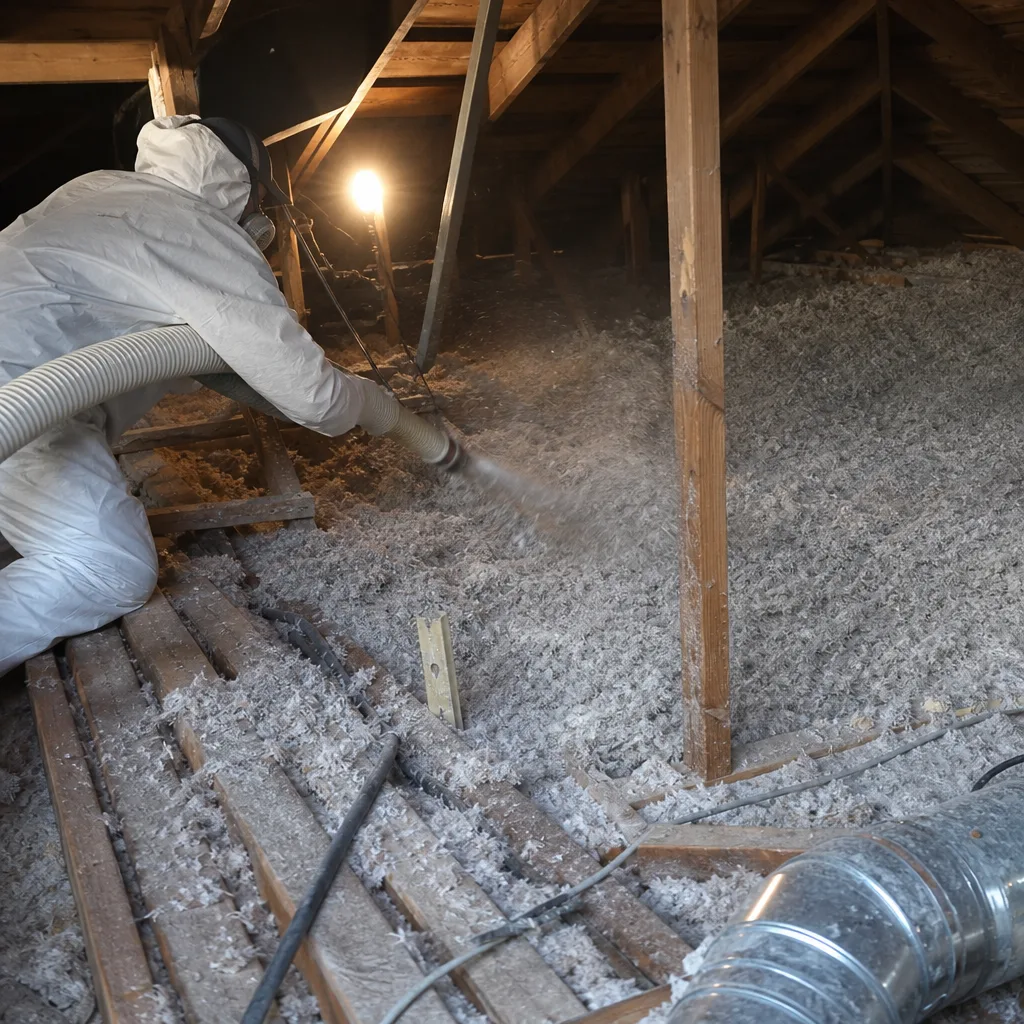
- Access method – closed wall vs. open wall. Retrofit drill-and-fill work on closed walls requires a technician to drill 2-inch holes every 16 or 24 inches (depending on stud spacing), inject dense-pack material, and patch each hole. That labor-intensive process costs more per square foot than insulating open walls during a remodel – but it costs far less than the drywall demo and repair that open-wall work requires if the walls were not already open. In the Cambrian Park and Dry Creek neighborhoods of Campbell, where 1960s homes rarely have any wall insulation at all, drill-and-fill retrofits are the most common project type we complete.
- Exterior cladding type. Campbell homes with wood lap siding, stucco, or T1-11 panels each present different exterior access scenarios. Stucco removal to blow from outside is rarely cost-effective; interior drill-and-fill or removal of interior drywall is usually the better path. Homes with wood lap siding can sometimes be drilled from the exterior and the siding replaced over patched holes, which changes the labor estimate.
- Existing insulation condition. Many Campbell homes built before 1975 have fiberglass batts that have settled, shifted, or been compressed by post-original electrical work. Settled batts lose R-value – R-13 batts installed at 75% density are performing closer to R-9 or R-10. When existing material is in bad shape, it sometimes needs to be removed before new insulation goes in, which adds cost. We document what we find in photos before any material is disturbed – that is the Documented Photo Record included on every job.
- Wall depth and stud configuration. Standard 2×4 framing (common in Campbell homes built before the mid-1980s) allows for approximately R-13 to R-15 of batt or dense-pack insulation. Homes with 2×6 framing can hold R-19 to R-23, and that difference shows up in material cost. Some homeowners doing gut rehabs choose to add rigid foam board to the exterior sheathing layer to get effective wall R-values above R-20 without changing the stud framing – that adds $1.20 to $2.80 per square foot to the exterior wall area but meaningfully reduces heating and cooling loads.
- Campbell’s mild but varied microclimate. Campbell sits at approximately 350 feet elevation, and temperatures in the Rincon and Los Gatos Creek corridor areas can drop 8 to 12 degrees colder than central Campbell on clear winter nights due to cold-air drainage. Homes on the western edge near the Pruneyard area experience slightly warmer winter minimums. That temperature variation affects how much the wall assembly contributes to comfort and energy bills – and it affects how we frame R-value recommendations for different addresses.
- California Title 24 and permit requirements. Most standalone insulation retrofit jobs in Campbell do not require a building permit, but projects tied to a permitted remodel do. If your wall insulation work is part of an addition or a permitted gut rehab, the installation must meet current California Energy Code (Title 24) minimums – R-13 minimum for 2×4 walls in Climate Zone 4, which covers Campbell. Work that triggers permit review may require inspection, and that can affect sequencing and cost. We flag this in the written scope before any work starts.
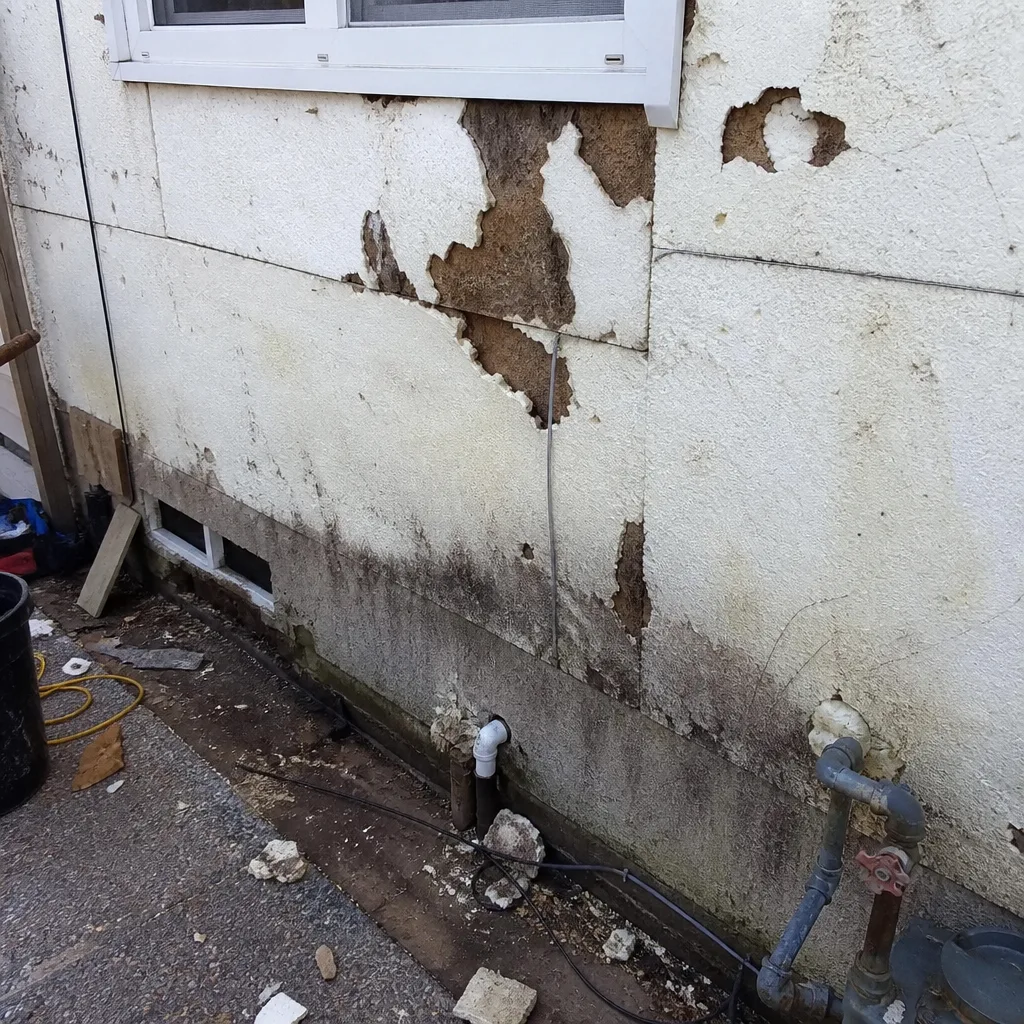 Before
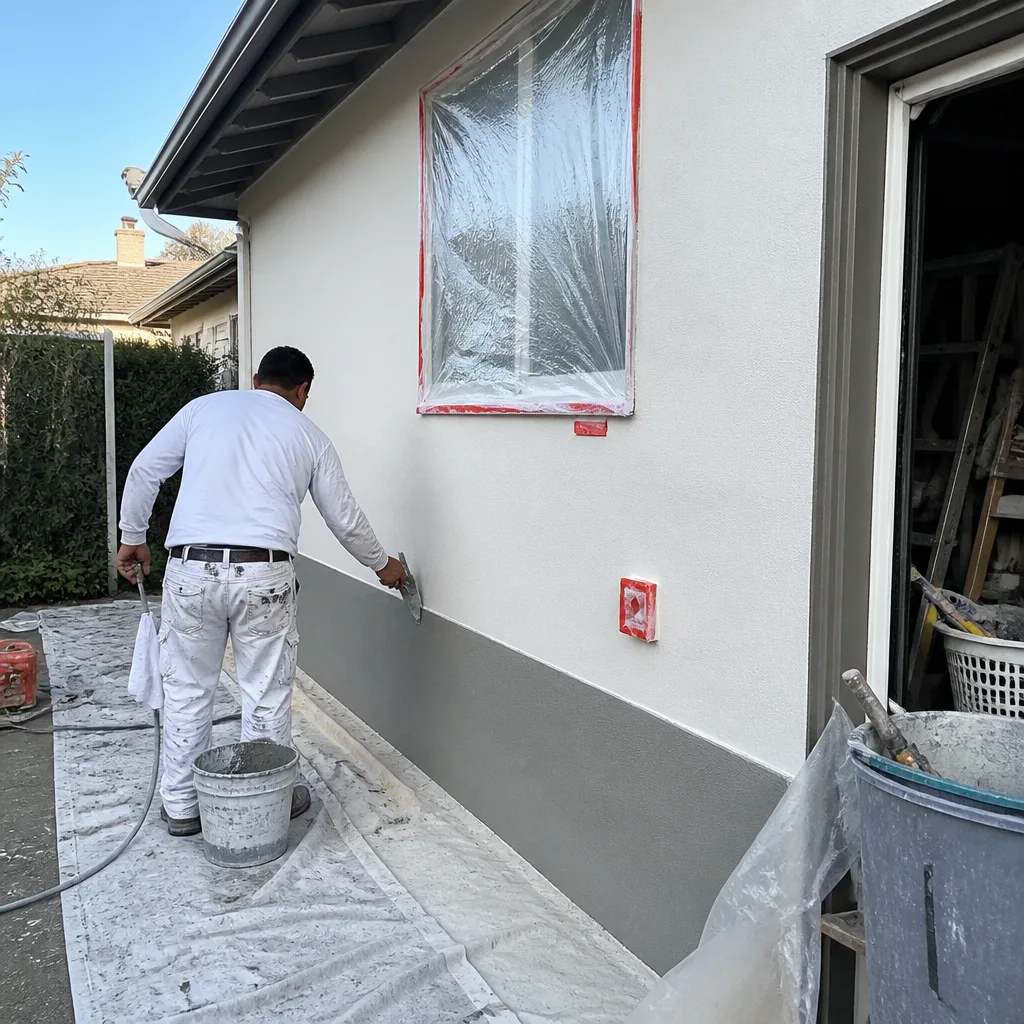 After
AfterR-Value, Air Sealing, and Why the Order Matters
R-value is the measure of a material’s resistance to heat flow – higher is better. But R-value only performs as advertised when the wall assembly is air-sealed first. A fiberglass batt rated R-15 installed in a wall with gap infiltration at the top plate performs closer to R-10 in practice, because convective air movement carries heat around the insulation rather than through it. This is a well-documented phenomenon in building science, and it is the reason we treat air sealing as a hard prerequisite rather than an upsell.
On wall insulation jobs in Campbell where we have access to the attic floor above, we seal the top plate connections before any wall insulation work begins. We use low-expansion spray foam and fire-rated caulk at electrical and plumbing penetrations. On retrofit jobs where wall cavities are accessed through drill-and-fill, injection foam products from Demilec and similar manufacturers combine air sealing with insulation in a single step – which is part of why injection foam costs more per square foot than blown cellulose but may eliminate a separate air-sealing labor charge.
After the work is complete on applicable jobs, we conduct a blower-door test – a pressurization measurement that shows, in one number, how much air your building envelope is losing. We publish the before and after readings so you can see the performance change you paid for. A blower-door reading is measured in CFM50 – cubic feet per minute of air loss at 50 pascals of pressure. A typical pre-work Campbell ranch house reads between 2,800 and 4,500 CFM50. Post-sealing, well-executed jobs regularly bring that number down by 25 to 40 percent. We document both numbers in writing.
How to Save on Wall Insulation in Campbell
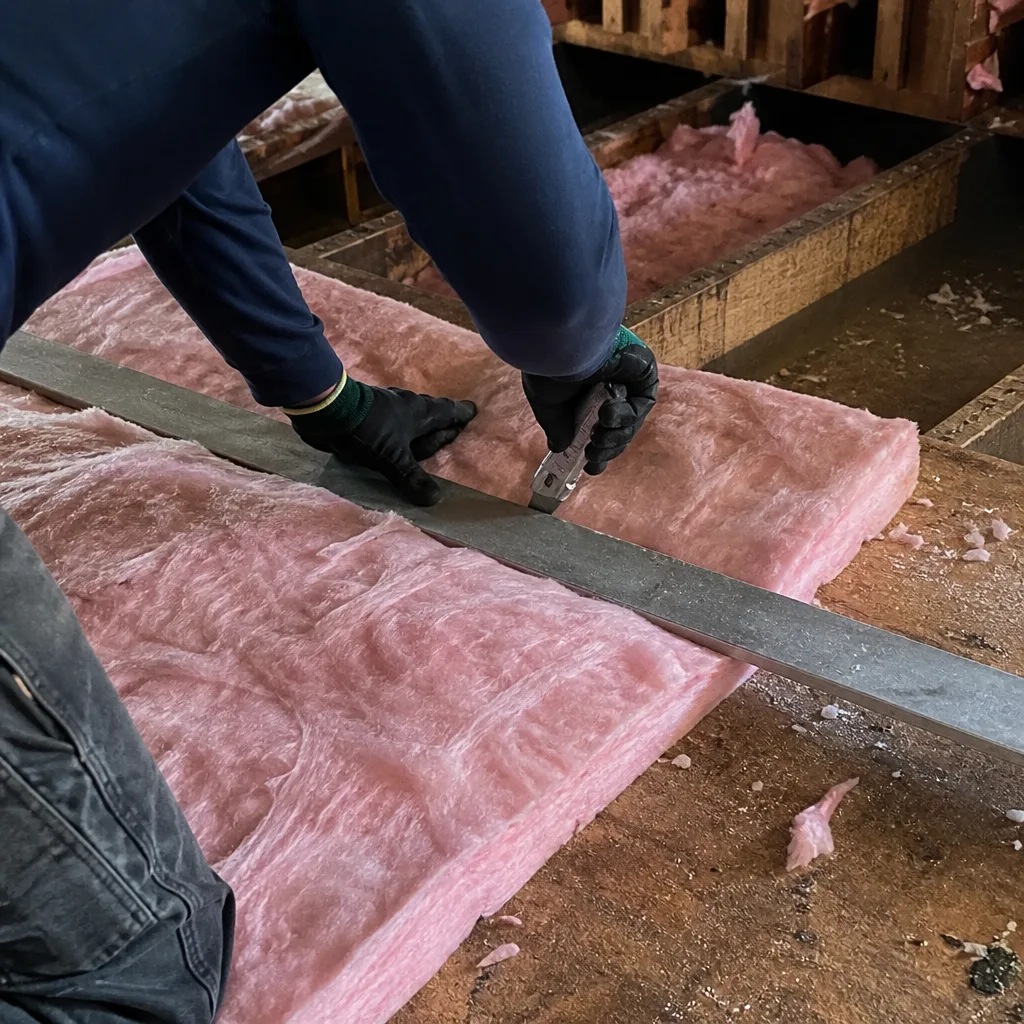
The biggest savings lever is timing. If you are already planning a kitchen remodel, bathroom gut, or room addition in your Campbell home, coordinating wall insulation with that project means the walls are already open – no drill-and-fill labor, no patching cost, no stucco or drywall access fees. That can reduce your effective cost by $0.60 to $1.20 per square foot compared to a standalone retrofit.
Second: get the scope right the first time. The most expensive wall insulation jobs we encounter in Campbell are the ones that were done once before by a contractor who skipped air sealing or chose the wrong material for a moisture-sensitive wall assembly. Redoing work costs more than doing it correctly the first time – and it costs more than the quote you thought you were avoiding by going with the lower number. Under Haven Standard Clause 1, you receive a flat written price and a written scope before any work starts. That document is what protects you from scope creep and from discovering that the “low bid” did not include patching, cleanup, or air sealing.
Third: use available rebates. PG&E currently offers rebates through its Energy Upgrade California program for qualifying insulation improvements in existing homes. Rebate amounts and eligibility requirements change, so verify current terms directly with PG&E before factoring them into your budget – but for a typical Campbell wall insulation retrofit, rebates in the $200 to $600 range have been accessible in recent program cycles.
Fourth: bring us any written estimate you have received from another contractor. We offer a Free Second Opinion on any written estimate. We will read it with you and tell you exactly what it does and does not include – material specs, air sealing, patching, cleanup, and warranty terms. That takes about 20 minutes and costs nothing. Call (831) 534-3206 to set one up.
Fifth: don’t skip the attic first. If your Campbell home has under-insulated walls but also has an unsealed or under-insulated attic, addressing the attic almost always delivers a faster payback – because heat moves up. Wall insulation matters, but if you’re working with a limited budget, a properly sealed and insulated attic can cut heating and cooling costs by 15 to 25 percent on its own. We can help you prioritize during a free estimate visit. Our full Wall Insulation in Campbell service page covers the scope of what a complete wall insulation project looks like from site visit to documented close-out.
What the Written Price and Written Scope Actually Include
This is worth explaining because it directly affects how you compare quotes. When Wes Okafor or a member of our team visits your Campbell home for an estimate, the document you receive before we leave covers:
- Exact wall areas to be insulated, measured in square feet by zone
- Access method (exterior drill, interior drill, open-wall) by wall section
- Material specified by manufacturer and product name – not just “blown cellulose” but the specific GreenFiber or Knauf product being used
- Air sealing scope: which penetrations, which plates, which products
- Patching responsibility: who patches, to what finish level
- Cleanup and haul-away
- Before-and-after blower-door test, where applicable
- Documented Photo Record – included on every visit, not available on request
- 365-Day Done Right Promise in writing, attached to the scope
The number at the bottom of that document is the number you pay. Not a starting point for negotiation. Not subject to “material surcharges” discovered after the crew arrives. Under the Haven Standard, a written price before any work starts is not a feature – it is the minimum standard for every job.
Campbell Neighborhoods and Wall Insulation: What We See Most Often
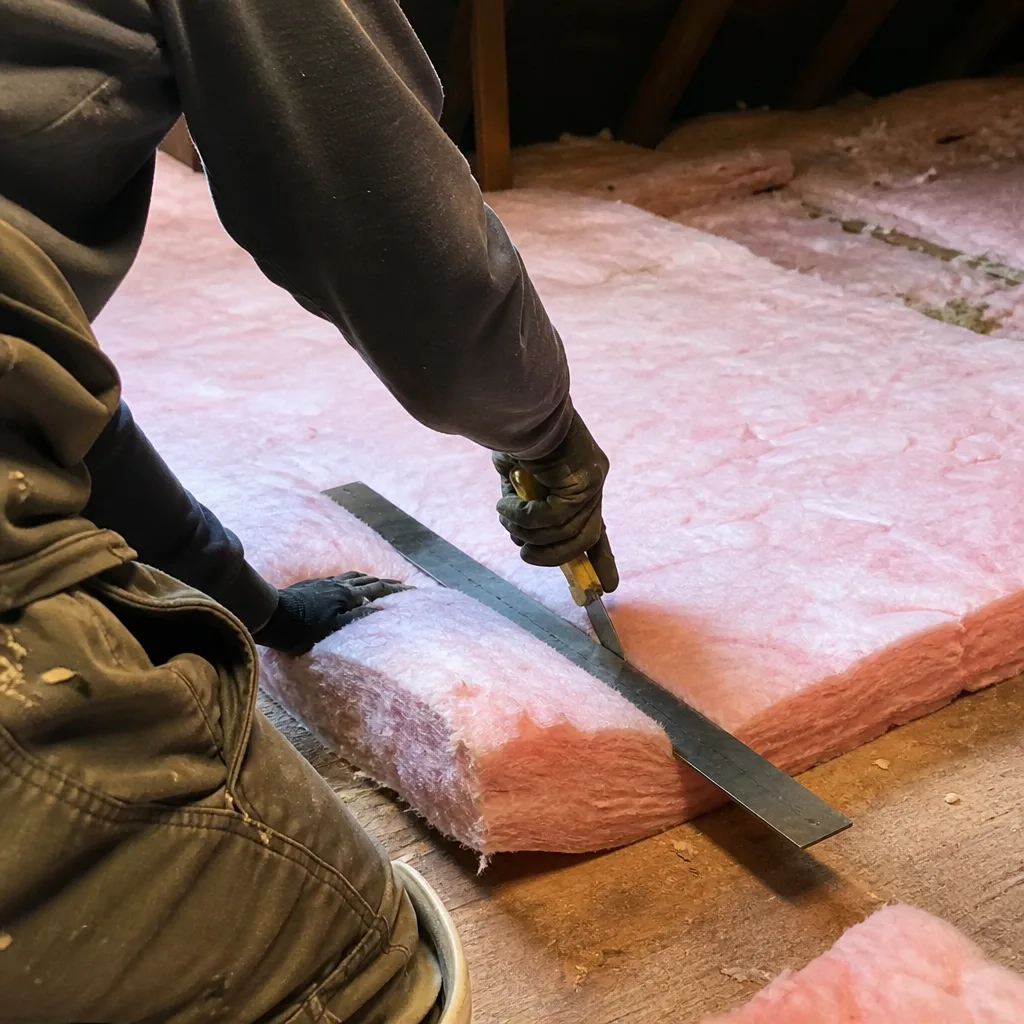
Campbell is not a uniform housing market. The wall insulation needs in the Orchard City neighborhood differ from what we find in the Hacienda tract near Highway 17, and both differ from the newer construction near the Hamilton Avenue corridor.
In the older Cambrian Park-adjacent streets on Campbell’s south side, we regularly find walls with either no insulation or original fiberglass batts that were stapled to one face of the stud and have since pulled away from the opposite face – leaving a thermal gap on one side of the cavity. Dense-pack cellulose retrofit addresses that by filling the entire cavity under pressure, which presses material against both faces and eliminates the convective gap.
In the Rincon tract near Los Gatos Creek, we see more two-story homes with both 2×4 and 2×6 framing depending on the build year. The 2×6 walls are capable of holding R-19 or R-21 dense-pack – a meaningful upgrade from R-11 settled batts – and the ROI in comfort terms is significant because these homes tend to have larger west-facing wall exposures that absorb afternoon heat in summer.
Along the older sections of Winchester Boulevard and Campbell Avenue, we see a mix of original wood-frame construction and 1980s additions. The additions frequently used 2×6 framing with R-19 batts that are still performing reasonably well. The original sections often have nothing in the walls at all. Scoping these jobs requires measuring each section separately because the retrofit approach differs wall by wall.
FAQs – Wall Insulation Cost in Campbell, CA
How much does wall insulation cost in Campbell, CA in 2026?
Most wall insulation projects in Campbell run between $2,800 and $7,400 for a typical single-family home, or $1.50 to $4.25 per square foot of wall cavity depending on material and access method. Blown-in cellulose retrofit through drill-and-fill is the most common method for existing Campbell homes and typically lands between $3,200 and $5,800 for a 1,400-2,000 sq ft home. Spray foam costs more per square foot but requires open walls. Call (831) 534-3206 for a written estimate – we measure your specific wall area and provide a flat written price before any work starts.
Is it worth insulating walls in an older Campbell home?
Yes, for most pre-1980 Campbell homes it is. Uninsulated walls account for 15 to 25 percent of a home’s total heating and cooling load. In Campbell’s Climate Zone 4, where summers regularly reach 90 to 95 degrees and winter nights can drop into the low 30s in the eastern foothills, uninsulated walls create comfort problems as much as energy bills. A dense-pack retrofit on a 1960s Campbell ranch typically pays back in energy savings within 7 to 11 years and improves comfort immediately. We document the before-and-after blower-door numbers so you can verify the air-sealing performance, not just estimate it.
What is the cheapest type of wall insulation for a Campbell retrofit?
Dense-pack blown cellulose through drill-and-fill runs $1.80 to $2.80 per square foot in Campbell and is generally the most cost-effective retrofit option for existing closed walls. It is made from recycled paper fiber treated for fire resistance, fills the cavity completely under pressure, and performs well at California’s Title 24 R-13 minimum for 2×4 walls. We source it from GreenFiber and similar manufacturers. It is not always the right choice – homes with moisture issues may need a vapor-permeable option evaluated carefully – but for a standard Campbell wood-frame home, it delivers strong performance at a reasonable price.
Does wall insulation in Campbell require a permit?
Standalone wall insulation retrofits in Campbell typically do not require a building permit from the City of Campbell’s Building Division. However, if your wall insulation is part of a permitted remodel, addition, or room conversion, the work must meet current California Title 24 Energy Code standards – R-13 minimum for 2×4 walls in Climate Zone 4. If a permit is required for your project, we flag that in the written scope before work begins. Permitted work may require inspection access before walls are closed, which affects sequencing. We handle that coordination and build it into the timeline we give you in writing.
Can you insulate walls without removing drywall?
Yes. Dense-pack blown cellulose, dense-pack fiberglass, and injection foam can all be installed through small drilled holes – typically 2 inches in diameter – without removing interior drywall or exterior cladding. Technicians drill at each stud bay, inject material under controlled pressure until the cavity is full, then plug and patch each hole. In Campbell, where many homes have stucco exteriors, interior drill-and-fill is often the preferred approach because stucco patching is more involved than drywall patching. The finished result is cosmetically clean and the wall cavity is fully insulated. Call (831) 534-3206 to get a written price for your specific walls – we measure the access conditions during the estimate visit.
Does Envelope Insulation Co. / Topside Attic Insulation Campbell do wall insulation and attic insulation together?
Yes, and doing both in one project often makes practical and financial sense. When we are already on-site for a wall insulation job, adding attic air sealing and insulation eliminates a second mobilization charge and lets us treat the building envelope as a system rather than patching it in pieces. We have completed this combination on homes throughout Campbell – in Los Gatos Creek-adjacent neighborhoods, in the Orchard City area, and along the older residential streets near downtown. The written scope covers both scopes of work with separate line items so you can see exactly what each part costs. You can learn more about our full building-envelope approach on our home page.
Key Takeaways
- Wall insulation in Campbell costs $1.50 to $4.25 per square foot, or roughly $2,800 to $7,400 for most homes.
- Drill-and-fill dense-pack cellulose retrofit is the most common and cost-effective method for Campbell’s existing housing stock.
- Air sealing is completed before insulation is added – not offered as an add-on after the insulation quote is accepted.
- A written price, written scope, and written warranty are delivered before any work starts – no exceptions.
- Before-and-after blower-door readings are documented on applicable jobs so you can verify the performance change.
- A 365-Day Done Right Promise applies to all completed work.
- PG&E rebates may apply; verify current amounts directly with PG&E before budgeting.
- Wes Okafor and the team have been operating under The Haven Standard since 2016 – 9,000+ homes sealed and insulated, every one with a written price before work started.
Get a Written Price for Wall Insulation in Campbell
If your Campbell home has walls that have never been insulated, or insulation that was installed decades ago and has since settled or been disrupted by electrical or plumbing work, a site visit takes about an hour and results in a flat written price with a full written scope – not a ballpark figure and a handshake. Wes Okafor leads every estimate with the same standard: measure the actual wall area, identify the access method, specify the material by manufacturer and product, and put the number in writing before leaving.
We serve Campbell and the surrounding communities of Los Gatos, San Jose, Saratoga, and Santa Clara. Calls are answered by a live person. Call (831) 534-3206 to schedule a free estimate for our Wall Insulation services – bring any written quote you have already received and we will read it with you at no charge.
Written by Wes Okafor, Owner at Topside Attic Insulation Campbell, serving Campbell, CA since 2016.
Pricing reflects the Campbell market as of 2026. Topside Attic Insulation Campbell offers free estimates – call (831) 534-3206.
What Our Customers Say
"They air-sealed the attic floor before insulating and showed me the blower-door number before and after. The upstairs is finally the same temperature as downstairs."
- Marisol D."Fixed price, clean work, and they hauled the old material away as agreed."
- Todd M."The winter gas bill dropped by about a third. They had estimated a quarter, so they under-promised."
- Genevieve R.