
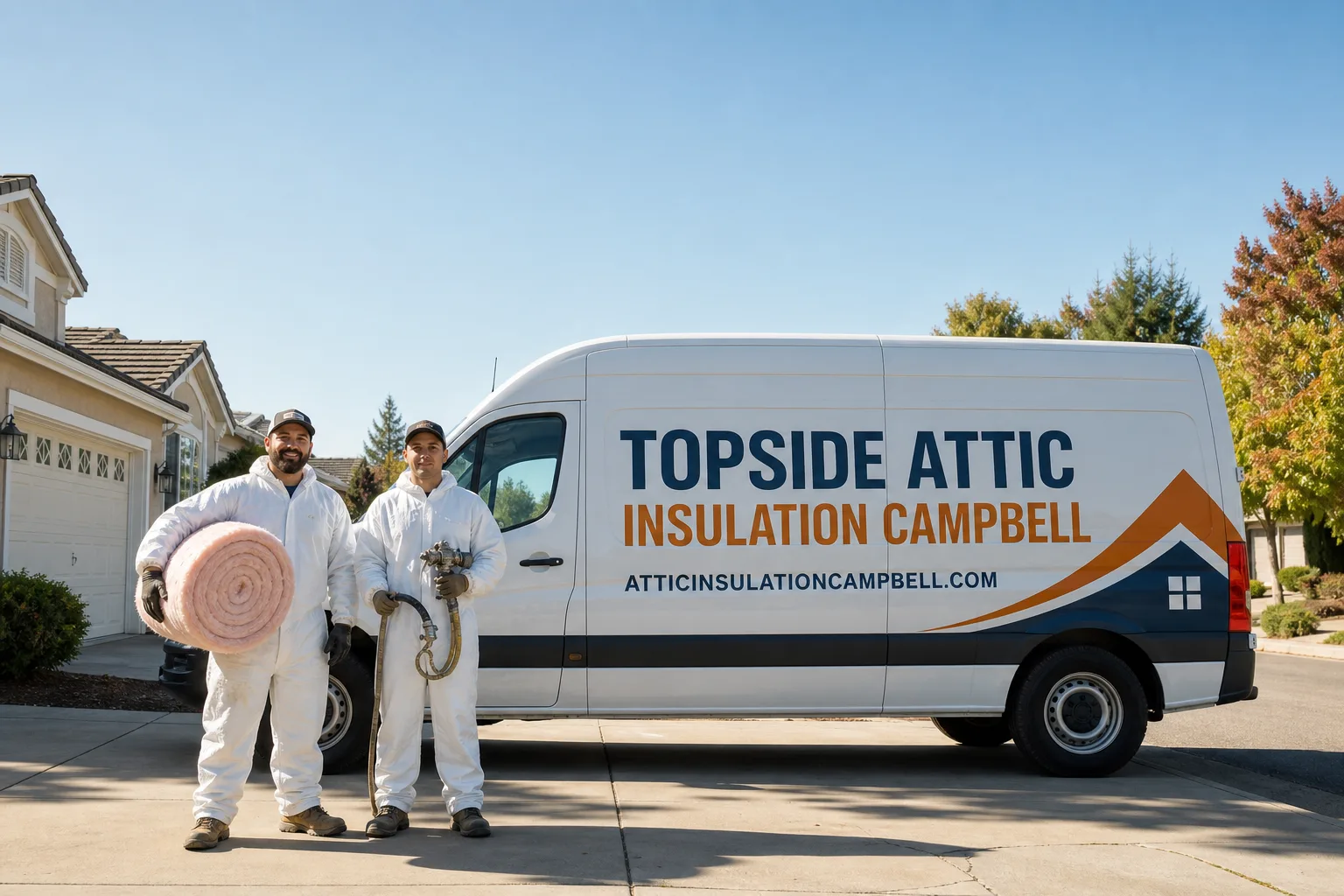
Trusted Spray Foam Insulation for Campbell Homeowners
Campbell Spray Foam Insulation typically costs $2,800-$7,500 for a complete attic application, and most jobs are completed in one to two days with same-day scheduling available. We’re Topside Attic Insulation Campbell, and we’ve been sealing and insulating homes under The Haven Standard since 2016. Our crews work across Campbell’s neighborhoods from the historic downtown corridor to the newer builds near Pruneyard Shopping Center, and we answer calls live at (831) 534-3206 around the clock.
Campbell’s climate sits in that tricky middle zone: hot, dry summers that push attic temperatures past 140°F, followed by damp winters where condensation can hide in wall cavities for months. Spray foam creates an air barrier and thermal barrier in one application, which matters here more than in climates with less temperature swing. We’ve completed over 9,000 jobs since 2016, and every one started with a written price and ended with a documented photo record. On spray foam jobs where air sealing is part of the scope, we run blower-door tests before and after so you can see the exact CFM50 reduction your investment produced.
What Our Spray Foam Insulation Service Includes
Open-Cell Spray Foam
Open-cell spray foam is a half-pound density foam that expands to fill framing cavities and remains somewhat flexible after curing, making it ideal for interior applications like attic floors and wall cavities where seasonal movement occurs. In Campbell’s older neighborhoods near Campbell Avenue, we often find homes with balloon framing or irregular stud bays that fiberglass batts never sealed properly; open-cell conforms to those gaps and provides an R-value of approximately 3.6 per inch. We specify open-cell for attic floors and non-vented cathedral ceilings where moisture management through the foam’s vapor-permeable structure is desirable, and we never install it below grade where bulk water exposure is possible.
Closed-Cell Spray Foam
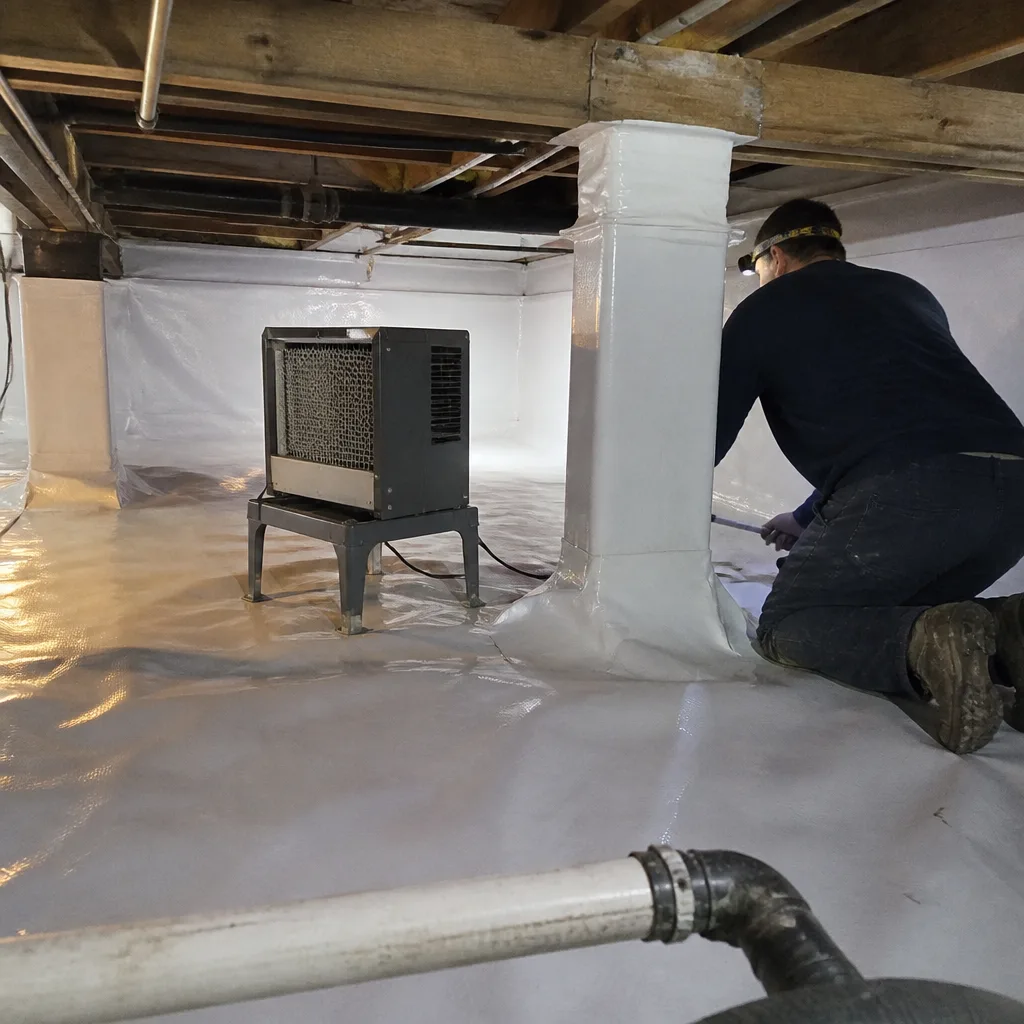
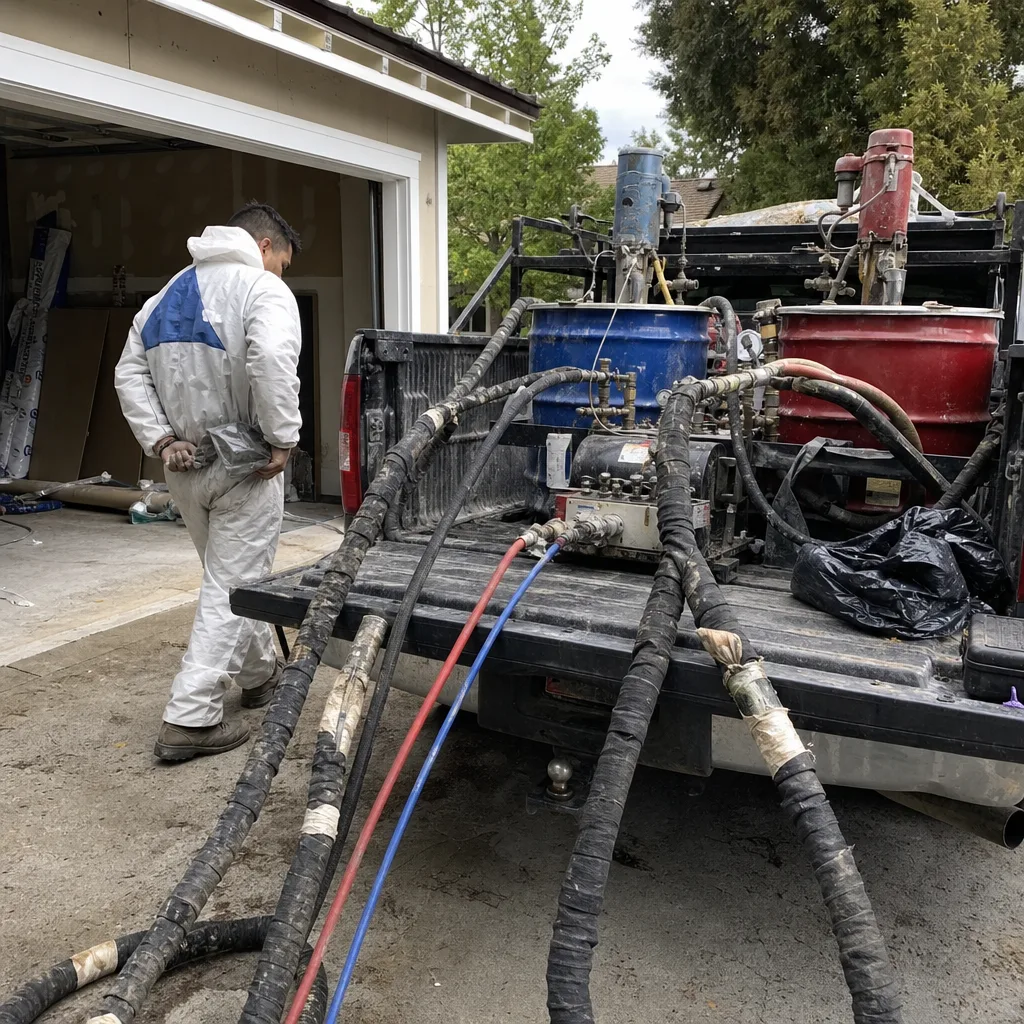
Closed-cell spray foam is a two-pound density foam that cures rigid and delivers approximately R-7 per inch while acting as its own vapor barrier, which makes it the right choice for crawl space walls, rim joists, and any application where space is limited and maximum R-value per inch matters. In Campbell’s hillside homes near the base of the Santa Cruz Mountains, we use closed-cell on foundation walls and under-floor applications where ground moisture is a constant factor; the foam’s closed structure resists water absorption and adds structural rigidity to framed assemblies. We source closed-cell products from Icynene and Demilec among others, and we document the applied thickness with depth gauges and photos at multiple points across every job.
Rim Joist Spray Foam
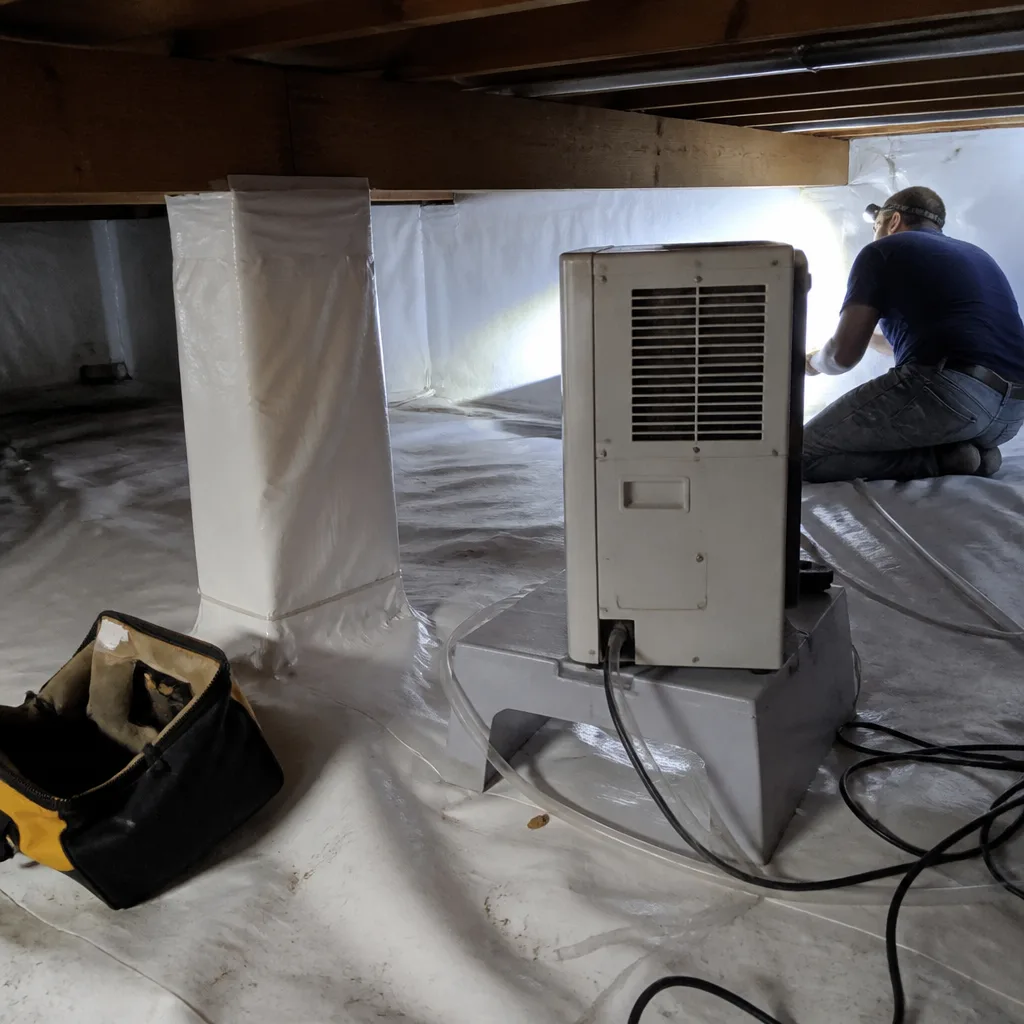
The rim joist is the perimeter band where your floor framing meets the foundation, and it’s often the leakiest part of a home’s thermal envelope because it’s rarely sealed well during original construction. In Campbell’s 1950s-1970s ranch homes, which dominate neighborhoods like the area around San Tomas Aquino Creek, rim joists are typically stuffed with fiberglass that does nothing to stop air movement; we remove that material and apply closed-cell spray foam to create a continuous air seal at this critical junction. This single upgrade often produces the most noticeable comfort improvement per dollar spent, especially in rooms above unconditioned crawl spaces where floors stay cold even when the heat is running.
Garage Ceiling Spray Foam
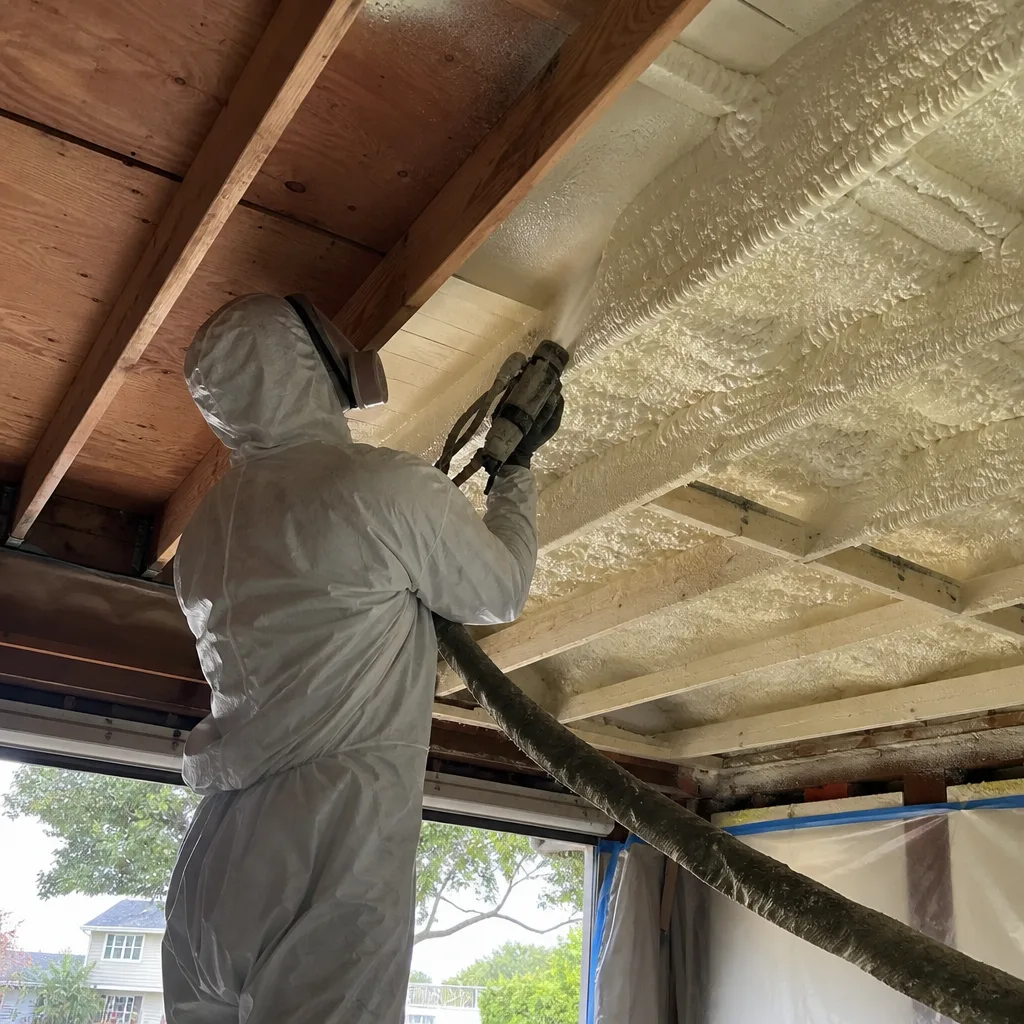
Garage ceiling spray foam addresses the thermal bridge created when a conditioned room sits above an unconditioned garage, a common configuration in Campbell’s townhome developments and split-level homes near the Westmont High School area. We apply open-cell or closed-cell foam depending on whether the garage is ventilated and whether the ceiling assembly needs vapor barrier performance; the foam bonds to the subfloor above and seals around electrical and plumbing penetrations that are almost never detailed properly in original construction. After installation, we verify the assembly with thermal imaging to confirm continuous coverage, and we include those images in your documented photo record.
Spray Foam Roof Deck
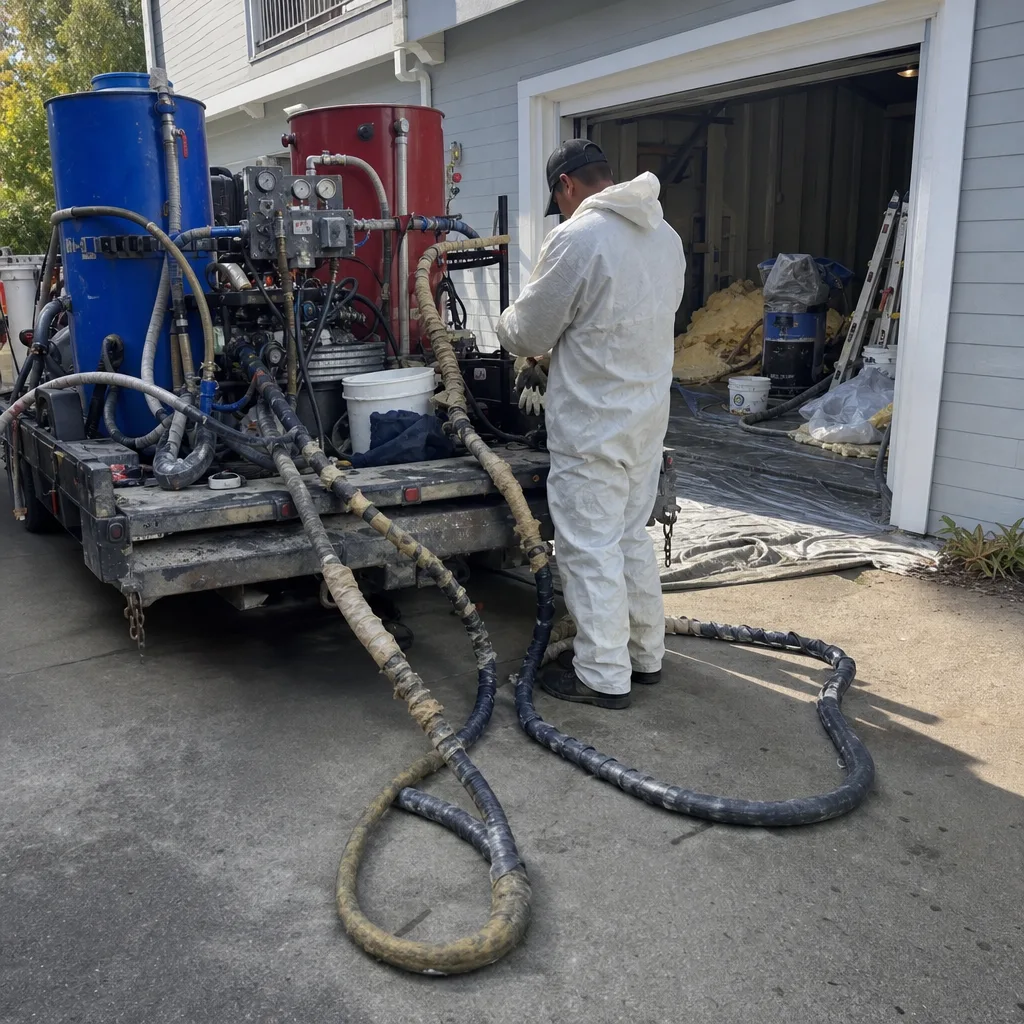
Spray foam applied directly to the underside of the roof deck converts a vented attic into a conditioned, semi-conditioned space, which is increasingly specified in Campbell’s newer construction and major renovations where HVAC equipment or ductwork is located in the attic. We use open-cell foam for most roof deck applications in our climate zone, applied to the code-required thickness while maintaining a conditioned ventilation path or designing a sealed assembly per Title 24 requirements. This approach drops attic temperatures from 140°F+ to within 10-15°F of the living space below, which extends HVAC equipment life and reduces cooling loads measurably; we verify performance with before-and-after attic temperature logging on request.
What happens when you call
- 1
A real person answersNo phone trees - you reach a local pro.
- 2
You get an upfront price rangeHonest numbers before anyone is dispatched.
- 3
A background-checked tech heads outLicensed & insured, dispatched right away.
- 4
You approve before work beginsNothing starts until you say go.
Brands We Service for Spray Foam Insulation
We work with Icynene’s open-cell and closed-cell product lines regularly in Campbell installations, particularly their LD-C-50 open-cell formulation which we’ve found performs well in the wide temperature swings of South Bay attics. Our technicians are trained in Icynene’s specific mixing ratios, substrate preparation requirements, and pass-fail criteria for adhesion testing; we keep their technical bulletins on file and reference them when specifying foam thickness for Title 24 compliance on permitted jobs.
We also install Knauf insulation products and have used their spray foam systems in commercial and residential applications where specific fire-rated assemblies are required. Our material sourcing is never locked to a single manufacturer; we select from Owens Corning, Johns Manville, Knauf, Rockwool, CertainTeed, Icynene, Demilec, and GreenFiber based on what the specific assembly demands. Whether your architect has specified Icynene, your existing foam was installed with a Knauf system, or you’re starting from scratch with no brand preference, we can match the right product to the application and document the installation per manufacturer warranty requirements.
 Before
 After
AfterSigns You Need Spray Foam Insulation Right Now
- Your upstairs rooms are 10-15°F hotter than downstairs in summer. This temperature stratification almost always indicates that conditioned air is leaking out of the thermal envelope faster than your HVAC can replace it. In Campbell’s two-story homes built between 1960 and 1990, we find that attic floor bypasses around chimneys, duct chases, and top plates are the primary culprits; spray foam seals these leaks while adding R-value in one operation.
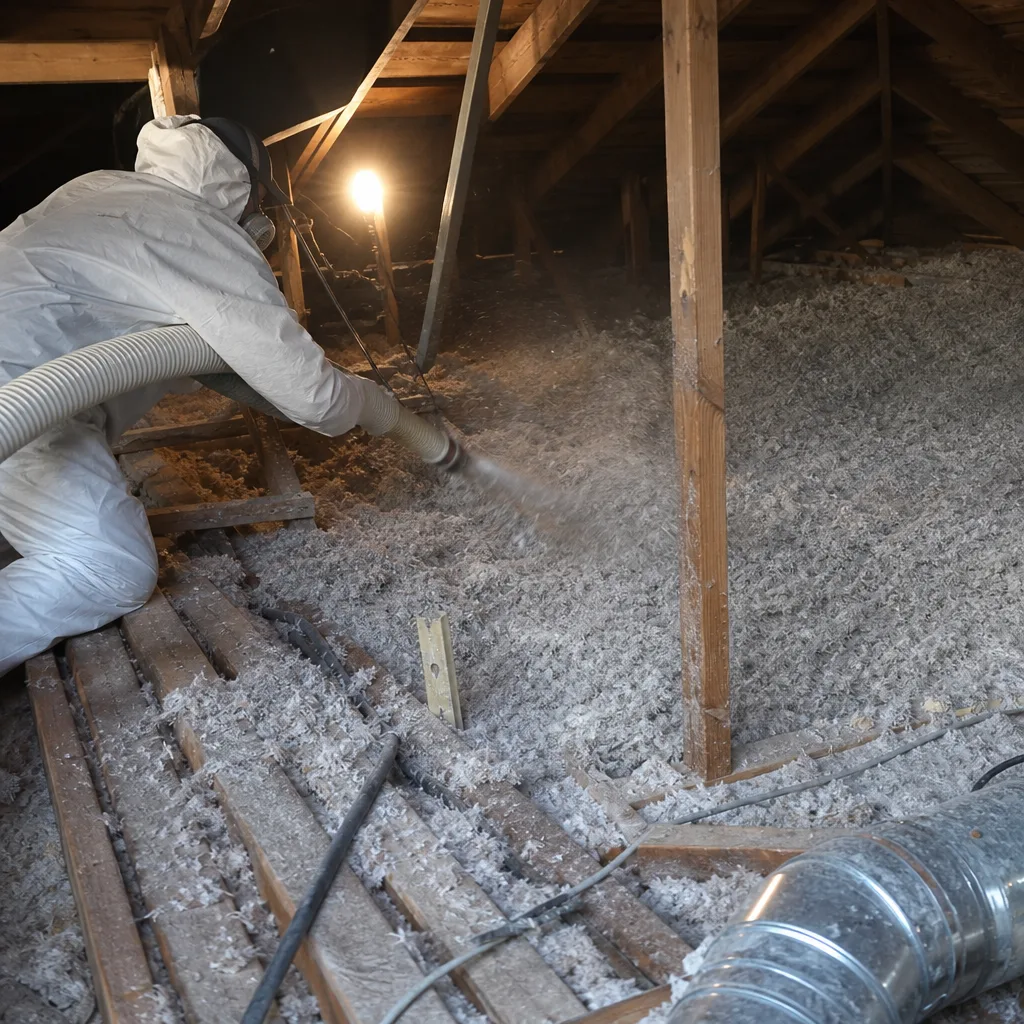
- You can see floor joists in your attic between batts of compressed fiberglass. Fiberglass that has settled, been disturbed by rodents, or was never installed to full depth has lost most of its effectiveness. We document this condition with photos before removal, then install spray foam to the full required depth with no gaps or compression.
- Your energy bills spike every July and August despite a newer HVAC system. A high-efficiency air conditioner cannot overcome a thermal envelope that leaks faster than it can cool. We’ve measured attic floor leakage in Campbell homes at 3,000-5,000 CFM50 before air sealing; after spray foam and targeted sealing, those numbers typically drop to 1,500-2,500 CFM50, which translates to measurable load reduction.
- You smell musty odors from the crawl space or notice cupping hardwood floors. Moisture migration through rim joists and subfloor gaps creates conditions for mold and wood distortion. Closed-cell spray foam at the rim joist and crawl space walls stops this moisture transport and, unlike fiberglass, cannot support mold growth if bulk water intrusion occurs.
- Your garage ceiling is cold to the touch in winter and rooms above are drafty. The garage-to-living-floor assembly is typically the most poorly detailed thermal boundary in a home. Spray foam applied to the garage ceiling creates a continuous air barrier that batts and loose-fill cannot achieve, especially around the irregular framing and utility penetrations common in this location.
Our Spray Foam Insulation Process - Step by Step
- 1
Initial assessment and blower-door baseline. We arrive at your Campbell home at the scheduled time, introduce the lead technician by name, and begin with a visual inspection of the work area and accessible envelope components. On jobs where air sealing is included, we run a blower-door test - a pressurization reading that shows, in one number, how much air your building envelope is losing - to establish a baseline CFM50 before any work begins.
- 2
Written scope and written price delivered before work starts. Under Haven Standard Clause 1, we provide a flat price, written scope, and written warranty before anyone lifts a tool. This document specifies the foam type, target thickness, square footage, and any preparatory work required; you sign it, or we don’t start. No verbal estimates, no scope creep, no surprises.
- 3
Preparation and air sealing of top plates, can lights, and penetrations. We never blow insulation over an unsealed attic floor. Our crews seal top plates, recessed light housings, plumbing and electrical penetrations, and chimney chases with appropriate materials before foam application begins. This step is non-negotiable; it’s the core of our “sealed first, then insulated” approach.
- 4
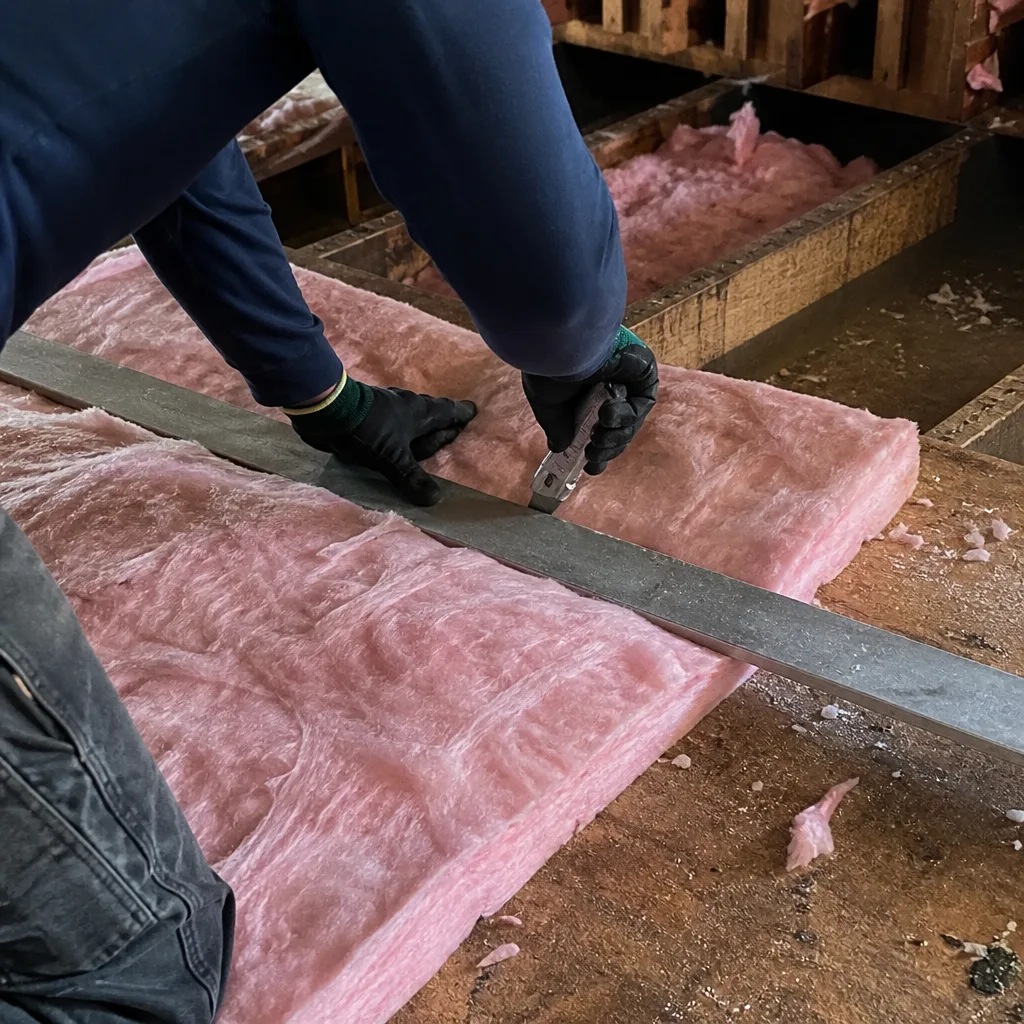
Spray foam application with real-time thickness verification. Our technicians apply foam in lifts per manufacturer specifications, measuring depth with calibrated probes at multiple points across the assembly. We photograph coverage and thickness at representative locations; these images become part of your Documented Photo Record, delivered with your final paperwork.
- 5
Final blower-door test, documentation, and walkthrough. On applicable jobs, we run a second blower-door test to quantify the air-sealing improvement. You receive the before-and-after CFM50 readings, the documented photo record, your written warranty, and a walkthrough of what was done and where. The 365-Day Done Right Promise applies from this moment; if it’s not done right, we make it right.
How Much Does Spray Foam Insulation Cost in Campbell?
A typical open-cell spray foam application in a Campbell attic runs $2,800-$4,500 for a 1,200-1,800 square foot home, depending on existing insulation removal needs and accessibility. Closed-cell applications for crawl space walls or rim joists typically range $1,800-$3,200 for the same footprint, with garage ceiling applications falling between $1,200-$2,400. Full roof deck spray foam in a Campbell home of comparable size generally runs $4,500-$7,500 due to the larger surface area and more complex preparation requirements.
Several factors move these numbers. Existing insulation removal and disposal adds $400-$900 in most cases. Attics with limited access, steep pitches, or extensive HVAC ductwork require more labor time and protective measures. Roof deck applications in homes with recessed lighting or combustion appliances need additional safety detailing for code compliance. We price every job individually because two homes on the same Campbell block can have very different envelope conditions.
To avoid overpaying, get any competing quote in writing and bring it to us for a Free Second Opinion - we’ll read it with you line by line and explain where the scope differs from ours. Our estimates are always free, always detailed, and always delivered as a written price before any work starts. Call (831) 534-3206 to schedule.
Spray Foam Insulation Near Campbell - Our Service Area
We complete spray foam insulation jobs throughout Campbell and neighboring communities with typical response times of same-day to 48 hours depending on scope and material availability. Our crews work regularly in Los Gatos hillside homes where closed-cell rim joist applications are common, and in Saratoga properties where larger custom homes require detailed roof deck and garage ceiling work. We also serve Cupertino, Santa Clara, San Jose, Sunnyvale, Alum Rock, Los Altos, East Foothills, Mountain View, and Milpitas. Travel beyond these areas is available for larger projects; call (831) 534-3206 to discuss your location.
Serving Campbell, CA - Our Local Coverage Area
We’re based in the Campbell area and know this community well. Use the map below to see our service coverage - if you’re nearby, we can almost certainly help.
Frequently Asked Questions - Spray Foam Insulation in Campbell
Spray foam insulation is a two-component chemical mixture that expands on contact with surfaces to create a continuous, monolithic layer of insulation that also functions as an air barrier. Unlike fiberglass batts, which leave gaps at irregular framing and do not stop air movement, or blown-in cellulose, which can settle and shift over time, spray foam adheres to substrates and maintains its position and performance indefinitely. We specify open-cell or closed-cell formulations depending on the assembly’s moisture management needs and available space.
Most residential spray foam jobs in Campbell are completed in one to two days, with larger roof deck applications or full-envelope projects occasionally extending to three days. Day one typically covers preparation, air sealing, and foam application; day two allows for full cure time, final inspection, and documentation. We schedule start dates with buffer for material cure times, and we never rush the process because foam performance depends on proper application temperature, substrate conditions, and lift thickness.
Most complete attic spray foam jobs in Campbell run $2,800-$4,500 for open-cell applications in typical single-family homes, with closed-cell specialty applications like rim joists and crawl spaces ranging $1,800-$3,200. The exact price depends on square footage, existing insulation removal needs, access conditions, and whether air sealing is included. We provide a written, itemized price before any work starts, and we offer free second opinions on any competing written estimate. Call (831) 534-3206 for your specific quote.
Yes, we install and service both Icynene and Knauf spray foam products, and we work with multiple other manufacturers including Owens Corning, Johns Manville, Rockwool, CertainTeed, Demilec, and GreenFiber. Our technicians are trained in each manufacturer’s specific mixing, application, and quality verification protocols. We do not claim exclusive or preferred status with any brand; we select materials based on what your specific assembly requires for code compliance and performance.
We answer calls live 24 hours a day, and we can typically dispatch a crew for urgent situations like failed insulation after water damage or pest remediation within 24-48 hours. True spray foam “emergencies” are rare because foam does not fail catastrophically, but we understand that some situations, like post-remediation re-insulation before a home sale closing, require accelerated scheduling. Call (831) 534-3206 any time; a live person will answer and discuss your timeline.
All completed spray foam work is backed by our 365-Day Done Right Promise - if it’s not done right, we make it right - plus any applicable manufacturer warranty on the foam product itself. You receive a written warranty document before work begins, specifying coverage terms and the process for initiating a claim. This is Haven Standard practice: promises in writing, delivered before anyone starts, not after something goes wrong.
Remove stored items from the work area, ensure access to electrical panels and attic hatches, and plan to vacate the home during application and for the manufacturer-specified re-occupancy time afterward, typically 24 hours. Our crew will cover floors and protect finished surfaces; we photograph condition before we start so any pre-existing marks are documented. We’ll provide a specific preparation checklist with your written scope after the initial assessment. Call (831) 534-3206 to schedule that assessment - estimates are free, and the written price comes before any work starts.
Schedule Your Spray Foam Insulation Service in Campbell Today
Call (831) 534-3206 now to speak with a live person and schedule your free estimate. We’ll arrive on time, assess your Campbell home’s specific envelope conditions, and deliver a written price and written scope before any work starts. Every job includes a Documented Photo Record and, where applicable, before-and-after blower-door numbers so you can verify what you paid for. Under our 365-Day Done Right Promise, if it’s not done right, we make it right.
Written by Wes Okafor, Owner at Topside Attic Insulation Campbell, serving Campbell, Los Gatos, Saratoga, and surrounding communities since 2016.