
Last updated September 24, 2026
Seasonal Insulation Care for Campbell: Year-Round Homeowner’s Guide
An attic in Campbell hit 147°F on a July afternoon in a house with R-30 blown fiberglass - well above code minimum - while the same house showed condensation staining on the north-facing crawlspace rim joist every February. Same building, two completely different seasonal failure modes. Campbell’s Mediterranean climate doesn’t announce itself with blizzards or hurricanes, but it applies precise, predictable stress to your building envelope: marine moisture that degrades vapor barriers from March through May, attic temperatures that compromise insulation performance from June through September, and radiative cooling nights that drive condensation into framing cavities from December through February. This guide - along with our Complete Guide to Insulation in Campbell - maps each season to a specific inspection or action, with the thresholds and locations we’ve documented across 9,000+ homes since 2016.
Quick Answer
Campbell homeowners should perform four seasonal insulation tasks: inspect vapor retarder integrity in spring after marine-layer humidity peaks, verify attic ventilation balance before summer heat drives attic temperatures above 140°F, retest blower-door numbers in fall before heating season reveals air leaks, and inspect crawlspace rim joists in winter when cold-night condensation risk peaks. Year-round, replace attic hatch weatherstripping annually - it degrades faster than any other envelope component and has a disproportionate impact on measured air leakage.
Table of Contents
- Spring (March-May): Marine-Layer Humidity and Vapor Retarder Failure
- Summer (June-September): Attic Heat and the R-Value Collapse Threshold
- Fall (October-November): Blower-Door Retesting Before Heating Season
- Winter (December-February): Crawlspace Condensation and Rim-Joist Inspection
- Year-Round: The Attic Hatch Weatherstripping Problem
- Common Mistakes to Avoid
- When to Call a Professional
- Frequently Asked Questions
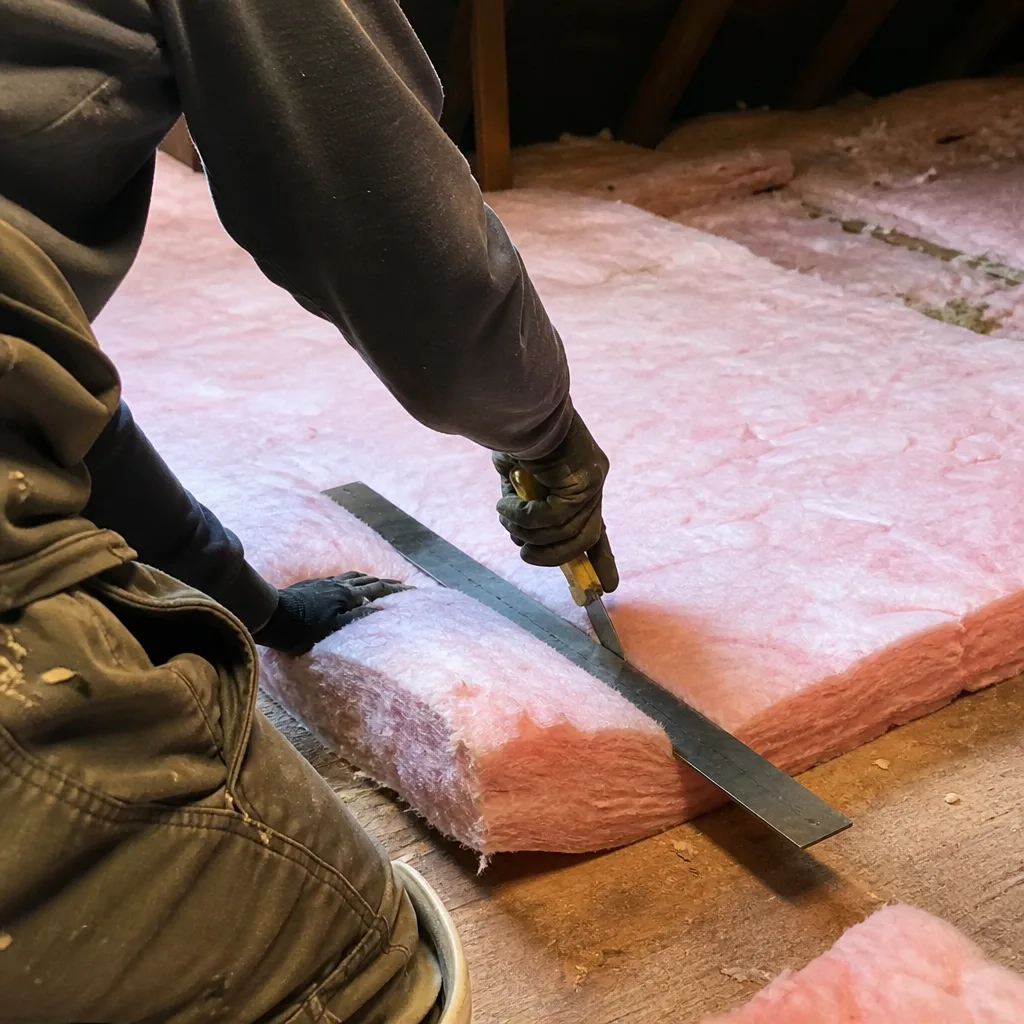
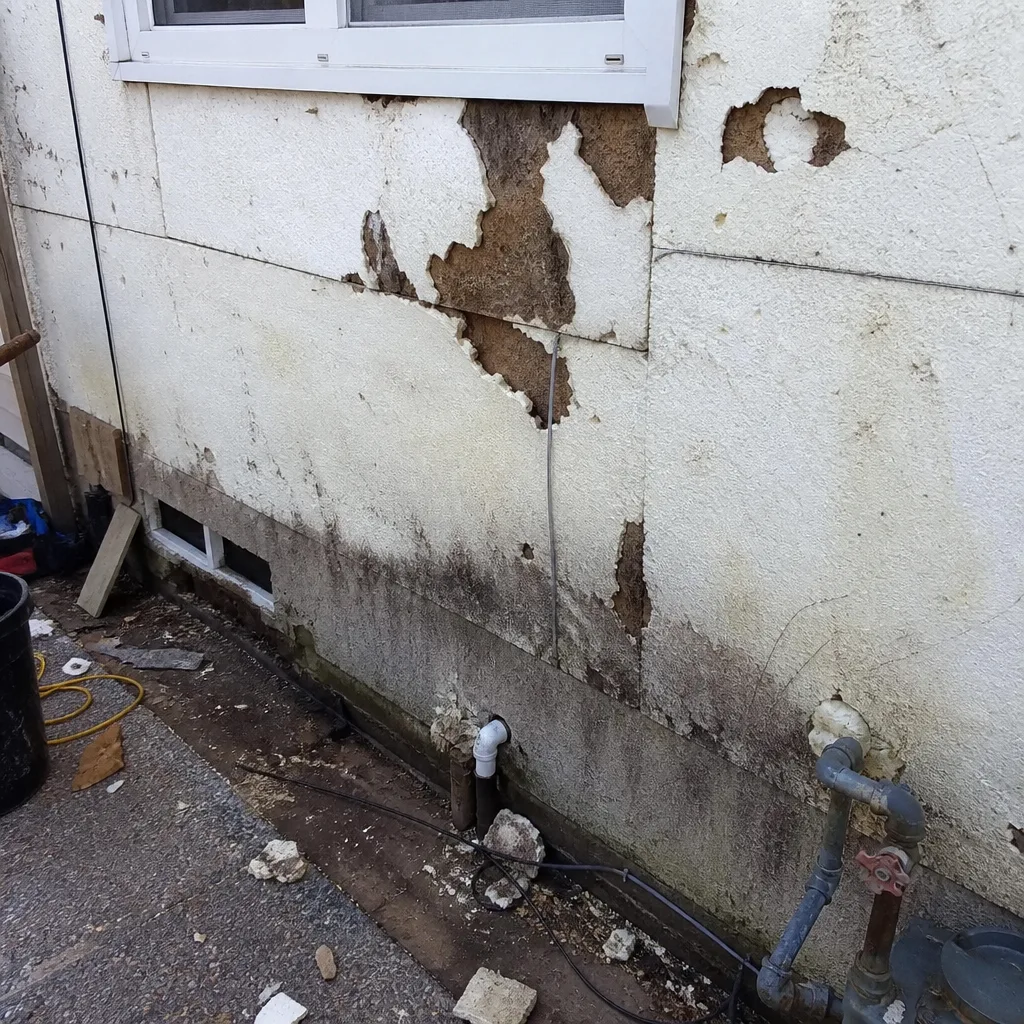 Before
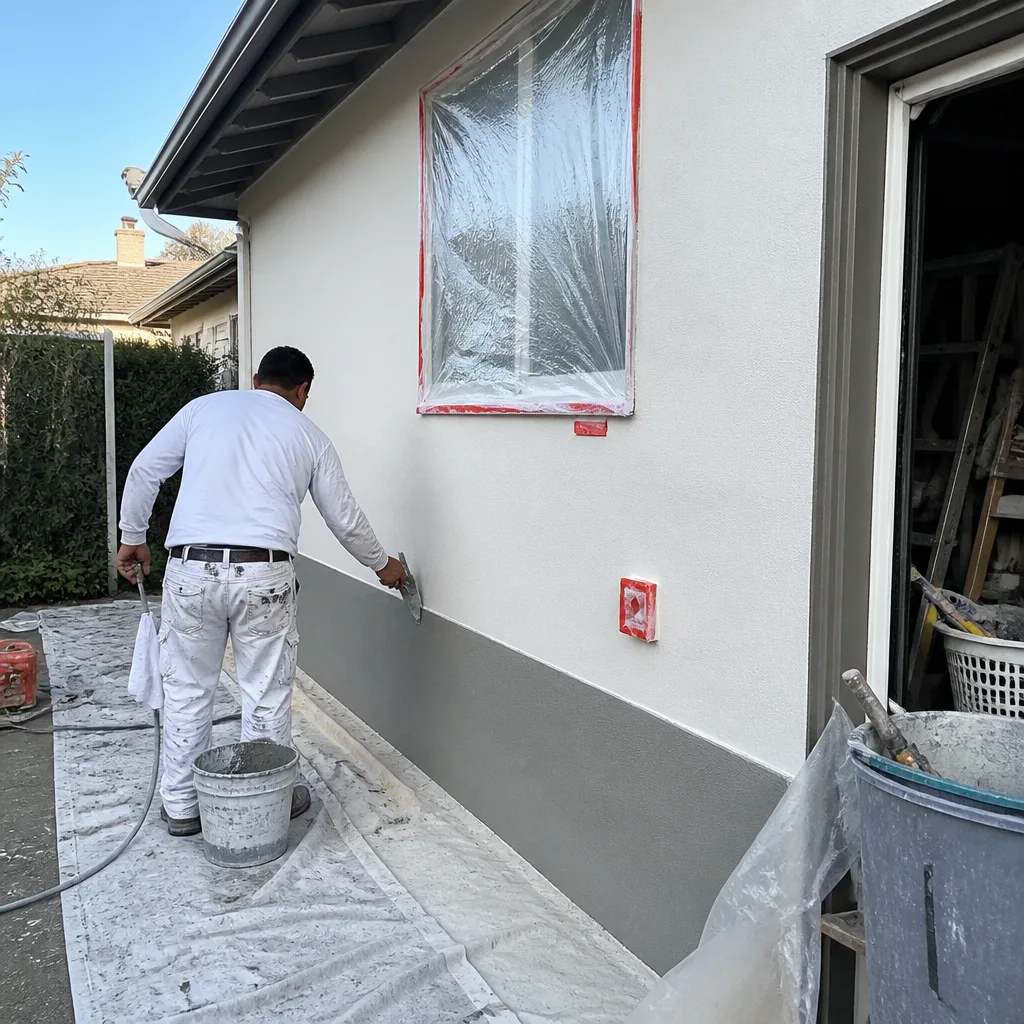 After
AfterSpring (March-May): Marine-Layer Humidity and Vapor Retarder Failure
Campbell’s spring doesn’t look dramatic. Temperatures hover in the 60s and low 70s. But the marine layer pushes inland through the Los Gatos Creek gap and the Highway 17 corridor, delivering sustained relative humidity above 85% for weeks at a time. We’ve measured attic humidity in Campbell homes at 78% RH in April with outdoor temperatures only in the mid-60s. That moisture load doesn’t cause immediate damage. It causes deferred damage that shows up in July or December.
The first location where moisture damage appears in Campbell-area homes is consistently the same: the north-facing slope of the roof deck, specifically within 24 inches of the eave where ventilation is weakest and the deck surface stays coolest. Cool surface plus humid air equals condensation. We’ve documented this pattern in neighborhoods from the Pruneyard area to the older stock near Campbell Avenue. The insulation beneath that deck section - typically blown fiberglass - begins to show gray banding or clumping. That’s not dirt. That’s trapped moisture that has degraded the binder and begun compressing the material.
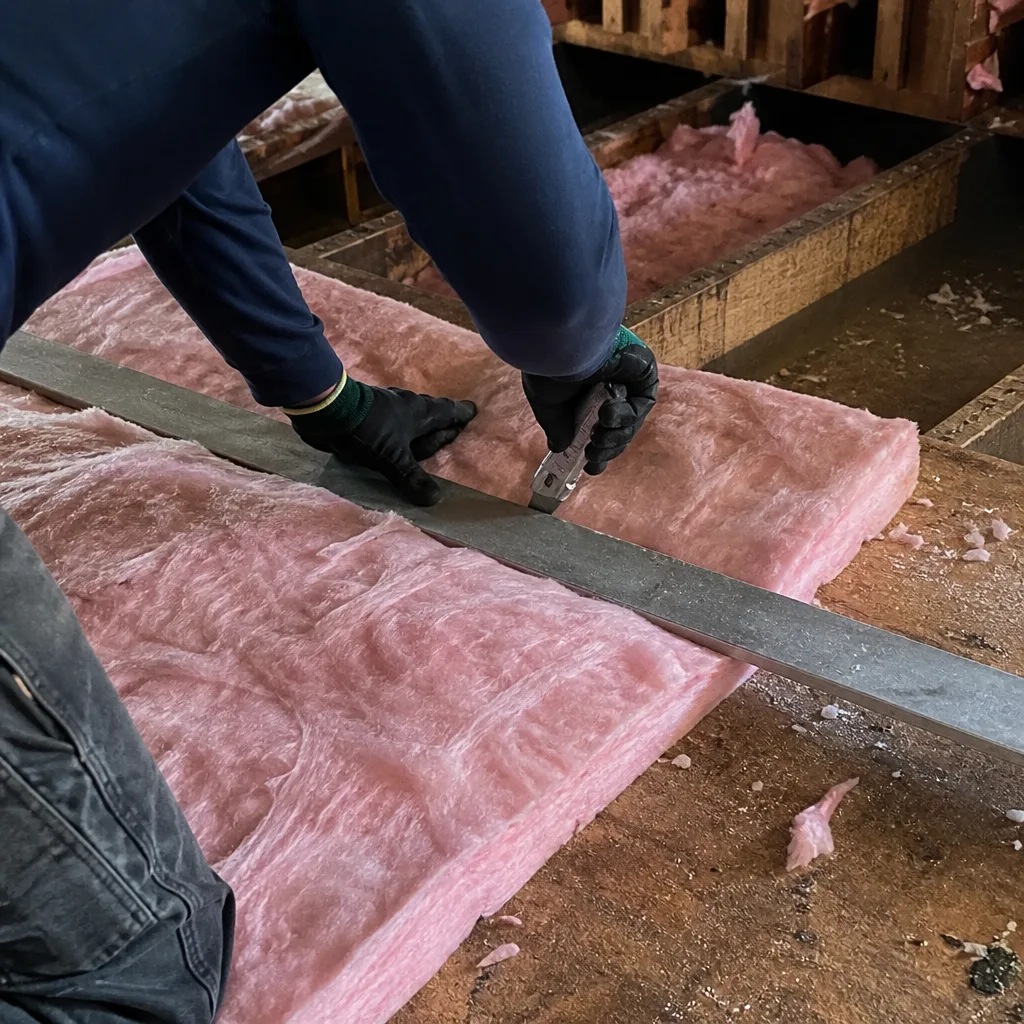
Vapor retarders in Campbell attics face a specific spring test. Kraft-faced batts, common in homes built 1965-1995, use asphalt-impregnated paper that becomes brittle after 15-20 thermal cycles. Spring humidity rehydrates that paper just enough to promote mold growth at the fasteners while the paper itself loses adhesion. We’ve pulled back batts in Campbell attics where the facing has delaminated across 40% of the surface area, creating a vapor trap instead of a vapor retarder.
What to inspect in spring:
- Check the north-facing roof deck from the attic access for dark staining or sheathing discoloration within 2 feet of the eave.
- Lift insulation in that zone and compress it lightly - properly dry blown fiberglass springs back; moisture-compacted material stays dented.
- Examine kraft-facing on any batt insulation for delamination, especially at staple lines and perimeter edges.
- Verify that bathroom and kitchen exhaust vents terminate outside, not into the attic - we find this violation in roughly 15% of Campbell homes built before 1990.
If you find gray banding or facing failure, the repair isn’t adding more insulation. It’s removing the compromised material, sealing the air leaks that transported that moisture, and reinstalling. At Attic Insulation in Campbell, we document the moisture source before we quote replacement - Haven Standard Clause 1 requires a written scope, and the scope depends on identifying the actual failure mode.
Summer (June-September): Attic Heat and the R-Value Collapse Threshold
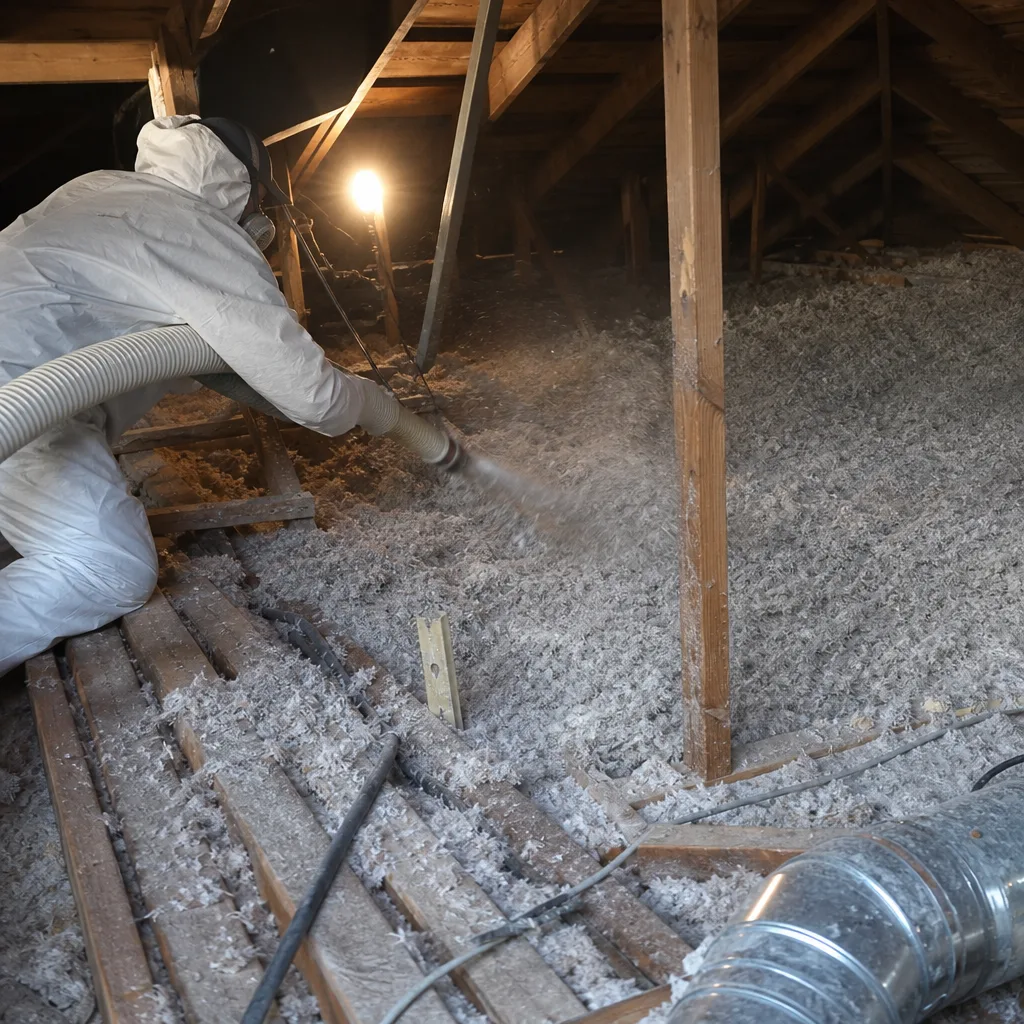
Campbell summer afternoons peak in the low 90s, but attic temperatures run 40-55°F above ambient. We’ve logged 147°F in a Campbell attic with R-30 blown fiberglass at 2:30 PM on a 92°F July day. That number matters because blown fiberglass begins to experience measurable R-value degradation above 140°F - not catastrophic failure, but a 10-15% reduction in effective thermal resistance that persists for the duration of the heat load.
The mechanism is straightforward: as mean temperature across the insulation layer increases, radiant and convective heat transfer within the fibrous matrix become more significant relative to conductive transfer. The published R-value, tested at 75°F mean temperature, doesn’t describe summer attic conditions. Owens Corning and Johns Manville both publish temperature-derating curves, but few homeowners or contractors reference them.
The more critical factor for Campbell homes is ventilation balance. Ridge and soffit ventilation creates a thermal siphon that can hold attic temperatures 15-25°F below unventilated equivalents. But balance matters. We’ve measured attics in the Willow Glen-adjacent areas of Campbell with excellent ridge venting and blocked soffit vents - the result is negative pressure at the eave that pulls conditioned air from the living space, increasing cooling load while still allowing attic heat buildup. The threshold for meaningful ventilation is 1 square foot of net free vent area per 150 square feet of attic floor, split evenly between high and low intake. Many Campbell homes achieve the total but not the balance.
Summer inspection protocol:
- Measure attic temperature at 2 PM on a day above 90°F - use a simple infrared thermometer on the roof deck. Above 140°F indicates ventilation or insulation location problems.
- Verify soffit vents are unblocked by insulation - baffles should be visible and intact.
- Check ridge vent for uniform airflow - hold a ribbon or light thread at the vent slot; stagnant areas indicate blockage or inadequate intake.
- Inspect any ductwork in the attic for disconnected seams - 140°F attic air leaking into supply ducts can raise delivered air temperature by 8-12°F.
For homes with chronic summer attic heat, Spray Foam Insulation in Campbell offers an alternative approach. Closed-cell spray foam applied to the roof deck creates an unvented conditioned attic, eliminating the 140°F problem entirely by moving the thermal boundary to the roof plane. We’ve applied Demilec and Icynene products in Campbell homes where ventilation retrofit was impractical due to roof geometry. The before-and-after blower-door numbers on these jobs typically show 15-25% reduction in CFM50, since the roof deck sealing also eliminates a major leakage pathway.
Fall (October-November): Blower-Door Retesting Before Heating Season
Fall in Campbell is brief and underappreciated as an envelope diagnostic window. The marine layer retreats, temperatures stabilize in the 60s, and heating systems haven’t yet cycled enough to mask air leakage patterns. This is the optimal season to retest blower-door numbers - the pressurization reading that shows, in one figure, how much conditioned air your building envelope is losing.
We recommend fall retesting for any Campbell home that hasn’t had a blower-door test in three years, or any home that showed ACH50 above 5.0 on the last test. The thresholds that indicate meaningful change:
| ACH50 Range | Interpretation | Action |
|---|---|---|
| Below 3.0 | Tight envelope, minimal leakage | Annual visual inspection only |
| 3.0-5.0 | Moderate leakage, common for Campbell homes built 1980-2005 | Targeted air sealing, retest in 2 years |
| 5.0-7.0 | Significant leakage, heating/cooling load impact | Comprehensive air sealing before insulation upgrade |
| Above 7.0 | Severe leakage, comfort and moisture risk | Full envelope assessment, prioritize before winter |
A meaningful change from a previous test is 0.5 ACH50 or 10% of the prior reading, whichever is larger. We’ve seen Campbell homes degrade by 1.2 ACH50 over four years due to settling of top-plate sealant, shrinkage of spray foam at rim joists, or - most commonly - failed weatherstripping at attic and crawlspace access points.
The air-sealing repairs most likely to be needed in Campbell homes, based on our fall retesting data:
- Top plate gaps at interior partitions. Drywall shrinkage and truss uplift create hairline cracks that aggregate to significant leakage. We seal these with acoustic sealant or targeted spray foam after blower-door-directed detection.
- Recessed can light penetrations. IC-rated airtight housings are rare in pre-2010 Campbell stock; most cans leak 2-4 CFM50 each. Ten cans equals a hole the size of a basketball in your ceiling.
- Plumbing stack penetrations. Wax ring sealant degrades; we’ve measured 8 CFM50 from a single unsealed 3-inch stack in a Campbell bathroom.
- Chimney chase gaps. Framing around masonry chimneys settles differently than the chimney itself, creating persistent leakage paths that blower-door testing locates precisely.
Fall is also the correct season to plan insulation upgrades. Topside Attic Insulation Campbell home schedules blower-door-directed air sealing in October and November so that any subsequent insulation work happens before the December cold nights begin. Under Haven Standard, every job begins with a written price and written scope - no work starts without both - and on applicable jobs, you’ll receive before-and-after blower-door numbers so you can verify the air-sealing result yourself.
Winter (December-February): Crawlspace Condensation and Rim-Joist Inspection
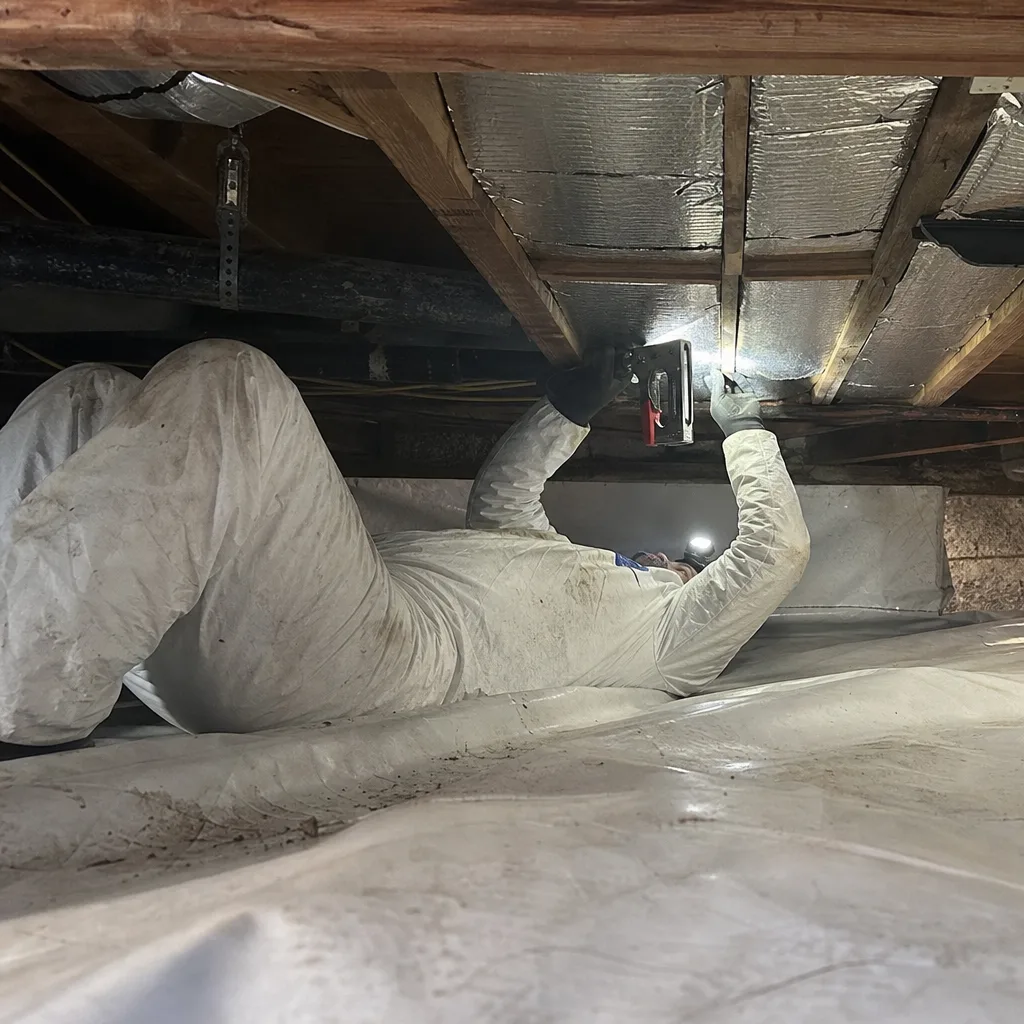
Campbell winters don’t threaten frozen pipes, but they create a specific condensation risk that’s poorly understood. Clear nights in December and January drive radiative cooling that can drop crawlspace surfaces below the dewpoint of the surrounding air - even when outdoor temperatures are in the 40s. We’ve measured rim-joist surface temperatures at 38°F in a Campbell crawlspace when the outdoor air was 45°F, due to radiative heat loss to the night sky. The result is condensation on the north and east-facing rim joists, typically appearing as dark staining or, in advanced cases, fungal growth on the wood surface.
The moisture reading threshold that indicates a problem versus normal variation: 20% wood moisture content measured with a pin-type meter at the rim joist. Below 16% is normal seasonal variation. 16-20% warrants monitoring and ventilation improvement. Above 20% indicates active condensation that will degrade wood and potentially support mold growth. We’ve found readings above 28% in Campbell crawlspaces where the vapor barrier was absent or degraded, and the rim joist was uninsulated.
Campbell’s specific risk factors:
- North-facing crawlspace walls receive no winter sun and stay coolest.
- Homes on the valley floor near Los Gatos Creek experience higher groundwater and soil moisture, increasing baseline humidity.
- Post-1978 homes with raised perimeter foundations often have minimal rim-joist insulation - a 2×10 rim joist with no cavity fill is essentially a thermal bridge.
Winter inspection protocol for Campbell crawlspaces:
- Enter the crawlspace on a clear morning after a night below 45°F - this is when condensation will be most visible.
- Inspect north and east rim joists with a flashlight held at low angle - surface sheen or droplets indicate active condensation.
- Test wood moisture at three points along the rim joist: center of north wall, corner, and a point near any plumbing penetration.
- Verify vapor barrier integrity - 6-mil polyethylene should cover 100% of soil with 12-inch overlaps, sealed at piers and perimeter.
- Check that foundation vents are closable - winter ventilation should be reduced, not eliminated, to balance moisture control with radon dilution.
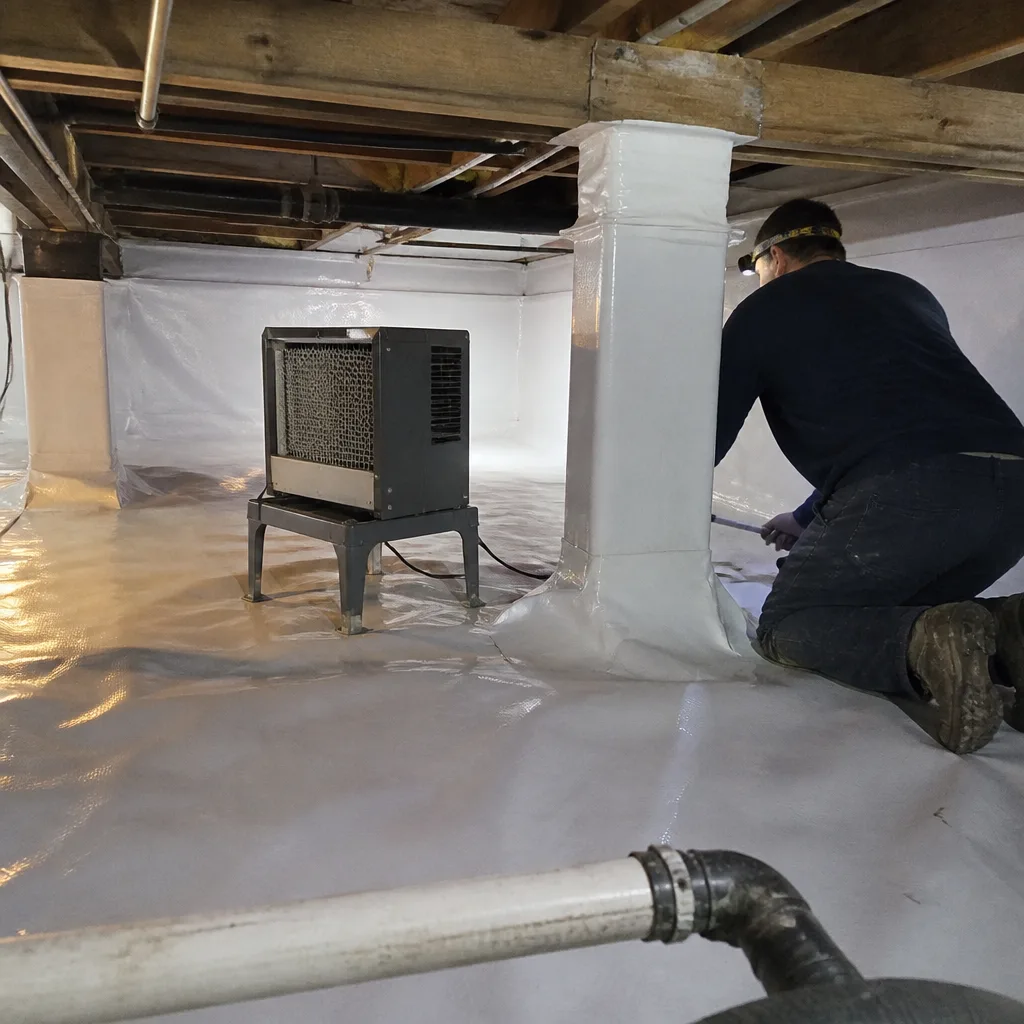
For homes with chronic rim-joist condensation, Crawl Space Encapsulation & Vapor Barrier in Campbell provides a permanent solution. Encapsulation seals the crawlspace from soil moisture and outdoor air, then conditions the space with a dehumidifier or small supply duct. We’ve completed encapsulations in Campbell neighborhoods from the historic downtown grid to the post-war ranch tracts near San Tomas Expressway, using vapor barriers and sealing materials from Owens Corning and Johns Manville. The documented photo record on these jobs shows the transformation - and the before-and-after moisture readings demonstrate the performance change.
Year-Round: The Attic Hatch Weatherstripping Problem
If we could recommend only one maintenance action for Campbell homeowners, it would be this: inspect and replace attic hatch weatherstripping annually. No other envelope component degrades faster or has a more disproportionate impact on measured air leakage.
The physics are simple. Attic hatches are the largest unsealed penetration in most residential ceilings. A 22×30 inch hatch with failed weatherstripping leaks approximately 40-60 CFM50 - equivalent to a 4-inch diameter hole open to the attic. In summer, that leakage pulls 147°F attic air downward. In winter, it drives stack-effect exfiltration that increases heating load and draws moisture into framing cavities. We’ve measured blower-door reductions of 150-250 CFM50 from replacing hatch weatherstripping and adding latch-style hold-downs - a 10-minute repair with $15 in materials.
The specific failure mode in Campbell: compression set in foam weatherstripping combined with thermal cycling. Attic temperatures swing from 50°F winter mornings to 140°F+ summer afternoons. Standard closed-cell foam tape loses resilience after 2-3 years of this cycling. We’ve found completely flat weatherstripping in Campbell homes where the homeowner “had it done a few years ago.”
What to use instead:
- Silicone bulb weatherstripping - maintains resilience across -40°F to 400°F, far exceeding attic conditions.
- Adjustable latch mechanisms - spring-loaded or cam-style latches that apply consistent pressure as the seal ages.
- Insulated hatch covers - R-10 minimum rigid foam bonded to the hatch panel, with weatherstripping on the ceiling side of the trim.
We include hatch weatherstripping inspection on every Attic Insulation in Campbell service visit, and we document the condition in the photo record. If it’s failed, we replace it before we leave - it’s that consequential to the overall envelope performance.
Common Mistakes to Avoid
- Adding insulation over unsealed air leaks. We see this in roughly 30% of Campbell attics where a previous contractor blew new material over decades-old bypasses. The insulation becomes a filter, trapping dust and moisture while the air continues to leak. Seal first, then insulate - in that order.
- Blocking soffit vents with insulation. Well-meaning homeowners or installers pack insulation tight to the eave, cutting off intake airflow. The attic overheats, and the insulation degrades faster. Baffles are required; we install them on every job.
- Ignoring the crawlspace in “attic-focused” efficiency upgrades. Campbell’s heating load is modest, but the crawlspace is often the largest uninsulated surface. Rim-joist insulation and vapor barrier integrity matter as much as attic R-value for overall envelope performance.
- Using kerosene heaters or unvented gas appliances in winter. Beyond the obvious safety hazard, these add massive moisture loads that overwhelm vapor retarders. We’ve traced severe attic moisture damage to a single unvented garage heater in a Campbell home.
- Assuming “R-30 is R-30” regardless of installation quality. Fiberglass batts compressed to half their labeled thickness deliver roughly half the rated R-value. Blown fiberglass with voids or wind-washing at eaves performs similarly poorly. The material matters less than the installation.
- Waiting for visible damage before inspecting. By the time you see ceiling staining or smell mustiness, the insulation has been compromised for one or more seasons. Seasonal inspection catches problems at the threshold, before remediation becomes replacement.
When to Call a Professional
Call for a professional assessment if your fall blower-door test shows ACH50 above 5.0, if winter rim-joist moisture readings exceed 20%, if summer attic temperatures consistently top 140°F, or if you find any insulation material that doesn’t spring back when compressed. These thresholds indicate envelope problems that DIY measures won’t resolve completely. Topside Attic Insulation Campbell offers free estimates in Campbell - call (831) 534-3206. Every estimate includes a written scope and written price before any work is proposed, under Haven Standard Clause 1. We also provide free second opinions on any written estimate from another contractor; bring us their scope and we’ll review it with you.
Frequently Asked Questions
Most attic insulation jobs in a Campbell home of 1,400-2,200 square feet run between $2,800 and $5,400 for blown fiberglass with comprehensive air sealing, or $4,200-$8,600 for spray foam at the roof deck. The range depends on access difficulty, existing material removal, and the extent of air sealing required. Call (831) 534-3206 for an exact quote - estimates are free and include a written price before any work starts.
Minor repairs - hatch weatherstripping, vent sealing, localized air sealing - can often be completed during the diagnostic visit. Full insulation replacement or spray foam application requires scheduling, typically within 3-7 business days in Campbell. We don’t start work without a written scope and written price, so same-day completion applies only to repairs that fit within a pre-established scope.
Repair is cheaper when the damage is localized - less than 20% of attic area, no moisture staining on decking, and the remaining insulation is less than 15 years old. Replacement is more cost-effective when there’s widespread compression, moisture damage, or evidence of pest intrusion. We’ve found that “repair” quotes from other contractors often omit the air sealing that caused the original failure; we identify the source before we recommend either approach.
Perform the seasonal inspections in this guide - spring for moisture, summer for heat, fall for air leakage, winter for crawlspace condensation. A professional blower-door test every three years, or after any major renovation, provides quantitative verification that visual inspection cannot. See our more guides & resources for additional home maintenance tips.
Campbell’s specific geography - the Los Gatos Creek drainage, the marine layer penetration through Highway 17, and the mix of 1950s ranch stock with 1980s-90s tract homes - creates moisture patterns distinct from hillier Los Gatos or denser San Jose. The north-facing roof deck condensation pattern we describe is particularly pronounced in Campbell’s older neighborhoods with minimal eave overhang and limited ventilation.
Every job closes with a Documented Photo Record showing before, during, and after conditions. On applicable jobs, we provide before-and-after blower-door numbers so you can verify the air-sealing result. The written scope, written price, and written warranty are delivered before anyone lifts a tool - Haven Standard Clause 1, no exceptions.
The Bottom Line
Campbell’s mild climate masks specific, predictable envelope stresses: spring marine moisture degrading vapor retarders, summer attic heat reducing insulation effectiveness, fall air leakage increasing heating loads, and winter radiative cooling driving crawlspace condensation. Each season has a defined inspection threshold and a specific action. Year-round, attic hatch weatherstripping demands annual attention - it’s the highest-impact, lowest-cost maintenance item we’ve identified across 9,000+ homes. Document your findings, track changes over time, and call for professional assessment when you cross the thresholds in this guide. The performance of your building envelope is measurable, and the measurements tell you exactly when to act.
Written by Wes Okafor, Owner at Topside Attic Insulation Campbell, serving Campbell since 2016.