
Last updated September 24, 2026
How to Hire a Insulation Contractor in Campbell: A Step-by-Step Guide
Here’s the single most revealing question you can ask any insulation contractor before hiring them, and it costs nothing: “Will you give me a blower-door number before and after the job?” A contractor who hedges, deflects, or tries to upsell that answer has just told you everything about their process. In Campbell, where summer highs push into the 90s and winter nights dip to the 40s, the difference between a contractor who measures and one who guesses can mean thousands in energy bills and a home that never quite feels right. We’ve sealed and insulated over 9,000 homes since 2016, and the pattern is consistent - the best outcomes come from homeowners who know what to ask for before anyone steps on a ladder. This guide gives you the exact document checklist and question set that separates professionals from pretenders, and you can find more guides & resources on our blog.
Quick Answer
To hire an insulation contractor in Campbell, verify their CSLB license classification (C-2 or C-43), demand a written scope with six specific line items including R-value targets and air-sealing locations, confirm they’ll provide pre- and post-job blower-door readings, and never sign a contract containing phrases like “approximate R-value” or “price subject to conditions.” A legitimate contractor in Campbell will provide a flat written price before work starts and deliver documented photo records and performance data when the crew leaves.
Table of Contents
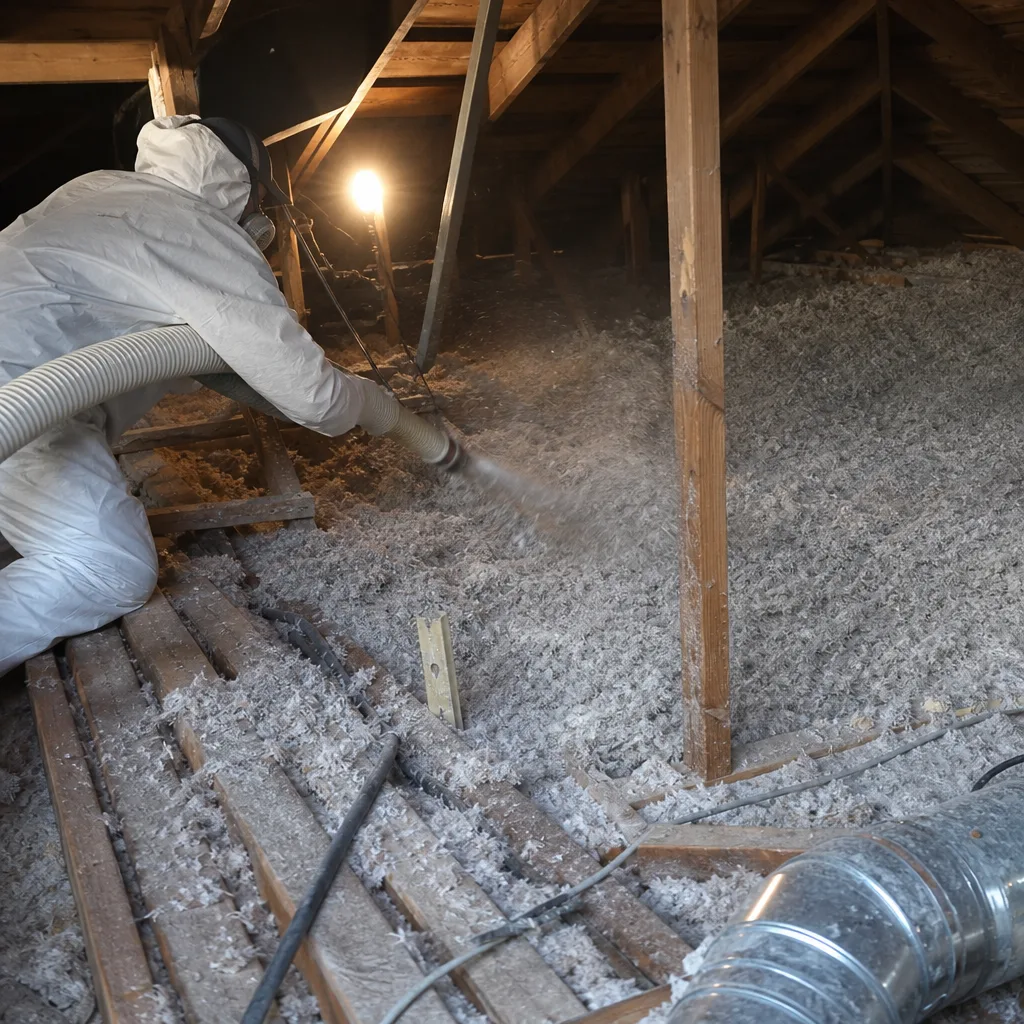
- The Blower-Door Question That Exposes Everything
- License Verification: C-2 vs. C-43 and How to Check
- The Six Line Items Every Written Scope Must Contain
- Why “Free Estimates” Without Diagnostics Are Structurally Flawed
- Red-Flag Language in Contracts
- Post-Job Documentation: What Campbell Homeowners Should Walk Away With
- How Campbell’s Climate and Code Shape Insulation Decisions
- Common Mistakes to Avoid
- When to Call a Professional
- Frequently Asked Questions
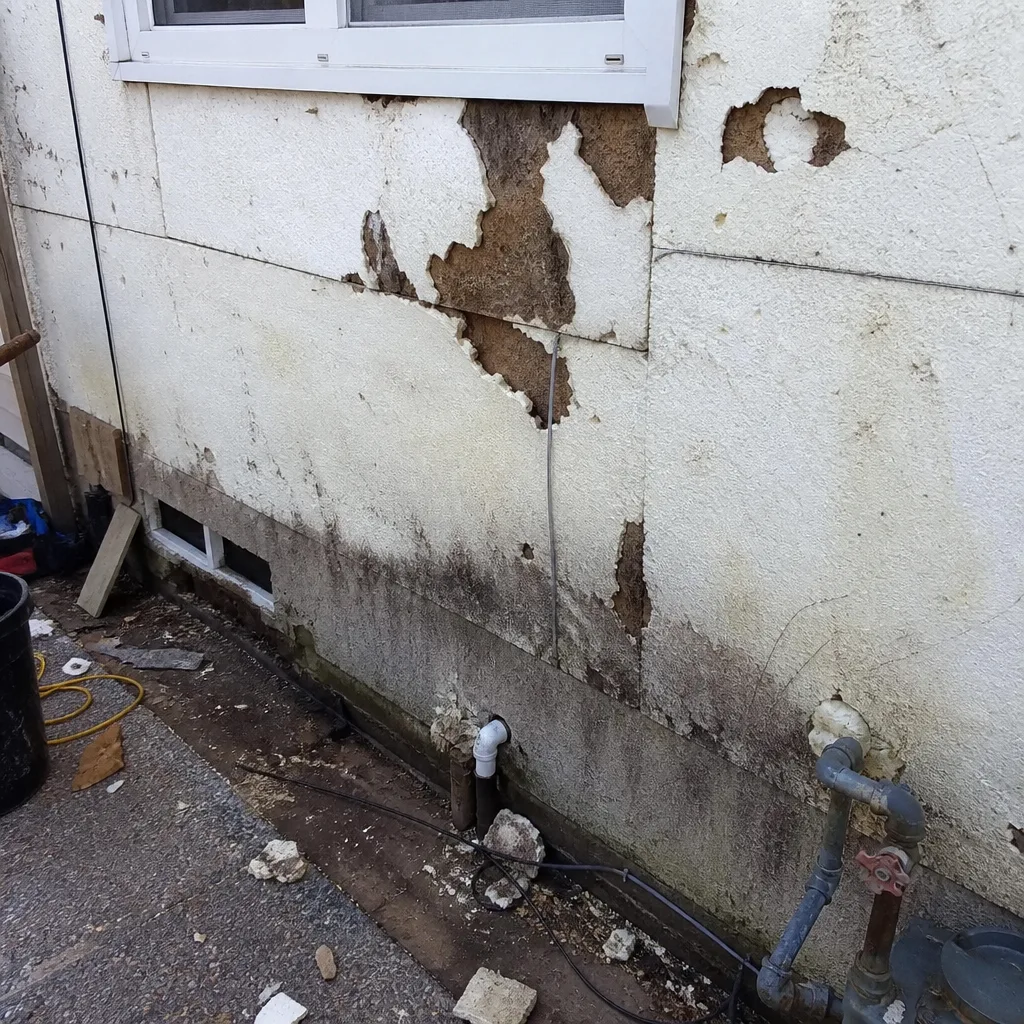 Before
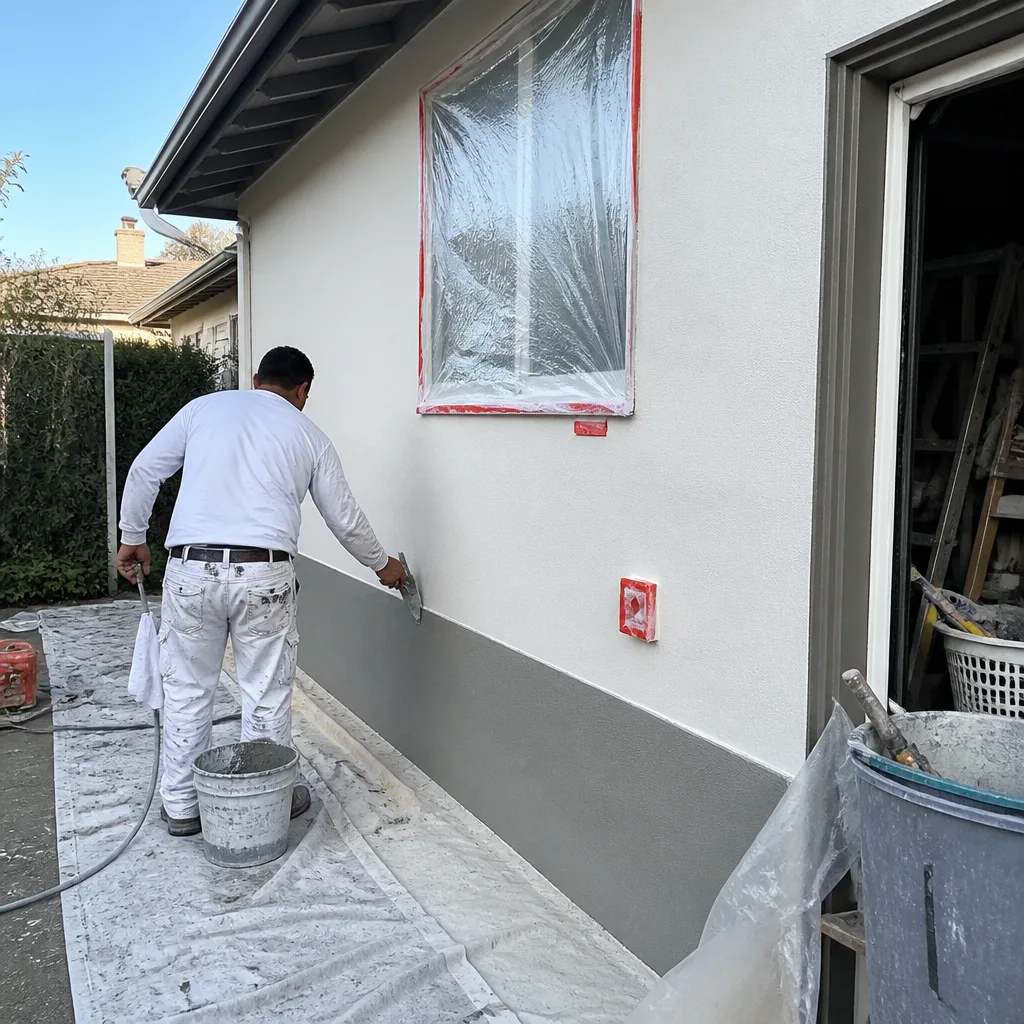 After
AfterThe Blower-Door Question That Exposes Everything
A blower-door test is a pressurization reading that shows, in one number, how much air your building envelope is losing. The equipment is simple: a powerful fan mounted in an exterior door frame that depressurizes the house, with gauges measuring airflow in CFM50 - cubic feet per minute at 50 pascals of pressure difference. Every home leaks. The question is how much, and where.
When we arrive at a Campbell home, we run the blower door before touching anything. In the Willow Glen-adjacent neighborhoods west of Bascom Avenue, we regularly see 1970s ranch homes testing at 3,500 CFM50 or higher - roughly double what a well-sealed home of that size should read. The homeowner feels drafts, rooms that won’t hold temperature, energy bills that climb every summer. Without the number, we’re all guessing.
Here’s what happens when you ask for pre- and post-job blower-door numbers:
- A contractor with a real process will explain their baseline reading, their target, and how they’ll hit it - usually through targeted air sealing of top plates, can lights, plumbing penetrations, and attic hatches before adding insulation.
- A contractor without one will change the subject to R-value, material type, or “years of experience.” They’ve just told you they don’t measure results.
- A contractor who offers the test as an upsell - “we can add that for $350” - has revealed that performance verification is optional in their business model.
At Topside Attic Insulation Campbell home, we publish before-and-after blower-door numbers on every applicable job. Not because it’s impressive, but because it’s the only way to prove the homeowner got what they paid for. A 1970s Campbell home we worked on near Campbell Avenue dropped from 4,200 CFM50 to 2,100 after sealing and insulating the attic. The homeowner didn’t need our enthusiasm; they had the number.
When interviewing contractors, ask these exact questions:
- “What was the last blower-door reading you published on a job, and what was the starting number?”
- “Do you seal before insulating, or blow insulation over the existing leaks?”
- “If the post-job number doesn’t meet your target, what’s your protocol?”
The answers will sort contractors faster than any review or referral.
License Verification: C-2 vs. C-43 and How to Check
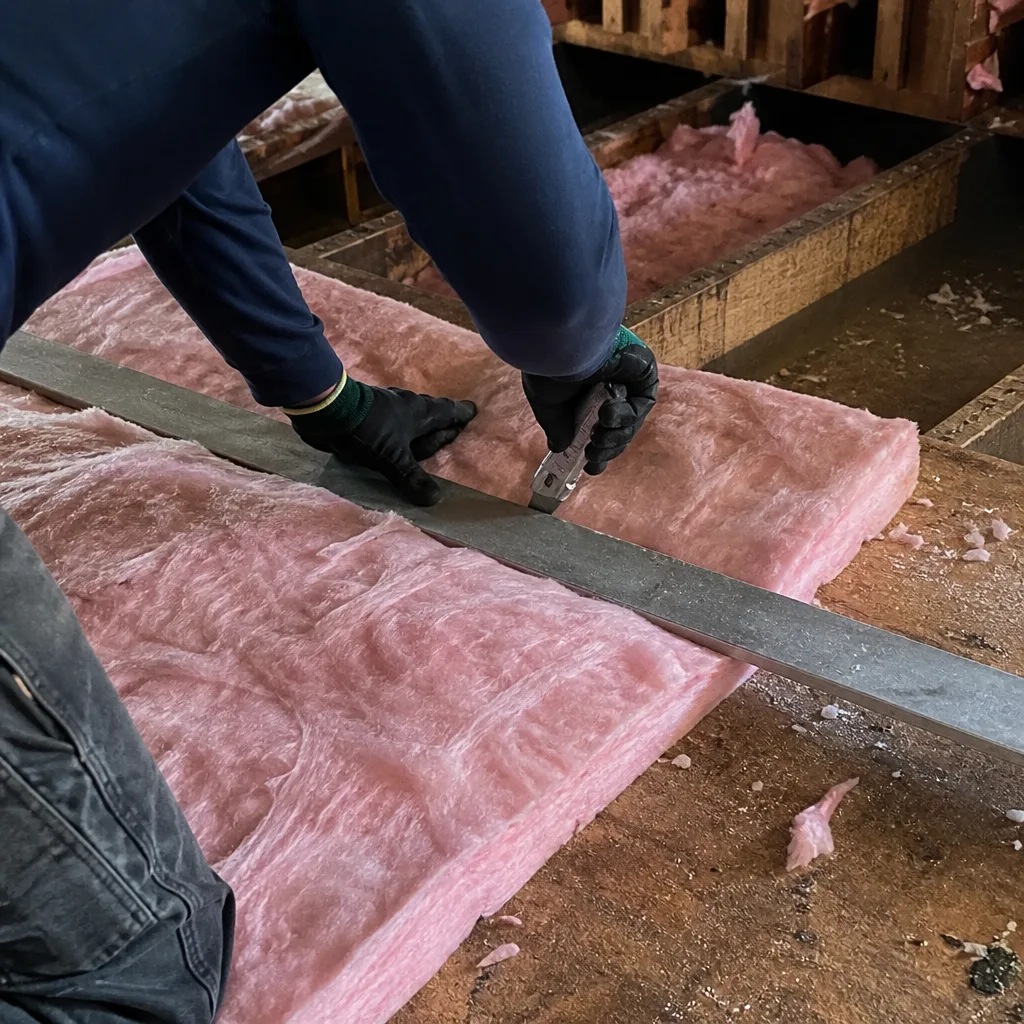
California licenses insulation work under two classifications, and the difference matters. A C-2 Warm-Air Heating, Ventilating and Air-Conditioning contractor can install insulation incidental to HVAC work. A C-43 Sheet Metal contractor can install insulation as part of sheet metal operations. For standalone insulation work - attic retrofits, wall insulation, crawl space encapsulation - you want a contractor whose primary classification matches the scope, or who holds both.
Here’s how to pull a contractor’s history on the CSLB site in under two minutes:
- Go to cslb.ca.gov and click “Check a License.”
- Enter the six- or seven-digit license number. Don’t accept “pending” or “applied for.”
- Verify the classification matches the work. A B-General Building contractor can perform insulation work, but only as part of a larger project involving two or more unrelated trades. For a standalone insulation job, this is a yellow flag worth questioning.
- Click “Complaint Disclosure” to see if disciplinary action exists. In Campbell and Santa Clara County, check specifically for citations related to unpermitted work - common in attic jobs where homeowners don’t realize a permit was required.
- Confirm workers’ compensation coverage is active. If the contractor uses employees (not just 1099 labor), this is mandatory and your protection against liability.
We’ve seen Campbell homeowners hire unlicensed handymen for attic work, only to discover the job required a permit when they later sell. The County of Santa Clara Building Division enforces Title 24 energy code compliance on insulation retrofits that involve removal and replacement - for details, read our guide on Insulation Permits, Codes & Inspections in CA: What You Need to Know. A licensed contractor knows this; an unlicensed one may not, or may not care.
Ask to see the license card, not just a number on a website. Under Haven Standard: Have it in writing - and that includes license verification in your file before work starts.
The Six Line Items Every Written Scope Must Contain
Most hiring guides tell you to “get three quotes.” They don’t tell you that comparing three quotes with different scopes is worse than comparing one quote to nothing. Here’s the checklist we use when reviewing competing estimates for our Attic Insulation in Campbell customers - and what we put in every proposal we write.
Line Item 1: R-Value Target by Location
Don’t accept “R-38 in the attic.” You need: “Attic floor: R-38 blown cellulose per Title 24. Knee walls: R-13 fiberglass batts. Ductwork in unconditioned space: R-8 minimum.” The location matters as much as the number. A contractor who specifies only one R-value for a whole house hasn’t looked at the whole house.
Line Item 2: Air-Sealing Locations and Methods
This is where most quotes fall apart. A legitimate scope lists: “Air seal top plates, electrical penetrations, plumbing stacks, can lights, attic hatch, and chimney chase with [specific material].” If the scope says “air sealing as needed” or omits locations entirely, you’re getting insulation without the prerequisite work. We never blow insulation over an unsealed attic floor - it’s sealing first, then insulating, in that order.
Line Item 3: Material Specification
Not “blown insulation.” Not “spray foam.” The scope should read: “Owens Corning AttiCat fiberglass, 0.5 lbs/cu ft density” or “Knauf Jet Stream Ultra BIBS system” or “Demilec Heatlok HFO High Lift, 2.0 lb density closed-cell.” Generic descriptions let contractors substitute cheaper materials mid-job. We source from Johns Manville, Knauf, Rockwool, CertainTeed, and others - and we name the specific product in writing before anyone orders.
Line Item 4: Preparation and Protection Protocol
What happens to your belongings? Your flooring? Your landscaping? A proper scope states: “Floor protection from entry to attic access. Furniture covered in work path. Attic contents photographed before disturbance. HEPA filtration during cellulose installation.” In Campbell’s tight lots near downtown, where homes from the 1950s have narrow hallways and original hardwood, this matters.
Line Item 5: Cleanup and Disposal Specification
“Clean up after ourselves” is not a scope item. You need: “All old insulation bagged and removed per Santa Clara County waste regulations. Attac vacuumed with HEPA-equipped equipment. Magnetic sweep of work path for fasteners. Final photo documentation.” The disposal method matters - old insulation with rodent evidence requires special handling.
Line Item 6: Post-Job Verification and Documentation
This is where the blower-door number lives, plus: “Before-and-after blower-door test with printed report. Thermal imaging scan of critical junctions. Photo log of all work areas. Material specification sheets. Written warranty.” Without this line item, you have no proof of what was done and no recourse if it fails.
Under Haven Standard Clause 1, every job gets a flat price, written scope, and written warranty before anyone lifts a tool. No exceptions in 9,000+ homes.
Why “Free Estimates” Without Diagnostics Are Structurally Flawed
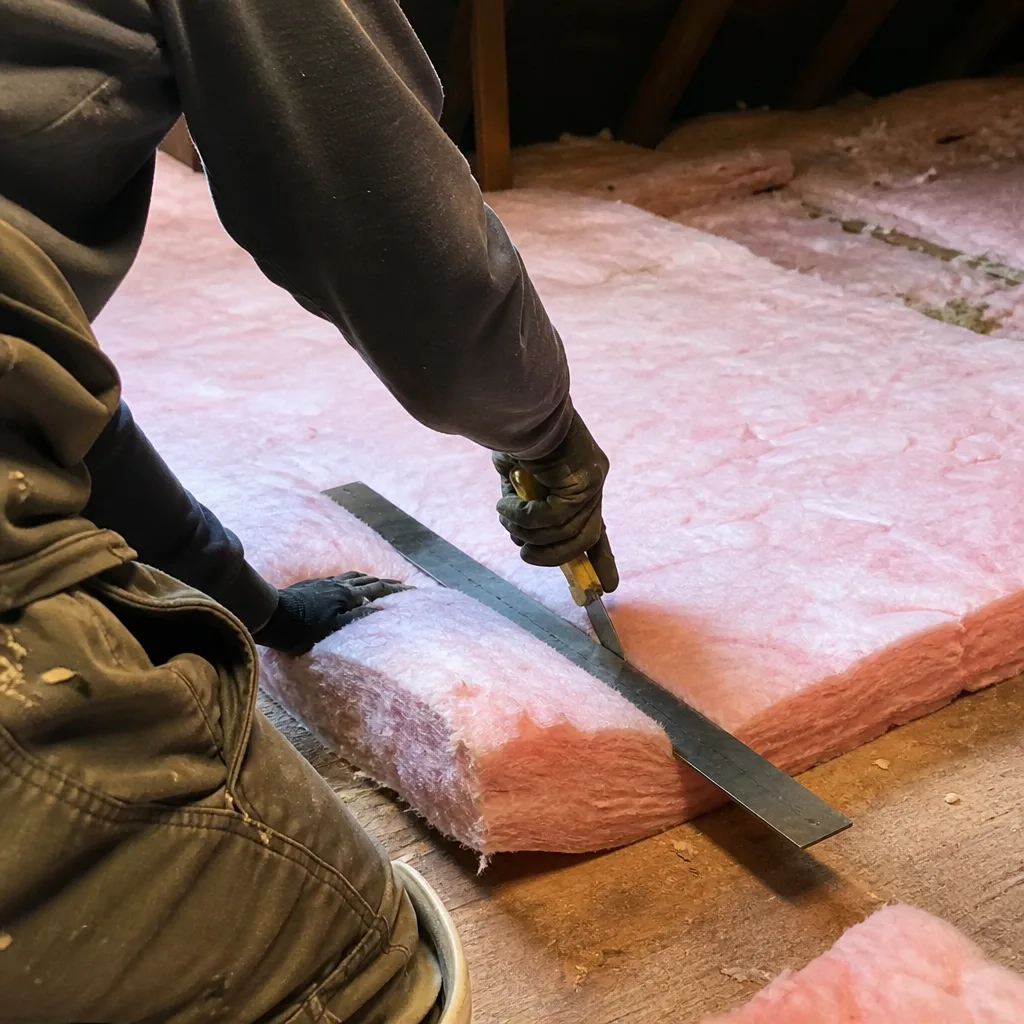
A contractor who walks through your Campbell home, glances in the attic, and hands you a price is not estimating your job. They’re estimating the average job they’ve done on similar houses - which is why we published Insulation Cost Breakdown: The Campbell Homeowner’s Reference for 2026 to show what accurate pricing actually looks like. This works fine until it doesn’t - and in insulation, “doesn’t” means hot rooms, high bills, and a callback that may never come.
Here’s why a free estimate that skips pre-job diagnostics cannot diagnose the actual problem:
- Thermal bypasses hide from visual inspection. In Campbell’s Eichler-influenced homes and mid-century ranches, open soffits, dropped ceilings, and chase ways create air paths that look like solid construction. Only a blower-door test with smoke pencil or thermal imaging reveals them.
- Moisture conditions change recommendations. An attic with active roof leaks or bathroom fan discharge into the soffit needs repair before insulation. A visual guess can’t distinguish “dry now” from “dry usually.”
- Existing insulation condition affects scope. Fiberglass batts compressed by storage or stained from past leaks may need removal, not supplementing. You can’t price removal versus overlay from the hatch.
- Duct leakage dominates comfort complaints. A homeowner who calls for insulation often has 20-30% duct leakage in an unconditioned attic. Adding R-value without addressing the ducts is treating the symptom. A blower-door test with duct blaster integration identifies this; a walkthrough cannot.
We charge nothing for our initial assessment, but we don’t call it an “estimate” - it’s a building-envelope evaluation that includes blower-door baseline, thermal imaging, and attic inspection. The written price that follows is based on measured conditions, not square footage and a guess. If a contractor in Campbell offers a price without diagnostics, ask what they’re actually pricing. The honest answer is: their last job.
For Crawl Space Encapsulation & Vapor Barrier in Campbell, this is even more critical. Crawl spaces with standing water, fungal growth, or compromised vapor barriers require remediation before encapsulation. A visual estimate from the crawl hatch is worthless.
Red-Flag Language in Contracts
Contract language reveals risk allocation. When a contractor uses certain phrases, they’re not being cautious - they’re transferring all downside to you. Here are the specific terms that should stop a Campbell homeowner from signing, and what each one means in practice.
“Approximate R-value”
This means the contractor won’t measure insulation depth after installation. R-value depends on settled depth and density; “approximately R-38” can legally mean R-30 or R-32 in spots. The scope should state: “Installed to achieve settled R-38 minimum, verified with depth gauge in minimum 10 locations per 1,000 sq ft, photo documented.”
“Air sealing as needed”
Translation: we’ll do what looks obvious from the hatch, and you’ll never know what we missed. Air sealing is measurable (blower-door number) and locatable (thermal imaging). “As needed” removes both measurements.
“Price subject to conditions”
This is a blank check. The conditions aren’t defined, the trigger isn’t defined, and the price ceiling isn’t defined. Under Haven Standard, the written price is flat. If we find something unexpected - damaged decking, active leaks, inaccessible areas - we photograph it, stop work, and present a written change order with a new flat price. No surprises.
“Proprietary insulation system”
Often code for “we’re using a product you can’t price-check, with margins we won’t disclose.” We specify materials from named manufacturers - Johns Manville, Knauf, Rockwool, CertainTeed - with model numbers. No proprietary lock-in.
“Best practices” or “industry standard”
Vague appeals to undefined norms. The scope should reference specific codes: Title 24, Part 6 for energy efficiency; IRC R302.10 for fire safety at recessed lights; ASTM standards for material testing. “Industry standard” is what a contractor claims after deviating from all three.
“Final payment due upon substantial completion”
Without defined completion criteria, this means “pay when we say we’re done.” The contract should list: blower-door target achieved, photo documentation delivered, permit signed off (if required), warranty document in hand. We don’t collect final payment until the homeowner has every document.
Before signing any Campbell insulation contract, search the document for these six phrases. Each one increases your risk. A contract with two or more is a contract to renegotiate.
Post-Job Documentation: What Campbell Homeowners Should Walk Away With
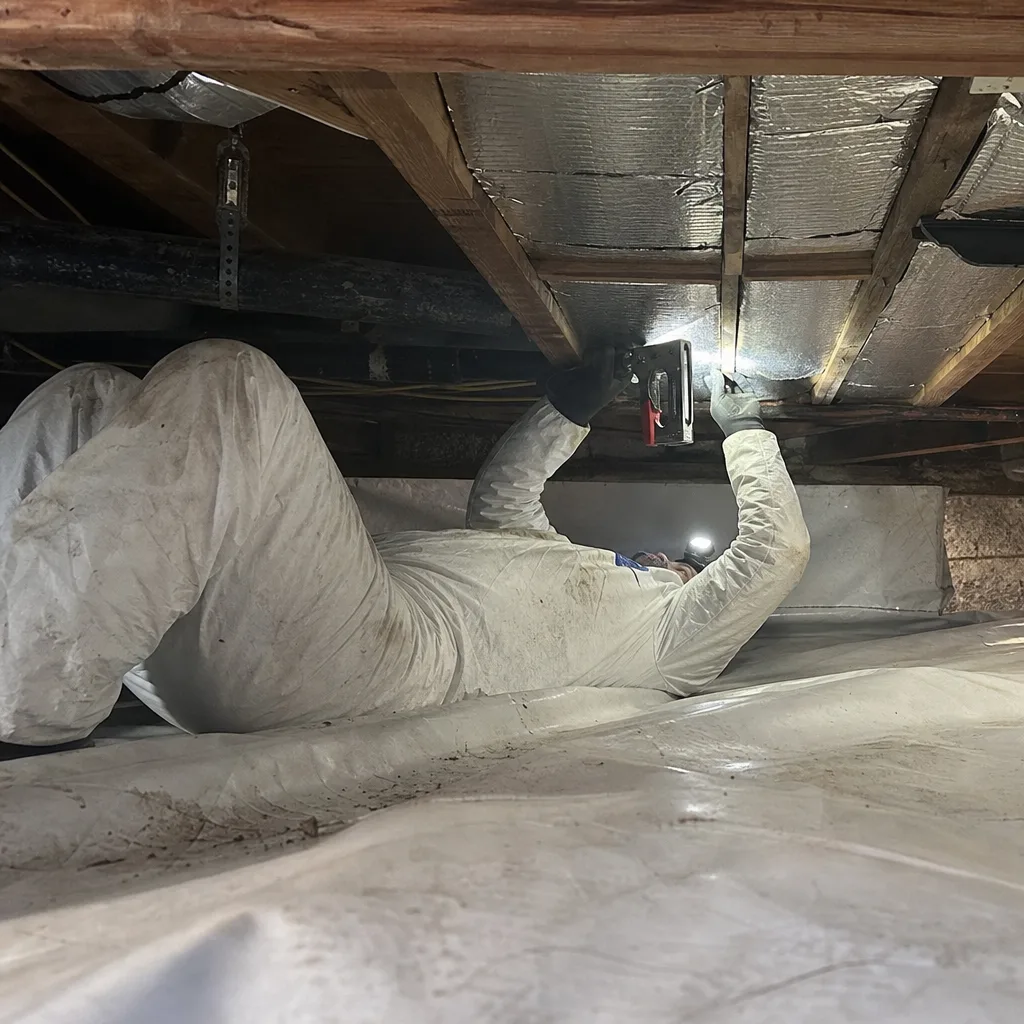
The job isn’t done when the crew leaves. It’s done when you have a file that proves what was done, with data you can verify independently. Here’s what that file should contain, and how to request it before work begins.
Blower-Door Report
A printed or PDF report showing pre- and post-job CFM50 readings, test date, technician name, and equipment calibration date. The report should note weather conditions (wind and temperature affect readings) and any test deviations. In Campbell’s variable spring weather, same-day conditions matter - a test at 6 PM after a hot day reads differently than 8 AM.
Material Specification Sheets
Manufacturer data sheets for every material installed: insulation type, R-value per inch, density, fire rating, and VOC emissions (relevant for spray foam). These sheets prove code compliance and protect resale value. A buyer’s inspector in Campbell will ask for them.
Photo Log
Time-stamped photos of: attic before work, air-sealing locations during work, insulation depth measurements, attic after work, and any unexpected conditions found. We include a Documented Photo Record on every visit - it’s not available on request because it’s already delivered.
Permit Sign-Off
For insulation removal and replacement in Santa Clara County, a permit is required when the work area exceeds specific thresholds or when Title 24 compliance documentation is needed. The final documentation should include the signed permit card or electronic sign-off from the County of Santa Clara Building Division.
Written Warranty
Specific coverage period, what’s covered (settlement, moisture damage, pest intrusion), and the claim process. Our 365-Day Done Right Promise - if it’s not done right, we make it right - is backed by a written warranty delivered before work starts, not after a problem arises.
Request this list in writing when you request the quote. A contractor who can’t commit to documentation before starting has no process for creating it after finishing.
How Campbell’s Climate and Code Shape Insulation Decisions
Campbell sits in Santa Clara Valley’s southern end, with a Mediterranean climate that creates specific envelope challenges. Summer highs average 82°F but spike past 95°F in July and August; winter lows hover near 42°F with occasional frost. This 50-degree annual swing means insulation must perform in both directions - keeping heat out in summer, in during winter.
Title 24, California’s energy code, divides the state into climate zones. Campbell falls in Climate Zone 4, which prescribes minimum R-values and mandates specific air-sealing requirements for altered attics and walls. A contractor who doesn’t reference Title 24 compliance in their scope is either unaware of code or planning to skip permit requirements.
Local conditions that affect insulation decisions in Campbell neighborhoods:
- West Campbell and the Pruneyard area: Older commercial-to-residential conversions and 1960s apartments often have flat roofs with minimal clearance. Spray foam or high-density blown fiberglass may be the only viable options without structural modification.
- Near Campbell Avenue and the historic downtown: Pre-1950s homes with balloon framing or no wall insulation require careful air-sealing before any cavity fill. Blown cellulose in unsealed balloon frames can create moisture traps.
- South Campbell toward Los Gatos: Hillside homes with crawl spaces on grade experience different moisture patterns than slab-on-grade construction. Crawl space encapsulation decisions depend on groundwater level and ventilation strategy.
- East Campbell near Highway 17: Traffic noise and particulate exposure make sealed attics with conditioned space more attractive than vented attics with passive airflow.
Campbell’s proximity to the Bay also means marine layer moisture - heavy morning fog that rolls in through summer. Attic ventilation must balance moisture exhaust with insulation performance; a contractor who specifies insulation without evaluating existing ventilation is missing half the problem.
For Spray Foam Insulation in Campbell, climate zone affects product selection. Open-cell foam (Icynene, Demilec) allows vapor permeability that helps in mixed climates; closed-cell (Heatlok, Bayseal) provides vapor barrier and structural rigidity but at higher cost per R-value. The choice should be justified in the written scope, not assumed.
Common Mistakes to Avoid
- Hiring based on price per square foot alone. A low price with no air sealing and generic R-value is more expensive than a higher price with measured performance. In Campbell’s competitive market, the spread between lowest and highest quote for the same scope is usually under 15%; the spread between scopes is infinite.
- Accepting verbal promises about “energy savings.” Without a blower-door baseline, savings claims are unverifiable. Ask for the specific CFM50 target and how it translates to conditioned air retention.
- Ignoring permit requirements. Santa Clara County requires permits for insulation removal and replacement in many cases. Unpermitted work must be disclosed on sale and can trigger reinspection.
- Letting the contractor choose material without justification. “We always use X” is not a reason. The scope should explain why cellulose, fiberglass, or foam fits your specific home, climate, and budget.
- Skipping the post-job verification. A surprising number of homeowners never enter their attic after work is done. Schedule the verification walkthrough before work starts, and make payment contingent on documentation delivery.
- Assuming all contractors seal before insulating. Many blow insulation directly over unsealed top plates and can lights, embedding air leaks under new material. Ask the question directly: “Will you air seal before insulating, and how will you prove it worked?”
- Not checking the CSLB complaint history. Two minutes on the state website reveals patterns that reviews won’t - repeated complaints about scope changes, permit issues, or warranty non-response.
When to Call a Professional
Call a professional when your home shows signs of envelope failure that DIY solutions can’t address: rooms that vary more than 5 degrees from the thermostat setting, energy bills that spike without rate changes, visible insulation degradation or pest activity in the attic, or any plan to finish a basement or convert attic space. For a complete list, see Insulation Warning Signs: A Campbell Homeowner’s Reference Guide. In Campbell, where home values support professional-grade work, the cost of guessing exceeds the cost of measuring.
Topside Attic Insulation Campbell offers free building-envelope evaluations in Campbell, including blower-door baseline testing and thermal imaging. Every evaluation produces a written scope with flat pricing before any work starts. Call (831) 534-3206 to schedule - a live person answers 24/7, and you’ll receive a text with your technician’s name and ETA when they’re en route.
Frequently Asked Questions
Most complete attic insulation jobs in Campbell run between $3,200 and $7,800 for a typical 1,400-2,200 square foot home, depending on whether removal is needed, air-sealing complexity, and material choice. A basic blown-in fiberglass overlay on a clean, accessible attic with minimal sealing runs toward the lower end; full removal, air sealing, and high-density cellulose or spray foam pushes toward the upper end. Call (831) 534-3206 for a written price based on your home’s measured conditions - estimates are free.
C-2 Warm-Air Heating, Ventilating and Air-Conditioning contractors install insulation as part of HVAC projects, while C-43 Sheet Metal contractors install insulation as part of sheet metal operations. For standalone insulation work in Campbell, verify the contractor holds the appropriate classification or can explain how their license covers your scope. Pull their record at cslb.ca.gov in under two minutes using their license number.
Air sealing stops conditioned air from escaping and unconditioned air from entering; R-value only slows heat transfer through solid materials. A well-sealed R-30 attic outperforms a leaky R-60 attic because the leaks bypass the insulation entirely. In Campbell’s climate with both heating and cooling loads, air sealing provides year-round benefit that R-value alone cannot.
Demand a before-and-after blower-door test with printed results. The CFM50 number should drop measurably - typically 20-40% for a proper attic seal. Without this number, you have no verification. At Topside Attic Insulation Campbell, we publish these readings on every applicable job and include them in your documentation file.
Sometimes, but only after evaluation. Old fiberglass batts compressed below their labeled thickness, insulation with rodent evidence or moisture staining, or any material containing vermiculite (which may contain asbestos) must be removed first. A thermal scan and attic inspection determine whether overlay or removal is appropriate - a decision that can’t be made from the hatch.
Compare scopes line by line, not totals. The low quote likely omits air sealing, specifies thinner insulation, excludes removal and disposal, or uses “approximate” language that allows material substitution. Under Haven Standard, we offer a Free Second Opinion on any written estimate - bring us a competing quote and we’ll read it with you, line by line.
The Bottom Line
Hiring an insulation contractor in Campbell comes down to documentation and measurement. Verify the license. Demand a written scope with six specific line items. Reject contracts with red-flag language. Insist on pre- and post-job blower-door verification. And walk away with a file that proves what was done - not just a receipt for what you paid. The contractors who measure their work separate themselves from those who guess; your job is knowing which questions force that separation. We’ve sealed and insulated over 9,000 homes since 2016 under The Haven Standard, and the pattern holds: homeowners who ask for documentation before work starts get better results than those who ask for explanations after problems appear.
Written by Wes Okafor, Owner at Topside Attic Insulation Campbell, serving Campbell since 2016.